Skip to content
Welcome, thoughtbot's Giant Robots listeners!Start here
Russia-Ukraine War 2026
5MAR

Starmer reopens UK door to Russian fuel

3 min read
04:57UTC

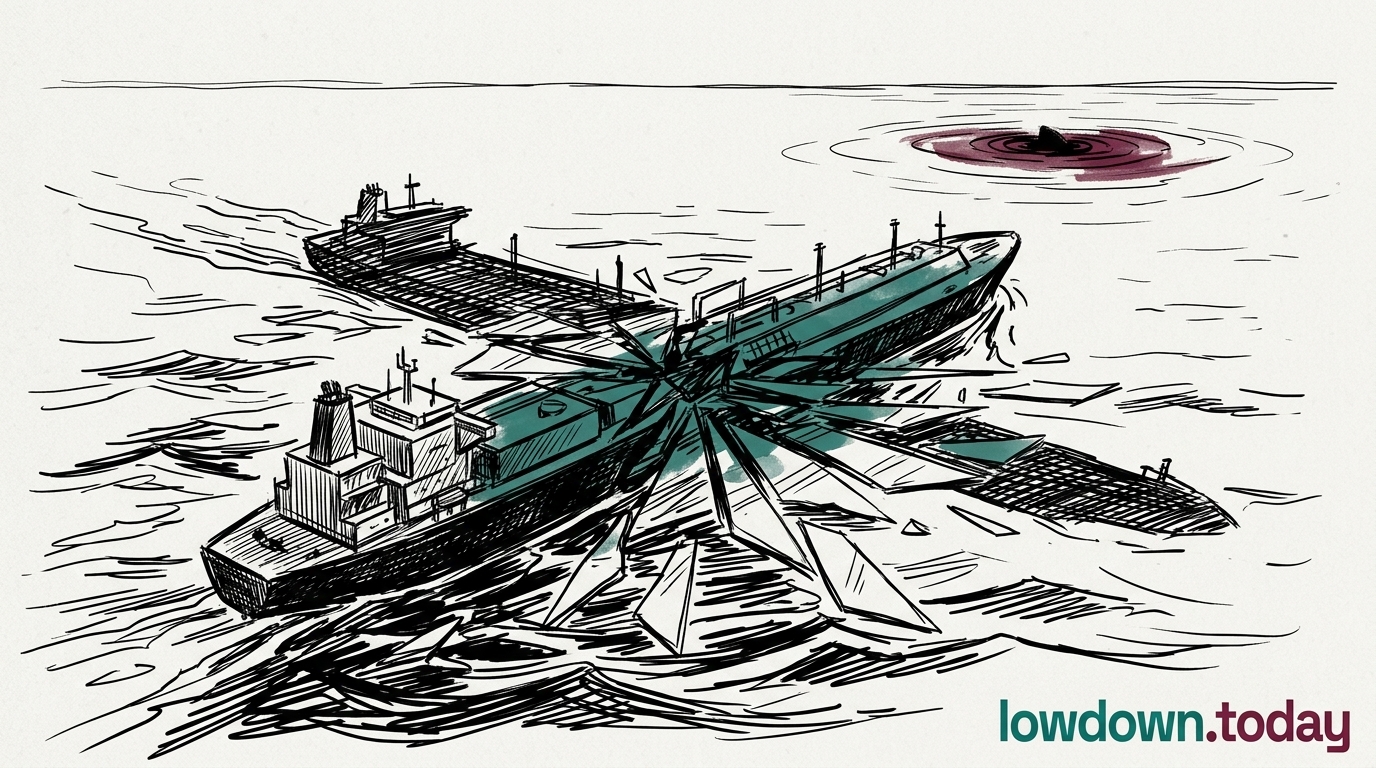
The Starmer government eased UK sanctions around 21 May to permit imports of jet fuel and diesel refined from Russian crude in third countries. RUSI values the flow at $1.2-1.4bn a year and its own director called the move an embarrassment for Downing Street.

ConflictDeveloping
Key takeaway

The new UK window for Russian-derived distillate has a 17 June compliance clock built in.

The Starmer government eased UK sanctions around 21 May to permit imports of jet fuel and diesel refined from Russian crude in third countries⁠1. RUSI (the Royal United Services Institute) valued the flow at $1.2-1.4bn a year at 2025 volumes, per research fellow Petras Katinas. Tom Keatinge, director of RUSI's Centre for Finance and Security, called it an embarrassment for Downing Street, poorly communicated and out of step with the messaging to Kyiv⁠2.

The mechanism that matters here is vessel-services compliance, not the flat price. GL 134C (General License 134C), the insurance, crewing and classification cover OFAC reinstated on 18 May, runs only to Wednesday 17 June and eased the compliant-tonnage squeeze on Baltic Aframax freight when it landed. Once it lapses without a successor instrument, and OFAC had issued none as of 1 June, Western-serviced tonnage carrying Russian-derived distillate to UK ports goes non-compliant.

For a products desk the buy-side window opens with roughly two weeks of clean logistics inside it. Any blender or distributor leaning on the new UK node has to load and have cargoes in transit before the cover cliff. London frames the easing as energy security, since the Iran conflict knocked out jet-fuel supply chains and import cover came first. The policy and the 17 June cutoff pull in opposite directions, and an unco-ordinated UK move complicates G7 price-cap alignment heading into the Évian-les-Bains summit.

Deep Analysis

In plain English

Britain quietly changed its rules around 21 May to allow the import of jet fuel and diesel that was made from Russian crude oil, as long as the refining was done in a third country such as India. The move is worth over a billion pounds a year in fuel that would not otherwise come into the UK. The catch is a separate US licence called General License 134C. That licence lets Western shipping companies, insurers, and crew legally handle cargoes connected to Russian oil. It expires on 17 June. Once it lapses, Western-crewed and Western-insured ships cannot carry those cargoes to UK ports without breaching US rules. So the UK opened a door that has a built-in padlock sixteen days away.

Deep Analysis
Root Causes

The Hormuz disruption stripped roughly 695kbd of EU gasoil imports in April 2026 and hit UK jet-fuel supply chains at the same time BP Rotterdam's 400kbd refinery was offline for maintenance. The Starmer government's energy-security rationale is structurally coherent: the UK jet-fuel import deficit was real and the domestic production capacity to fill it was offline simultaneously.

The compliance constraint runs through GL 134C, which authorises vessel-services cover for Russian-origin cargoes loaded by 17 April but expires 17 June. The UK's new buy-side window is operationally dependent on that umbrella for any buyer using Western-serviced tonnage. The policy and the licence calendar were written on different desks, creating a self-limiting two-week compliance window that the UK government did not publicly acknowledge.

What could happen next?
  • Consequence

    UK buyers using Western-serviced tonnage for Russian-derived distillate must complete cargo loading and transit before the 17 June GL 134C lapse or face non-compliance.

    Immediate · Reported
  • Risk

    An unco-ordinated UK move complicates G7 price-cap alignment heading into the Kananaskis summit on 12-15 June, where EU-27 unanimity on a full maritime-services ban is the deferred agenda item.

    Short term · Reported
  • Precedent

    The UK's third-country processing carve-out establishes a template other G7 members under domestic supply pressure could cite if their own energy-security needs intensify post-Hormuz.

    Medium term · Suggested
First Reported In

Update #4 · EFS compression is a China hole, not Hormuz

RUSI (Royal United Services Institute)· 1 Jun 2026
Read original →
Causes and effects
This Event
Starmer reopens UK door to Russian fuel
The new buy-side window has a 17 June compliance cliff built in: Western-serviced cargoes must clear before GL 134C vessel cover lapses.
Different Perspectives
South Korean foreign ministry
Seoul said on 20 October it will withdraw some Kyiv embassy staff, citing no constructive steps from Kyiv since it recalled its ambassador over the disclosure of two North Korean prisoners. A chargé d'affaires and consular staff stay, and Seoul says its aid continues.
Alexander Lukashenko
Lukashenko said on 22 October that talks with the US show progress despite problems, which he said were highlighted with the exchange of political prisoners for the lifting of sanctions. He said Minsk keeps its promises and wants the US to deliver its side in full.
Moldovan government (Daniella Misail-Nichitin)
Moldova has pulled its border guards and customs officers from four crossings on Ukrainian soil after Russian strikes near the border. Interior Minister Daniella Misail-Nichitin said Chisinau is weighing moving Ukrainian checkpoints onto Moldovan territory.
Péter Magyar
Péter Magyar
Magyar told RTL that Ukrainian maize may cross Hungary in sealed trains bound for Western Europe. He set one condition: the cargo must only transit the country.
Donald Tusk
Donald Tusk
Tusk said Warsaw would seek an explanation from Kyiv for the drone's route across Poland. He said Poland allows no operations over its territory without its explicit consent.
Mindaugas Sinkevičius
Lithuania's prime minister said the Ukrainian drone that exploded in Pasvalys district on 18 October carried explosives and entered from Poland through the Schengen zone. Earlier drones over Lithuania had come from Belarus, not through allied airspace.

Written with AI from Lowdown's published reporting. Not individually reviewed by an editor. Editorial standards.