Skip to content
Welcome, thoughtbot's Giant Robots listeners!Start here
Russia-Ukraine War 2026
5MAR

BOTAS blend is the gap at the border

3 min read
04:57UTC

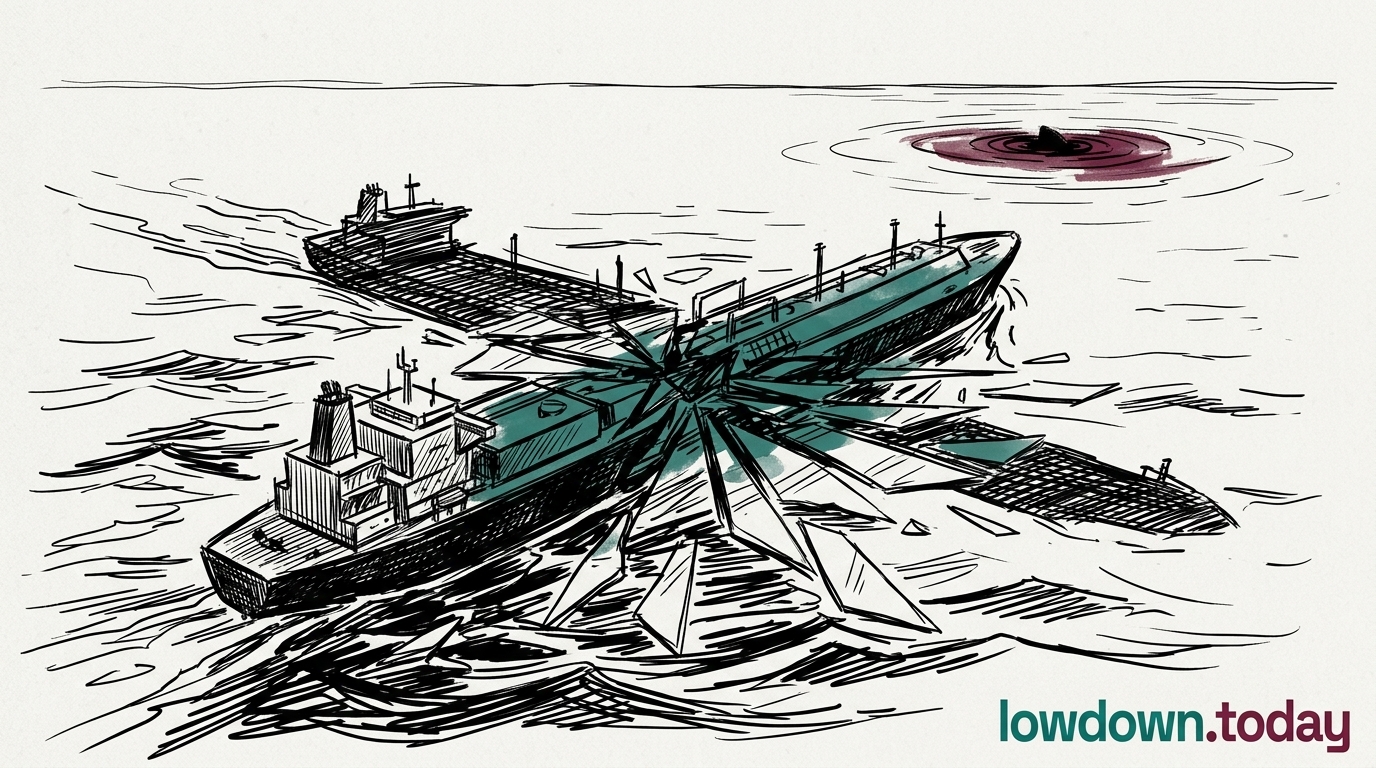
BOTAS mixes Russian, Azeri and Iranian molecules into a 'Turkish blend' and routes it through Kipi, the Greek-Turkish crossing that lacks the origin checks applied elsewhere.

ConflictDeveloping

BOTAS, the Turkish state gas importer, mixes Russian, Azerbaijani and Iranian molecules and markets the result as a non-Russian "Turkish blend", and the Kipi entry point on the Greek-Turkish border lacks the rebuttable-presumption origin documentation applied at stricter crossings⁠1. A rebuttable presumption requires the importer to prove the gas is not Russian; where the requirement is absent, partly-Russian blend can enter the EU as Azeri or Iranian product and flow onward into Central Europe.

This is the physical counterpart to the legal carve-outs confirmed in the regulation's text. Where the long-term exemptions let Russian pipeline gas keep flowing on paper, Kipi is the route by which short-term Russian molecules keep flowing in practice. The two leaks operate at different layers of the same ban: one written into the statute, the other left open at the customs gate.

EUobserver carried the BOTAS blend account, and it has not surfaced on the price wires⁠2. The market signal that would normally flag a porous border is absent here, which fits the wider read of the deadline as procedural. For a Central European supply desk, the practical takeaway is that the 17 June date does not seal the Kipi channel, and no published basis spread yet prices the blend route as a risk. The enforcement gap sits beneath the price, not in it.

Deep Analysis

In plain English

Turkey buys natural gas from three countries: Russia, Azerbaijan, and Iran. Its state gas company, BOTAS (pronounced 'bo-tash'), mixes those three streams together in its pipeline network. When it exports gas to Europe, it labels the combined blend as 'Turkish-origin' gas. At Kipi, the crossing point on the Greek-Turkish border where this gas enters the EU, Greek customs authorities do not have the tools to test what percentage of the mix is actually Russian. Other EU entry points have a stricter rule: importers must present documents that can be challenged to prove the gas is not Russian. Kipi has no such rule, so the blended gas passes through without any origin check. The result is that some Russian gas molecules are legally entering the EU after the ban, wearing a Turkish label that nobody at the border is required to dispute.

Deep Analysis
Root Causes

The Kipi enforcement gap has two distinct structural roots. First, Kipi is one of the oldest interconnection points between Turkey and Greece, predating the Southern Gas Corridor's commercial opening in 2020. Its metering and documentation infrastructure was designed for bilateral Turkish-Greek gas flows, not for the origin-tracing requirements of a post-2022 sanctions architecture.

Second, BOTAS's blending operation is legal under Turkish commercial law. Turkish domestic gas sourcing requires BOTAS to balance three contracted supply streams (Russia via TurkStream, Azerbaijan via TANAP, Iran via the Iran-Turkey pipeline) against domestic demand. Surplus molecules from any of those streams that exceed domestic needs become available for export as 'Turkish-origin gas', even when the molecular composition is primarily Russian.

The regulatory gap runs deeper than the physical infrastructure: EU Regulation 715/2009 on gas network access conditions, which underpins the ENTSOG network codes applied at Kipi, was designed to govern gas market access and transmission capacity, not supply-origin tracing. The Commission would need a standalone instrument, not an amendment to existing network codes, to close the Kipi gap.

What could happen next?
  • Risk

    ACER's cross-border enforcement powers activating in H2 2026 (ID:4118) may trigger market-abuse investigations at Kipi if BOTAS transactions are reported under the REMIT STOR framework, but jurisdiction over third-country entry points remains legally contested.

    Short term · Suggested
  • Precedent

    Kipi establishes a replicable circumvention template for any third-country blending operation that predates the EU's origin-tracing infrastructure, applicable to future energy import bans on coal, hydrogen, or ammonia.

    Long term · Assessed
  • Consequence

    The BOTAS Turkish blend route reduces the effective volume removed by the 17 June ban by an unmeasured but non-trivial fraction, sustaining partial Russian gas revenue flows that the regulation was designed to terminate.

    Immediate · Assessed
First Reported In

Update #18 · TTF breaks the floor into the import ban

EUobserver· 15 Jun 2026
Read original →
Causes and effects
This Event
BOTAS blend is the gap at the border
Where the regulation's text lets long-term Russian gas keep flowing on paper, the Kipi enforcement gap lets short-term Russian molecules keep flowing in practice.
Different Perspectives
South Korean foreign ministry
Seoul said on 20 October it will withdraw some Kyiv embassy staff, citing no constructive steps from Kyiv since it recalled its ambassador over the disclosure of two North Korean prisoners. A chargé d'affaires and consular staff stay, and Seoul says its aid continues.
Alexander Lukashenko
Lukashenko said on 22 October that talks with the US show progress despite problems, which he said were highlighted with the exchange of political prisoners for the lifting of sanctions. He said Minsk keeps its promises and wants the US to deliver its side in full.
Moldovan government (Daniella Misail-Nichitin)
Moldova has pulled its border guards and customs officers from four crossings on Ukrainian soil after Russian strikes near the border. Interior Minister Daniella Misail-Nichitin said Chisinau is weighing moving Ukrainian checkpoints onto Moldovan territory.
Péter Magyar
Péter Magyar
Magyar told RTL that Ukrainian maize may cross Hungary in sealed trains bound for Western Europe. He set one condition: the cargo must only transit the country.
Donald Tusk
Donald Tusk
Tusk said Warsaw would seek an explanation from Kyiv for the drone's route across Poland. He said Poland allows no operations over its territory without its explicit consent.
Mindaugas Sinkevičius
Lithuania's prime minister said the Ukrainian drone that exploded in Pasvalys district on 18 October carried explosives and entered from Poland through the Schengen zone. Earlier drones over Lithuania had come from Belarus, not through allied airspace.

Written with AI from Lowdown's published reporting. Not individually reviewed by an editor. Editorial standards.