Kipi
Greek-Turkish gas border crossing; the physical gap in EU pipeline ban enforcement.
Last refreshed: 15 June 2026 · Appears in 1 active topic
Why does the Kipi border crossing let Russian gas into the EU despite the import ban?
Timeline for Kipi
Created short-term supply uncertainty as the ban bound at the Kipi entry margin, driving CEGH premium
European Energy Markets: CEGH pays a one-day ban premiumAccepted blended Turkish-origin gas without rebuttable-presumption origin checks, enabling Russian molecule entry
European Energy Markets: BOTAS blend is the gap at the borderBackground
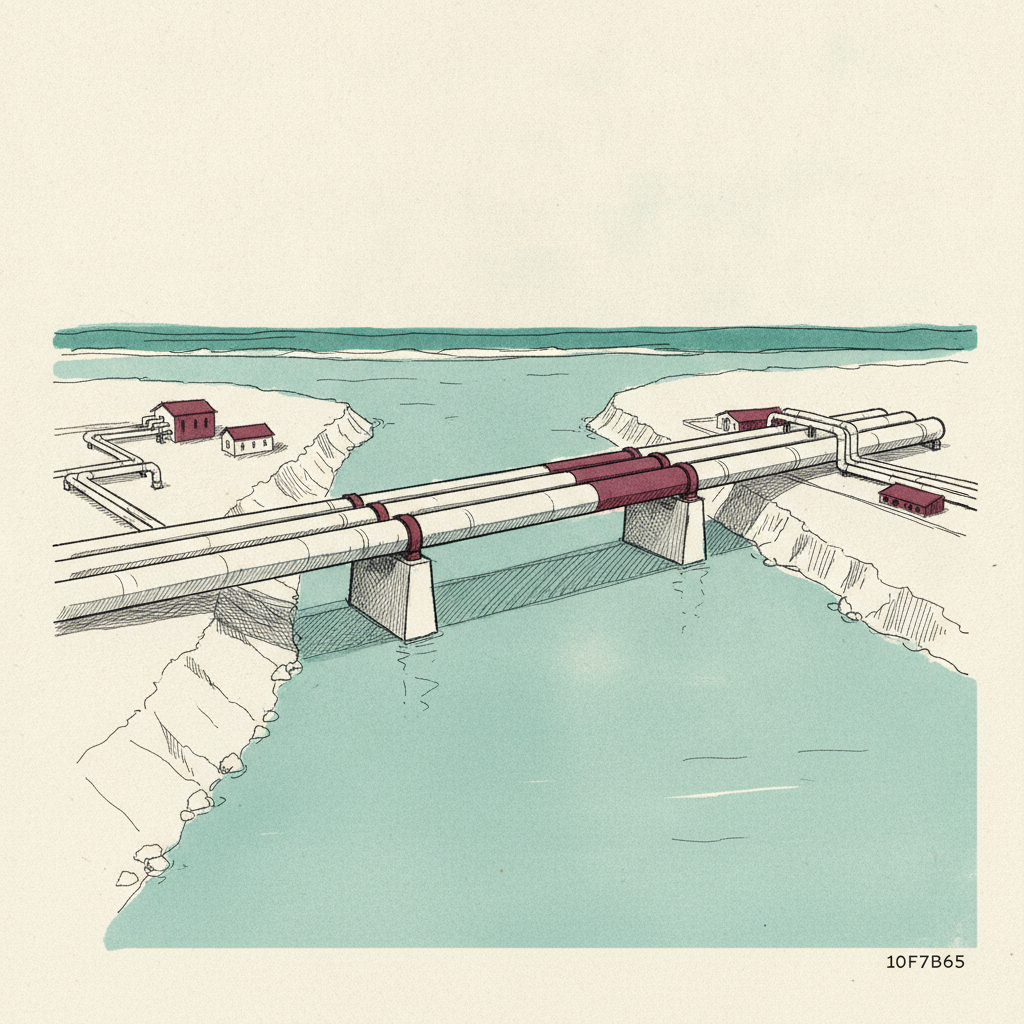
Kipi is a natural gas interconnection and border-crossing point on the Greek-Turkish frontier in the Evros region of northeastern Greece. It is the primary entry point through which gas transported by BOTAS, Turkey's state gas importer, crosses into the EU via the Greek transmission grid and onwards to Central and Southern European markets. The interconnector at Kipi links the Turkish National Grid to the Greek high-pressure transmission network operated by DESFA (the Hellenic Gas Transmission System Operator).
In the context of the EU's Regulation (EU) 2026/261 pipeline ban, Kipi has been identified as a structural enforcement gap. The regulation requires that non-exempt gas of Russian origin either go through prior authorisation or be blocked at the border; this mechanism rests on the rebuttable presumption that gas of undocumented origin is treated as Russian until proved otherwise. At Kipi, the infrastructure and customs documentation framework to apply that rebuttable presumption is reportedly absent, unlike at stricter entry points elsewhere on the EU's gas border. Gas that BOTAS has commingled from Russian, Azerbaijani and Iranian sources therefore enters the EU at Kipi without origin documentation sufficient to trigger the ban's enforcement mechanism.
Kipi is significant as the physical counterpart to the regulation's legal exemptions: where the long-term contract carve-out is the paper reason most TurkStream flow continues, Kipi is the infrastructure reason short-term Russian molecules can still enter in practice. The point's enforcement gap requires a bilateral agreement between Greece and Turkey, or new EU customs documentation requirements, to close; neither of which is in force as of the 17 June binding date.
What is the Kipi gas entry point and why does it matter for the EU ban?
Where exactly is Kipi in Greece?
How does gas get from Turkey into Greece and then the rest of Europe?
