Skip to content
Briefings are running a touch slower this week while we rebuild the foundations.See roadmap
Russia-Ukraine War 2026
9JUN

ZNPP Day 50: nuclear alert sensors destroyed

3 min read
11:54UTC

A drone strike on 3 May destroyed meteorological monitoring equipment at the External Radiation Control Laboratory four kilometres from the Zaporizhzhia Nuclear Power Plant, disabling the first-alert sensor layer for any nuclear emergency as the main 750 kV feeder reaches 50 days disconnected.

ConflictDeveloping
Key takeaway

The 3 May ERCL drone strike disabled the nuclear site's first-alert sensor layer at the 50-day disconnection milestone.

The Zaporizhzhia Nuclear Power Plant (ZNPP)'s main 750 kV Dniprovska feeder has been disconnected for 50 days as of 13 May 2026, running on its sole remaining backup, the 330 kV Ferosplavna-1 line 1. IAEA (International Atomic Energy Agency) Director General Rafael Grossi is still negotiating a sixth repair ceasefire for the main feeder; no agreement has been reached 2.

The sequence that produced this milestone began at 18 days on 10 April , extended to 23 days and a 13th total power loss on 14 April , then the Ferosplavna-1 feeder itself was damaged 1.8 kilometres from the plant on 22 April . Each mission to assess the substations has had to be renegotiated with both sides while the infrastructure keeps taking damage.

The development that distinguishes Day 50 from Day 44 is the 3 May drone strike on the External Radiation Control Laboratory (ERCL) at Enerhodar, four kilometres from the plant. The strike destroyed meteorological equipment used for environmental nuclear emergency monitoring 3. The ERCL is the environmental perimeter layer: the system that provides Enerhodar residents and the IAEA with real-time external dose rate data if internal containment fails. Its loss matters most in a scenario where the primary concern shifts from reactor criticality (the plant is in cold shutdown, so reactor criticality is not the immediate risk) to environmental contamination from a spent-fuel pool or cooling system event. On 5 May, more than 20 drones were detected over Enerhodar, with one reportedly striking the off-site emergency centre building 4.

IAEA Update 349 (7 May) documents the ERCL strike as a discrete escalation in the infrastructure degradation sequence. A radiological event with the ERCL sensors down would not trigger a first-alert reading. That information vacuum is the qualitative change Day 50 carries that earlier disconnection milestones did not.

Deep Analysis

In plain English

Zaporizhzhia Nuclear Power Plant is Europe's largest nuclear plant. It needs a constant supply of external electricity to keep its cooling systems running, even when the reactors themselves are shut down. Without cooling, they can overheat and potentially release radiation. The plant's main power line has been cut off for 50 days. ZNPP now runs on a single 330 kV backup cable called Ferosplavna-1. On 3 May, a drone destroyed the equipment that monitors for radiation leaks near the plant, the sensor system that would give the first warning if something went wrong. The IAEA, the UN's nuclear safety body, has been trying for months to get both sides to agree to let engineers fix the main line. No agreement has been reached. Six repair windows have been attempted; none succeeded.

Deep Analysis
Root Causes

ZNPP's precarious position traces to three structural conditions. First, the plant was designed for a peacetime grid architecture; its redundant power pathways all converge on infrastructure within the conflict zone, meaning military action against any single node degrades the entire safety architecture.

Second, the IAEA's lack of enforcement authority means its monitoring function cannot compel either party to cease targeting infrastructure near the plant. Russia's refusal to agree a sixth repair ceasefire, despite five previous windows, suggests the denial of repair opportunity is deliberate posture rather than logistical oversight.

What could happen next?
  • Risk

    If Ferosplavna-1 is damaged before the main 750 kV line is repaired, ZNPP's sole external power source would be severed, triggering immediate activation of diesel generators whose sustained-operation record in summer conditions has not been publicly verified.

  • Consequence

    With environmental monitoring disabled at the ERCL, any radiation release below the threshold detectable by more distant monitoring stations would go undetected for longer, compressing the emergency response window.

First Reported In

Update #16 · 800 drones, three ceasefires, one cliff

IAEA (via GlobalSecurity)· 13 May 2026
Read original
Different Perspectives
North Korea / DPRK
North Korea / DPRK
ISW confirmed the first mounting of DPRK Type-75 MLRS on Russian autonomous UGVs near Kharkiv on 7 June, the latest step in a supply axis that escalated from shells in 2023 to troops in 2024. Pyongyang gains live battlefield data on its ordnance and on Russia's uncrewed-systems programme.
IAEA / Rafael Grossi
Grossi confirmed Chornobyl structural damage with nuclear material metres away and could not attribute the ZNPP 15-hour blackout during the agreed repair window. Six ceasefires brokered and broken at ZNPP, compounded by Rosatom's May attack on IAEA neutrality, have eroded his ability to enforce the windows he negotiates.
Emmanuel Macron / France
Macron co-signed the E3 framework whose line-of-contact baseline marks Europe's first formal acceptance that 1991 borders are not the opening position. France's role carries weight because Macron had previously proposed a European force for Ukraine, and the framework's multinational force point is the vehicle for that.
Keir Starmer / E3
Keir Starmer / E3
Starmer, Macron and Merz met Zelenskyy on 7 June and backed a five-point framework taking the line of contact as the talks baseline, conceding roughly one fifth of Ukraine in exchange for a multinational force and frozen assets. With US mediation ended, the NATO Ankara summit on 7-8 July is the next test.
Vladimir Putin / Kremlin
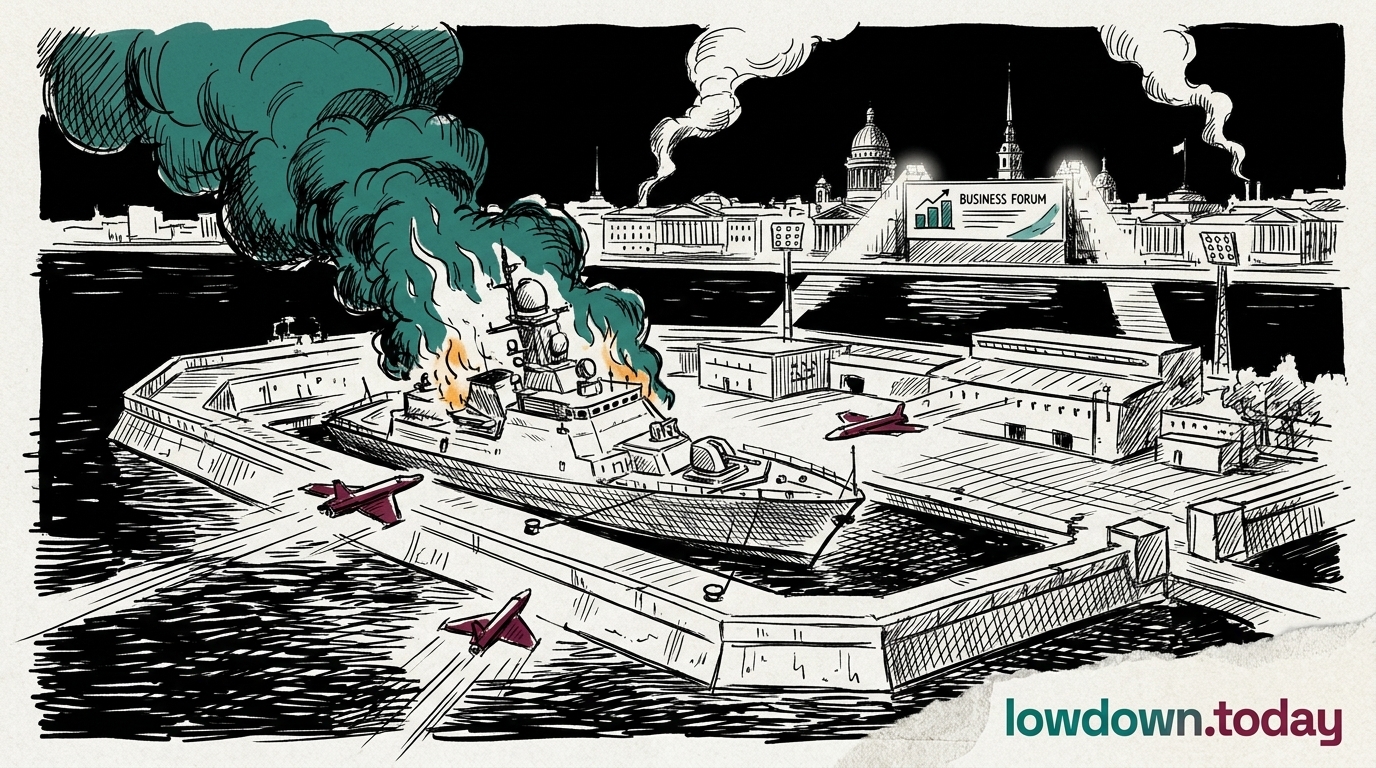
Putin used SPIEF to reject Zelenskyy's summit letter, citing 'elements of rudeness', and repeated the pre-agreed treaty precondition that has frozen every diplomatic round since May. The SPIEF platform's message of investor confidence was punctured by naval fires visible from St Petersburg, which Moscow declined to dispute in scale.
Ukraine / Unmanned Systems Forces
Commander Brovdi confirmed USF units tracked and set fire to Boikyi at Kronstadt, while Code 9.2 struck the Chonhar Bridge the following day. Ukraine is sequencing strikes for rear-area interdiction and political timing rather than ground gains, trading the Baltic Fleet's home base for the logistics squeeze Russia cannot absorb without rationing its own occupied territory.