Skip to content
You can now search across every topic, entity and event.What's new
Russia-Ukraine War 2026
9JUN

Drone strike shuts Kapotnya near Moscow

3 min read
11:54UTC

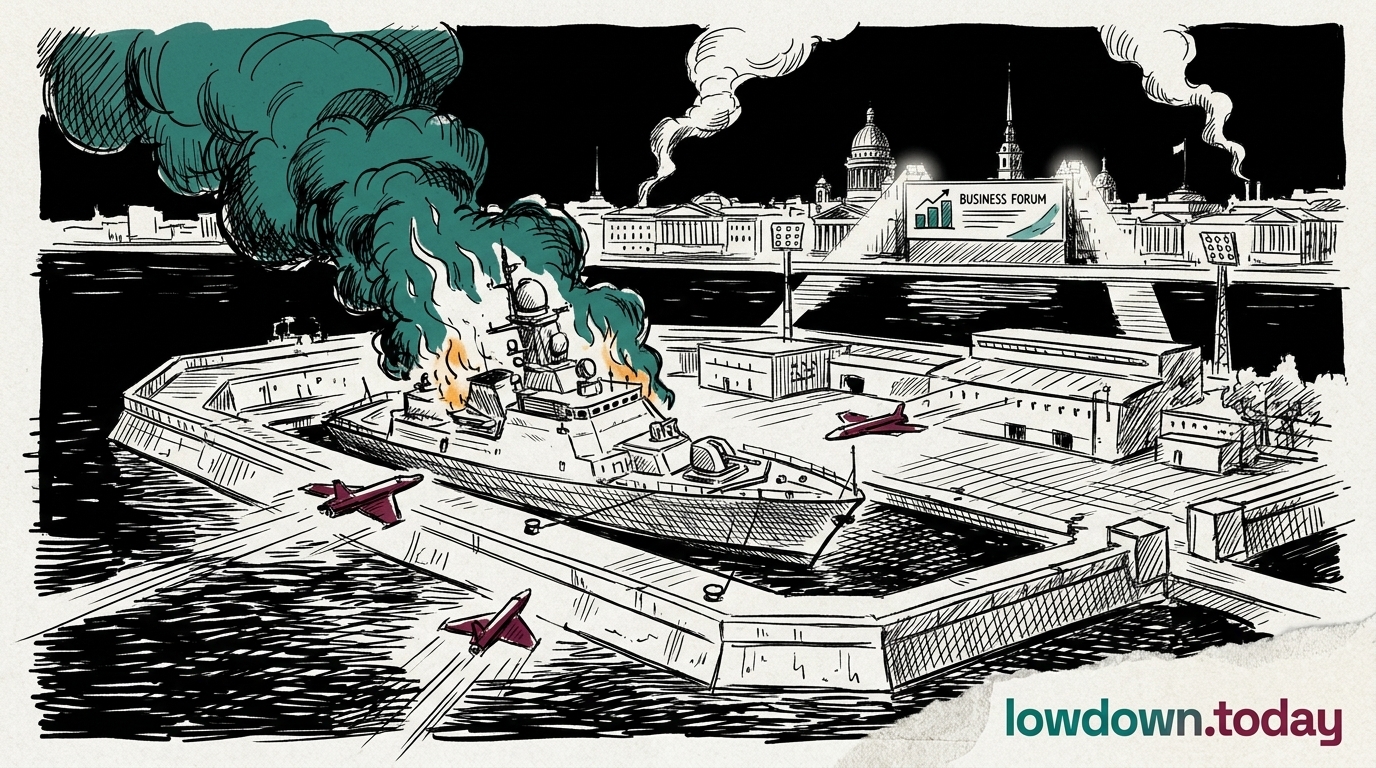
Ukraine's drones shut Moscow's Kapotnya refinery on 18 June, the plant that supplies 40% of the capital region's fuel, and Russian air defences scrambled 555 drones in response.

ConflictDeveloping
Key takeaway

Striking a refinery ten miles from the Kremlin pushed fuel rationing into Russia proper.

Ukrainian drones struck the Kapotnya refinery in south-east Moscow on 18 June, forcing a shutdown at the plant that supplies about 40% of the Moscow region's fuel 1. Russian air defences met the attack by scrambling roughly 555 drones, the saturation response of a capital unused to deep strikes. Kapotnya sits ten miles from the Kremlin, yet the consequences of its halt are now showing up thousands of miles away.

The refinery matters for what it makes, not where it sits. Forecourts are filled by refining throughput, the rate at which crude is turned into petrol and diesel, and not by crude export volume. Knock out a plant carrying two-fifths of a region's supply and the shortage spreads down the distribution chain. Crimean drivers had already been capped at 20 litres a week after the Chonhar bridge strike ; within days of Kapotnya, rationing crossed into Russia proper.

The sanctions plumbing that sets the crude price, the lapsed waiver and the shadow-fleet listings, belongs to a separate ledger and ran in parallel . What changed on 18 June was narrower and more visible: Russian motorists, not Russian budget lines, felt the strike. Through 2025, RUSI-cited analysis had put 130 Ukrainian oil strikes at a 6% export cut, a rounding error against revenue. Kapotnya converted that marginal nuisance into a queue at the pump.

Deep Analysis

In plain English

Russia buys and sells crude oil, but what fills petrol stations is refined fuel, produced at refineries that turn crude into petrol and diesel. Ukraine struck Kapotnya, the refinery closest to Moscow, on 18 June. That single plant supplies about 40% of the fuel used by people in and around Moscow. When Kapotnya stopped working, there was not enough petrol to go round, so regional governments started limiting how much each driver could buy. The shortage has nothing to do with Russia running out of oil underground: it is about the factories that convert oil into fuel being hit, not the oil fields themselves.

Deep Analysis
Root Causes

Russia's domestic fuel supply depends on a small number of large refineries serving regional distribution networks. Kapotnya's concentration of 40% of Moscow-region refining in a single Soviet-era plant reflects a planning structure that was never redesigned for a threat from the east. No meaningful dispersal of refining capacity occurred after 2014.

The 555-drone air-defence response to the 18 June strike demonstrates a second structural cause: Russia's layered air-defence system was designed around long-range ballistic threats, not low-altitude drone swarms operating in high volume. Scrambling 555 drones to intercept the attacking force is consistent with a saturated point-defence model that trades interception rate for magazine depth.

Escalation

Escalatory: striking a refinery ten miles from the Kremlin signals that no fixed infrastructure within Russia's European territory is beyond reach. The 555-drone air-defence response indicates Moscow considers the threat serious enough to exhaust point-defence resources over a single raid.

What could happen next?
  • Consequence

    Russia will face pressure to extend or expand its gasoline export ban as domestic rationing spreads beyond 15 regions.

    Short term · Assessed
  • Risk

    Sustained Kapotnya outage will deepen regional fuel shortages in Moscow Oblast, potentially requiring emergency reserve releases that draw down strategic stockpiles.

    Immediate · Reported
  • Precedent

    A strike within 10 miles of the Kremlin against critical civilian infrastructure establishes a new threshold for Ukrainian drone operations inside Russia.

    Long term · Assessed
First Reported In

Update #21 · Ukraine's drones reach Russia's petrol pumps

Kyiv Independent· 24 Jun 2026
Read original
Different Perspectives
IAEA (Rafael Grossi)
IAEA inspectors logged Zaporizhzhia's 22nd loss of off-site power, ten of them in the last three months, after a thunderstorm knocked out the plant's sole surviving backup line. Grossi reads the accelerating frequency, not any single outage, as the safety signal now that the plant's redundancy is exhausted.
United States (Treasury/OFAC)
Washington has let general licence 134C, its Russian crude waiver, lapse for 36 days with no successor, the longest gap of the war. Treasury has not said whether the non-renewal reflects deliberate policy or administrative delay, leaving buyers to price in compliance risk rather than wait for clarity.
Slovakia
Slovakia
Slovakia dropped its hold-out on the EU's 21st sanctions package only after winning a 2028 guarantee phasing out Russian gas, the exact pipeline dependency, roughly 80% of its crude supply, that gave it leverage. Bratislava's climbdown clears the package but leaves the same single-veto mechanism intact for the next round.
Russia (Kremlin and general staff)
General staff chief Gerasimov claimed Donetsk captures on 18 July that ISW says it cannot corroborate, extending a pattern ISW clocked at a 5:1 exaggeration ratio earlier this year. Moscow is conditioning its public for a possible autumn mobilisation after September's Duma elections rather than acknowledging the front has stalled.
Ukraine (Zelenskyy government)
Zelenskyy dismissed his commander-in-chief, defence minister and chief of general staff within eight days, replacing Syrskyi with Drapatyi and Hnatov with Skybiuk as protesters demanded Syrskyi go and Fedorov return. Kyiv frames the sweep as a bet on manoeuvre capacity ahead of a feared Russian autumn surge, not the disarray critics read into three changes in a week.
The United Kingdom
The United Kingdom
Starmer pledged £300 million in Kyiv on 16 July toward Ukraine's Gripen E squadron, adding to the PURL expansion Trump and Rutte had announced two days earlier. London is paying into a scheme built around a shortfall NATO's own published $4bn-plus pledge does not close against Zelenskyy's roughly $15bn stated need.