Skip to content
Briefings are running a touch slower this week while we rebuild the foundations.See roadmap
Russia-Ukraine War 2026
1JUN

Russia fires 324 drones at Ukraine post-truce

3 min read
10:39UTC

The barrage that followed the end of Putin's Easter ceasefire killed five in Dnipro and a child in Cherkasy. Kyiv's tempo data shows the pause moved no operational needle.

ConflictDeveloping
Key takeaway

A ceremonial truce changed the cable television footage, not the drone math.

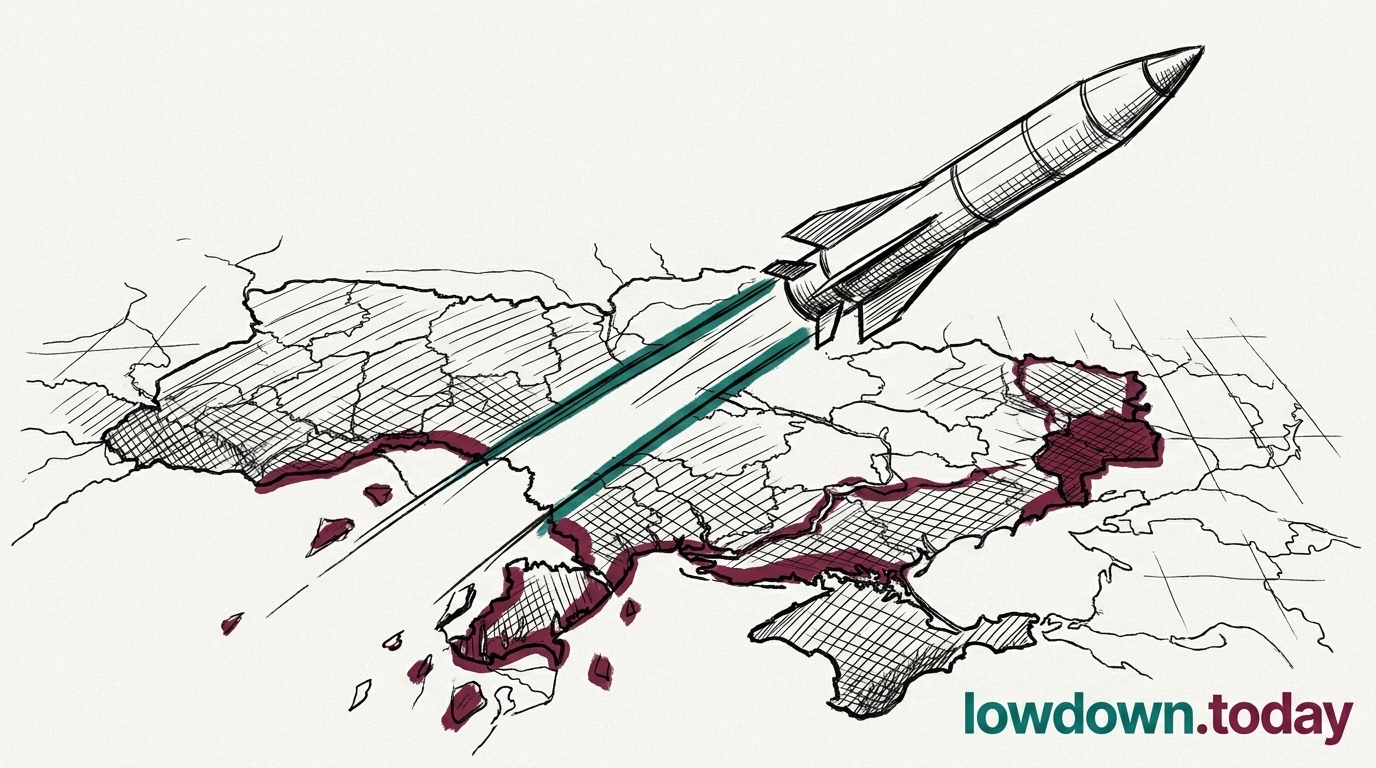
Russia launched 324 drones at Ukraine overnight on 14-15 April, killing five people in Dnipro, a child in Cherkasy, and others in Zaporizhzhia city. The barrage followed the expiry of Vladimir Putin's 32-hour Easter ceasefire , which ended just before the night-cycle began. Violation tallies on each side for the Ceasefire window itself are covered in event 12.

The 324-drone figure is the operational signal. It is a baseline tempo night, similar in scale to strikes on either side of the truce window. Novaya Gazeta Europe, a Russian exile outlet, read the compliance pattern as asymmetric by design: Russia did hold back its long-range arsenal during the pause, giving rear-area cities a genuine respite, though short-range fire carried on at the front. The 14-15 April barrage restored the long-range component the window had paused.

Kremlin spokesperson Dmitry Peskov said any extension would require Ukraine to accept Russia's "well-known" terms, which are the territorial demands Kyiv has consistently rejected. The decree achieved what it was issued to do for a day and a half: public positioning around Orthodox Easter, a closed window on Hungarian polling day, and no commitment to an extension. The overnight strike on Dnipro, Cherkasy and Zaporizhzhia confirmed the pattern. The pause was message; the strike tempo is mechanism.

Deep Analysis

In plain English

Russia launched 324 drones overnight on 14-15 April, hitting three Ukrainian cities and killing civilians including a child. This attack came the night after a 32-hour ceasefire called by Vladimir Putin for the Orthodox Easter holiday ended. During the ceasefire itself, Russia's drone and missile launches paused, but ground fighting continued and Ukraine's military recorded over 10,000 individual violations, mostly artillery fire and small-unit attacks. Russia counted nearly 2,000 Ukrainian violations from its side. The night after the ceasefire ended, Russia returned immediately to its standard attack tempo, indicating the pause was not the beginning of any sustained de-escalation.

Deep Analysis
Root Causes

The 10,721-to-1,971 violation count disparity does not necessarily indicate bad faith by one party, the two sides use different methodological definitions of a ceasefire violation, and Russian MoD counts only Ukrainian fire against Russian-held positions while the Ukrainian General Staff counts all incoming fire. The more structurally revealing figure is the 119 ground assaults Ukraine logged during the 32-hour window, at roughly the same daily rate as the preceding week.

Russia's tactical incentive to accept temporary drone restraint but maintain ground pressure is consistent with the broader offensive strategy: drones are a siege instrument targeting civilian morale and infrastructure, while ground assaults lock in territorial micro-gains that accumulate regardless of ceasefire optics.

What could happen next?
  • Consequence

    The 10,721 ceasefire violation count establishes a reference figure that Kyiv will use in any future ceasefire verification negotiation to argue for third-party monitoring requirements.

  • Risk

    Recurring ceasefire-violation counts without enforcement consequences reduce the operational credibility of any future ceasefire proposal, making front-line commanders on both sides less likely to stand down unilaterally.

First Reported In

Update #13 · Treasury kills the Russian crude waiver

Al Jazeera· 16 Apr 2026
Read original
Different Perspectives
China
China
Beijing has not publicly commented on the dual Oreshnik launch. China's declared position of urging restraint and dialogue sits awkwardly alongside its continued economic ties with Russia; the weapons escalation tests whether Beijing's neutrality framing can survive a European IRBM normalisation event.
IAEA
IAEA
Director General Grossi condemned the ZNPP reactor-6 turbine building strike and stated "there should be no attack of any kind from or against the plant." The agency confirmed normal radiation levels but has not resolved attribution; Rosatom CEO Likachev warned the region is "one step closer to an incident."
Turkey
Turkey
Ankara hosted Istanbul Round 2 at Ciragan Palace on 2 June and secured a 1,200-for-1,200 prisoner exchange, consolidating Turkey as the war's sole diplomatic venue after Rubio confirmed US mediation has ended. Erdogan's leverage over both parties grows with each round.
European Union
European Union
EU Ambassador Mathernova answered Lavrov's evacuation demand with "We stay in Kyiv. We stay with Ukraine." The Verkhovna Rada approved the EUR 90bn EU loan on 28 May; the EUR 9.1bn first tranche, the EU's first explicit defence-procurement financing, arrives mid-June.
United States
United States
Rubio declared US mediation stagnated on 22 May and confirmed no talks were occurring, then received Lavrov's evacuation demand three days later without ordering embassy drawdown. Washington's leverage now runs through the GL 134C sanctions cliff on 17 June rather than any active diplomatic channel.
Ukraine
Ukraine
Zelenskyy called Russia's 2-3 day ceasefire counter-offer at Istanbul Round 2 "shortsighted" and submitted a full peace memorandum covering EU membership, international guarantees, phased sanctions relief and frozen-asset reparations. Kyiv's position is that a partial ceasefire freeze aids Russian reconstitution; only an all-domain 30-day pause is acceptable.
