Skip to content
Briefings are running a touch slower this week while we rebuild the foundations.See roadmap
Russia-Ukraine War 2026
1JUN

Russia strips Victory Day of hardware

3 min read
10:39UTC

Russia's Ministry of Defence stripped tanks, Iskander launchers and Yars carriers from the 9 May Victory Day parade, the first foot-only column on Tverskaya Street in roughly twenty years.

ConflictDeveloping
Key takeaway

Russia is hiding its hardware on its biggest day because Ukraine can now hit it in central Moscow.

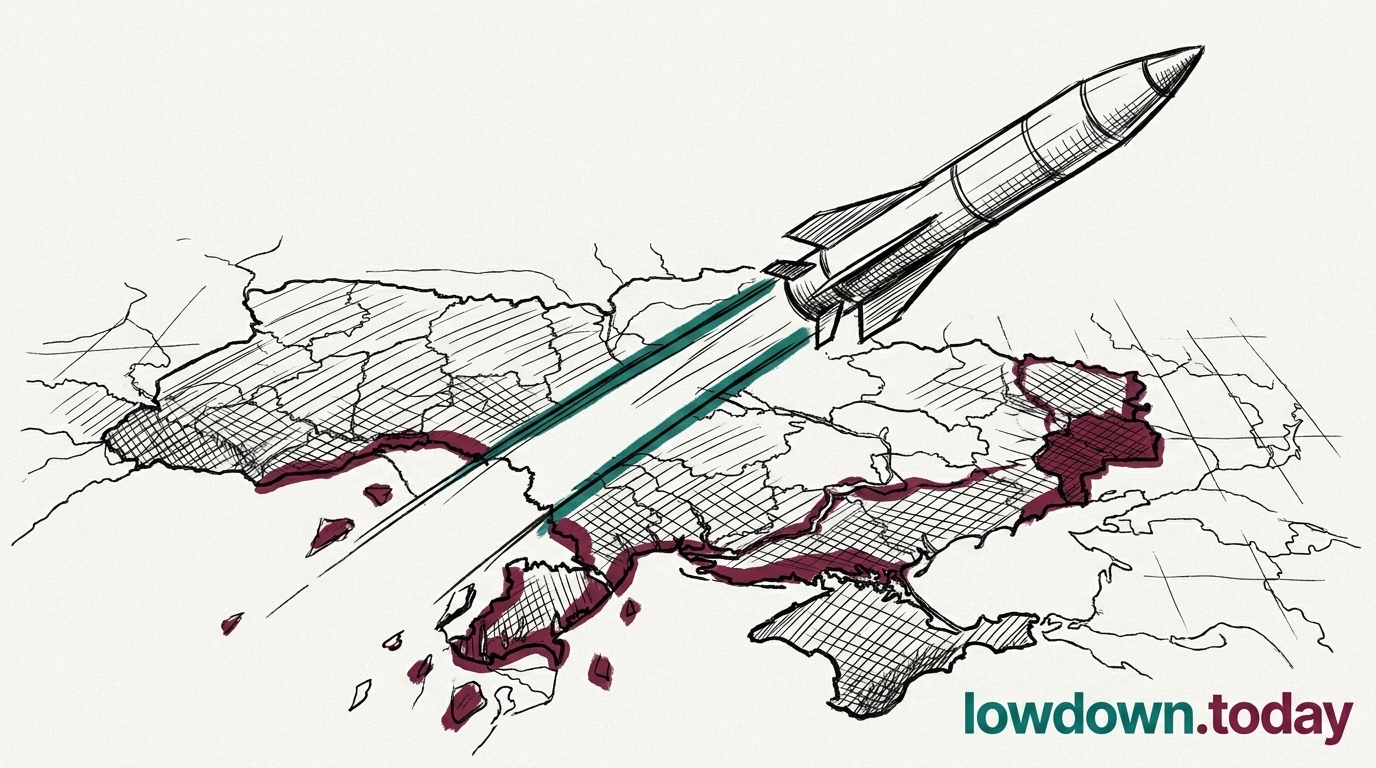
On 29 April Russia's Ministry of Defence announced that the 9 May Victory Day parade on Red Square would feature troops marching on foot but no tanks, missile launchers, or armoured vehicles. Iskander short-range ballistic launchers and Yars intercontinental carriers, both standard fixtures, will not roll down Tverskaya Street. It is the first hardware-free Red Square parade in roughly twenty years.

Victory Day, marking the Soviet defeat of Nazi Germany in 1945, is the central choreographed event of the Russian state calendar. The hardware column has been the parade's visual signature since the Soviet era and was reinstated under Vladimir Putin in 2008. Russian milbloggers and Western analysts attributed the change directly to Ukraine drone forces and the deep-strike reach now extending into Moscow oblast. An Atlantic Council analyst described the parade format as one that 'once projected power; now it reveals Russia's weakness'. Ukraine's deep-strike doctrine is detailed elsewhere in this briefing alongside the 2-3 May drone-exchange reversal.

The Federal Security Service (FSB) cannot guarantee static air defence over the parade route while a hardware column moves at three kilometres per hour. A drone striking an empty truck cab is a security incident; a drone striking an Iskander launcher in front of the Kremlin wall is a state-television problem the Kremlin cannot edit out.

The parade decision sits inside the same week Putin requested a parade-day truce from Trump, the third commemorative-truce gesture of 2026 after the Easter decree and its violation-heavy expiry and the 324-drone post-Easter barrage . The hardware-strip is the first physical, datable concession that Ukraine's deep-strike campaign has reshaped Russian domestic ceremony.

Deep Analysis

In plain English

Russia holds a huge military parade every year on 9 May to celebrate the Soviet Union's victory over Nazi Germany in World War Two. For the past twenty years, that parade has featured tanks, missile launchers, and other heavy weapons rolling through Red Square in Moscow. This year Russia announced none of that hardware will appear, only soldiers marching on foot. The reason, according to Western defence analysts and Russia's own military bloggers, is that Ukraine now has drones capable of reaching Moscow. Russia's air defences cannot reliably protect a column of expensive tanks and missile systems rolling through the city centre, so the army chose not to risk them. It is the first concrete change to Russian domestic behaviour that can be directly attributed to Ukraine's long-range strike campaign.

Deep Analysis
Root Causes

Ukraine's long-range FPV and loitering munition programme crossed a threshold in early 2026 that changed the operational calculus for central Moscow. The MoD's security perimeter for the Red Square route runs roughly 80 km from the city centre; Shahed-class Ukrainian drones with the 2025 guidance upgrade have a confirmed strike range that covers that radius from launch points inside Ukrainian-controlled territory.

The second structural cause is the depletion of Russian short-range air-defence assets at the parade perimeter. Pantsir and Tor systems that would normally form the parade's inner-ring defence layer have been redistributed to the front and to oil infrastructure protection since late 2024. The Ministry of Defence cannot credibly guarantee hardware safety over a Red Square column without pulling systems back from operationally critical positions, and it chose not to.

Russian milbloggers have been publicly attributing the hardware decision to Ukraine's reach since mid-April, meaning any attempt to move tanks to the capital now would be read domestically as a response to Ukrainian pressure rather than as a confidence display. The MoD's information environment has no clean path back to the equipment-column format while that attribution is live in the Russian-language blogosphere.

What could happen next?
  • Consequence

    The parade decision hands Ukraine's communications teams a datable, first-party-confirmed data point for the argument that deep-strike reach is changing Russian domestic behaviour beyond the battlefield.

    Immediate · 0.88
  • Risk

    If the Victory Day ceasefire holds and is seen as enabling a safe parade, the Kremlin may claim retroactively that the hardware decision was strategic rather than security-driven, muddying the evidentiary record.

    Short term · 0.72
  • Precedent

    The 2026 hardware-free parade sets a baseline: future parades stripped of equipment will be read as evidence of ongoing strike vulnerability rather than tradition, regardless of official framing.

    Medium term · 0.85
First Reported In

Update #15 · Hardware-free parade; crude waiver lives on

Kyiv Independent· 3 May 2026
Read original
Causes and effects
This Event
Russia strips Victory Day of hardware
First time in two decades a Russian leadership has visibly conceded a Victory Day staging ground to an active adversary's reach.
Different Perspectives
China
China
Beijing has not publicly commented on the dual Oreshnik launch. China's declared position of urging restraint and dialogue sits awkwardly alongside its continued economic ties with Russia; the weapons escalation tests whether Beijing's neutrality framing can survive a European IRBM normalisation event.
IAEA
IAEA
Director General Grossi condemned the ZNPP reactor-6 turbine building strike and stated "there should be no attack of any kind from or against the plant." The agency confirmed normal radiation levels but has not resolved attribution; Rosatom CEO Likachev warned the region is "one step closer to an incident."
Turkey
Turkey
Ankara hosted Istanbul Round 2 at Ciragan Palace on 2 June and secured a 1,200-for-1,200 prisoner exchange, consolidating Turkey as the war's sole diplomatic venue after Rubio confirmed US mediation has ended. Erdogan's leverage over both parties grows with each round.
European Union
European Union
EU Ambassador Mathernova answered Lavrov's evacuation demand with "We stay in Kyiv. We stay with Ukraine." The Verkhovna Rada approved the EUR 90bn EU loan on 28 May; the EUR 9.1bn first tranche, the EU's first explicit defence-procurement financing, arrives mid-June.
United States
United States
Rubio declared US mediation stagnated on 22 May and confirmed no talks were occurring, then received Lavrov's evacuation demand three days later without ordering embassy drawdown. Washington's leverage now runs through the GL 134C sanctions cliff on 17 June rather than any active diplomatic channel.
Ukraine
Ukraine
Zelenskyy called Russia's 2-3 day ceasefire counter-offer at Istanbul Round 2 "shortsighted" and submitted a full peace memorandum covering EU membership, international guarantees, phased sanctions relief and frozen-asset reparations. Kyiv's position is that a partial ceasefire freeze aids Russian reconstitution; only an all-domain 30-day pause is acceptable.
