Skip to content
Briefings are running a touch slower this week while we rebuild the foundations.See roadmap
Russia-Ukraine War 2026
1JUN

Russia claims Luhansk 'liberated'

2 min read
10:39UTC

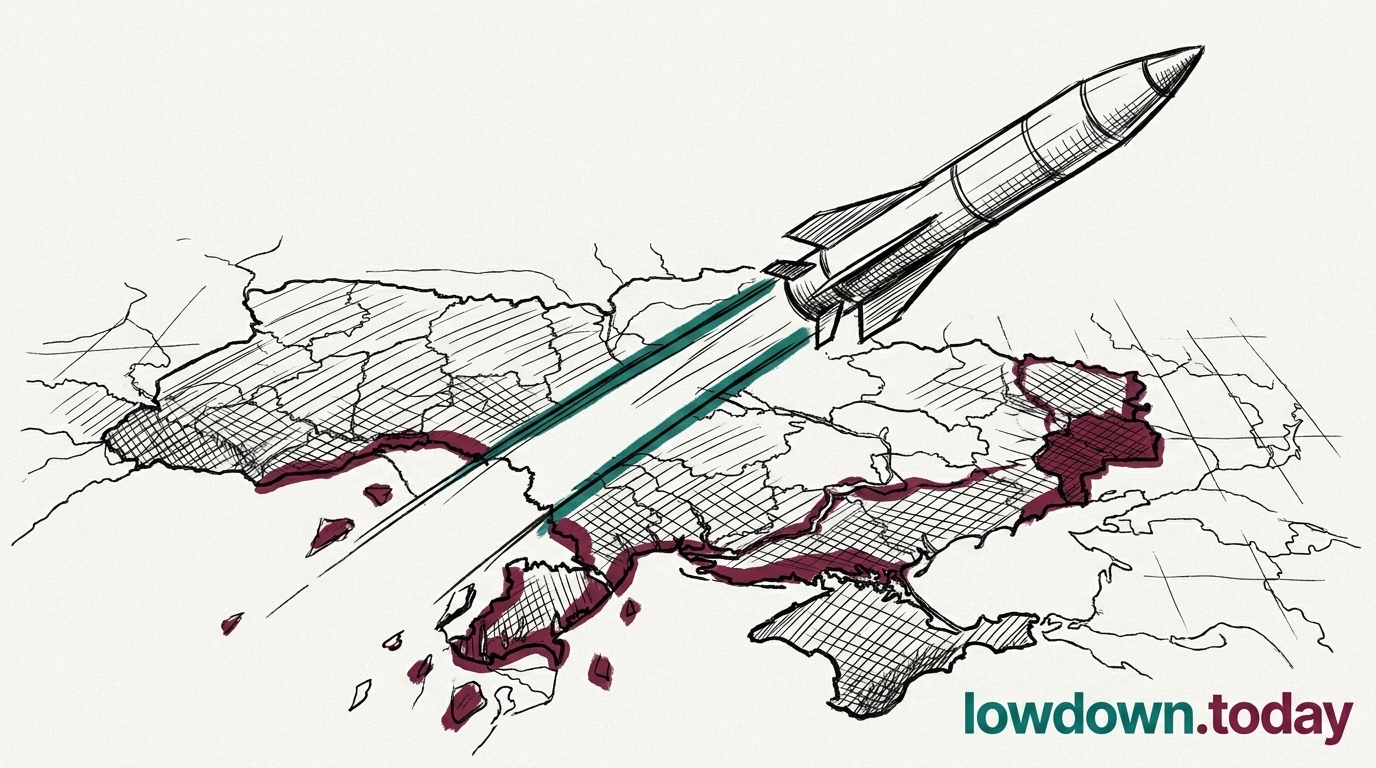
Moscow declared Luhansk 'liberated' while telling Washington it would seize all of Donbas within two months, a timeline battlefield data contradicts.

ConflictDeveloping
Key takeaway

Russia's two-month Donbas deadline is a diplomatic tool, not a military forecast.

The Russian Ministry of Defence announced "completion of the liberation of the Luhansk People's Republic" on 1 April 1. More than 99% of Luhansk Oblast had been under Russian control since the 2022 annexation. The claim is marginal, not operational.

The same day, Russia communicated through US intermediaries that it intends to seize all of Donbas within two months, with peace terms hardening if Ukraine does not withdraw. Zelenskyy disclosed this ahead of a 1 April video call with US envoys Steve Witkoff and Jared Kushner. "I believe Russia will not be able to occupy all of Donbas within two months," he told journalists 2. ISW's battlefield assessment supports his scepticism: daily engagements have dropped from their opening peak of 163 to 120 , and the 3rd Combined Arms Army has stalled east of Sloviansk. The timeline reads less as a military forecast and more as a pressure instrument aimed at Washington.

Deep Analysis

In plain English

Luhansk is a region of eastern Ukraine that Russia has controlled almost entirely since 2022. Russia's 1 April announcement claiming it had 'liberated' the area is largely symbolic — there was almost nothing left to capture. More significant is Russia's separate message, sent through American intermediaries, that it intends to seize all of the Donbas region within two months. Donbas includes both Luhansk and Donetsk oblasts. Russia already controls most of Donetsk but not all of it. Ukraine's president dismissed the two-month claim, and the evidence supports him. Russia's offensive has just stalled at Ukraine's main defensive line. Whether the deadline is a genuine military forecast or a bargaining chip in negotiations with Washington is the key unanswered question.

Deep Analysis
Root Causes

Russia's Luhansk announcement is largely symbolic, confirming control of territory already held since 2022.

The two-month Donbas ultimatum serves three purposes: it tests US willingness to pressure Ukraine; it creates a deadline that can be cited if negotiations fail; and it positions Russia as the party with a clear territorial objective rather than an aggressor with unlimited aims, which matters for Global South fence-sitters.

Escalation

The Luhansk 'liberation' claim is marginal militarily, but the Donbas two-month ultimatum, if taken seriously by Washington, creates diplomatic pressure for Ukraine to accept a ceasefire on terms that leave Russia controlling Luhansk and most of Donetsk. The mechanism is psychological, not operational.

What could happen next?
  • Risk

    Russia's two-month deadline, if accepted by Washington as a genuine red line, may pressure the US to push Ukraine toward territorial concessions before the NATO foreign ministers meeting in May.

  • Meaning

    The delivery of the ultimatum through US intermediaries signals Russia is treating America as the relevant audience for its diplomatic messaging, not Ukraine or Europe.

First Reported In

Update #9 · Ukraine halves Russia's Baltic oil exports

Al Jazeera· 1 Apr 2026
Read original
Different Perspectives
China
China
Beijing has not publicly commented on the dual Oreshnik launch. China's declared position of urging restraint and dialogue sits awkwardly alongside its continued economic ties with Russia; the weapons escalation tests whether Beijing's neutrality framing can survive a European IRBM normalisation event.
IAEA
IAEA
Director General Grossi condemned the ZNPP reactor-6 turbine building strike and stated "there should be no attack of any kind from or against the plant." The agency confirmed normal radiation levels but has not resolved attribution; Rosatom CEO Likachev warned the region is "one step closer to an incident."
Turkey
Turkey
Ankara hosted Istanbul Round 2 at Ciragan Palace on 2 June and secured a 1,200-for-1,200 prisoner exchange, consolidating Turkey as the war's sole diplomatic venue after Rubio confirmed US mediation has ended. Erdogan's leverage over both parties grows with each round.
European Union
European Union
EU Ambassador Mathernova answered Lavrov's evacuation demand with "We stay in Kyiv. We stay with Ukraine." The Verkhovna Rada approved the EUR 90bn EU loan on 28 May; the EUR 9.1bn first tranche, the EU's first explicit defence-procurement financing, arrives mid-June.
United States
United States
Rubio declared US mediation stagnated on 22 May and confirmed no talks were occurring, then received Lavrov's evacuation demand three days later without ordering embassy drawdown. Washington's leverage now runs through the GL 134C sanctions cliff on 17 June rather than any active diplomatic channel.
Ukraine
Ukraine
Zelenskyy called Russia's 2-3 day ceasefire counter-offer at Istanbul Round 2 "shortsighted" and submitted a full peace memorandum covering EU membership, international guarantees, phased sanctions relief and frozen-asset reparations. Kyiv's position is that a partial ceasefire freeze aids Russian reconstitution; only an all-domain 30-day pause is acceptable.
