Skip to content
Briefings are running a touch slower this week while we rebuild the foundations.See roadmap
Russia-Ukraine War 2026
22MAY

Qatar confirms $6bn assets still frozen

2 min read
10:57UTC

Iran claimed the US agreed to release the funds; Qatar says Treasury approval was never granted.

ConflictDeveloping
Key takeaway

The $6 billion claim was aimed at Tehran's domestic audience, not at the negotiating table.

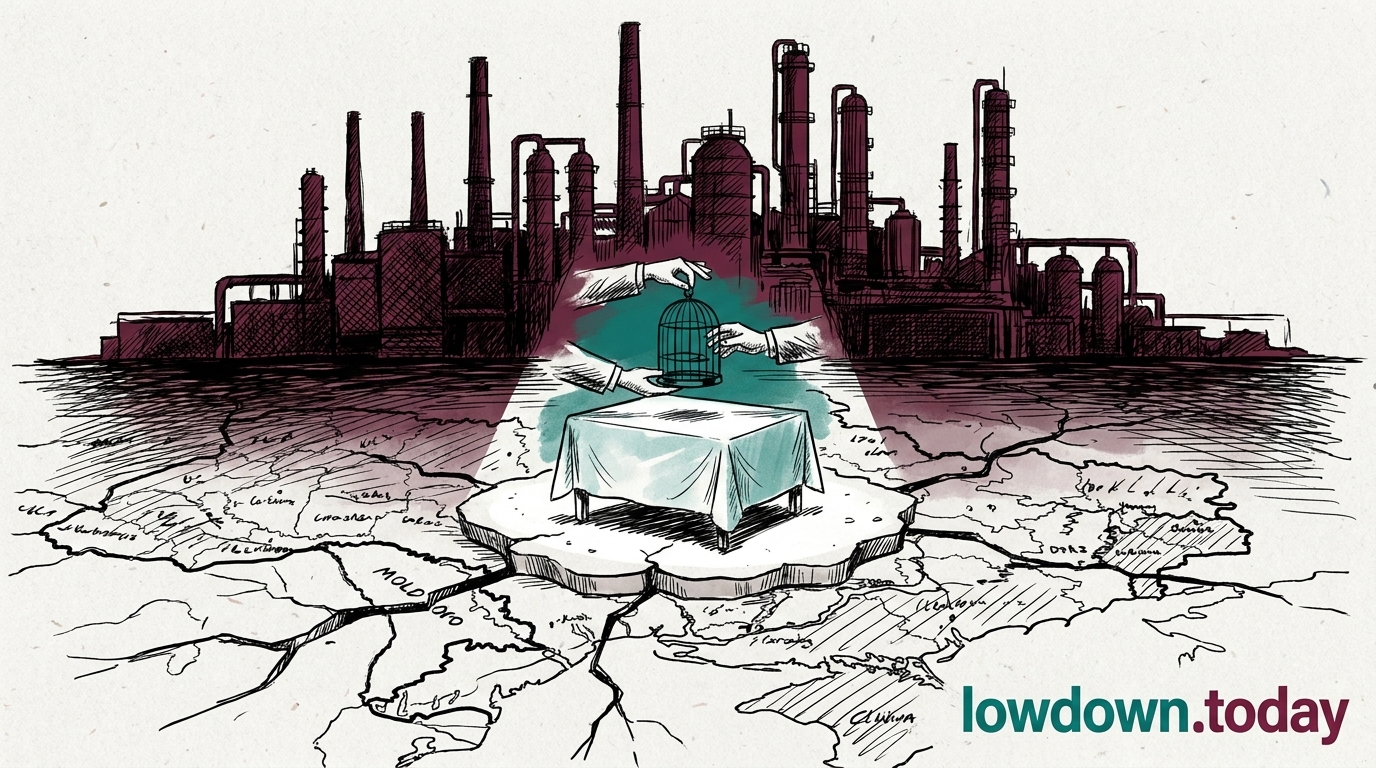
Qatar confirmed on 11 April that $6 billion in frozen Iranian assets remain frozen and any release requires US Treasury Department approval, which has not been granted. Iran had entered the Islamabad talks claiming the US had already agreed to release these funds.

The money traces back to the 2023 prisoner-swap deal and was frozen again under sanctions renewed by Trump in March . It was originally earmarked for Iranian humanitarian imports, food and medicine purchases that sanctions otherwise block. Subsequent US sanctions froze it again. Iran's parliament speaker framed the release as settled, not a subject for negotiation. Qatar's correction on 11 April flatly contradicted that position.

The gap between Iran's characterisation ("agreed") and Qatar's statement ("pending Treasury approval, not granted") is instructive. It suggests the asset claim served as domestic political framing rather than an operational negotiating position. The $6 billion was a bargaining chip pointed inward, not outward: it told the Iranian public that sanctions relief was already won before talks began.

Releasing the funds would ease domestic pressure on the Iranian government without touching the nuclear or military files. That is precisely why neither side moved on it. For Washington, releasing $6 billion before Iran agreed to any nuclear concession would collapse domestic support for the talks. For Tehran, claiming the release was already agreed gave parliament speaker Ghalibaf cover to present Islamabad as a position of strength, not supplication. The money never moved. Vance left without the matter resolved.

Deep Analysis

In plain English

In 2023, Iran and the US agreed a prisoner swap. As part of that deal, Iran was allowed access to $6 billion of its own money that had been held in South Korean and Qatari banks, frozen by sanctions. The money was meant to be used only for food and medicine. Iran turned up to the Islamabad talks saying the US had already agreed to release those funds as a precondition. Qatar then stated publicly that the money is still frozen and the US has not approved its release. The gap tells you something about how both sides were managing domestic audiences. Iran was telling its public that it had already won a concession before the talks even started. The US was saying nothing, which is itself a position.

Deep Analysis
Root Causes

The asset freeze is a product of the Biden-era prisoner swap mechanics being overtaken by the Trump administration's policy of maximum pressure.

Iran's claim that the funds were 'agreed' most likely reflects a genuine private signal that was communicated informally during pre-talk contacts and then not followed through in writing. The absence of any written US commitment gave Washington the ability to deny the concession publicly without technically lying.

What could happen next?
  • Consequence

    Iran's parliament speaker publicly framing the asset release as 'already agreed' before talks succeeded creates a domestic accountability problem: if the funds are not released, the regime must explain the gap to an audience that was told it had already won the point.

  • Opportunity

    GL-U expiry on 19 April and the asset-release question are both Treasury decisions; a package renewal of GL-U combined with asset release could serve as a good-faith signal without requiring nuclear or military concessions, potentially reopening talks before the ceasefire expires.

First Reported In

Update #66 · Islamabad collapses: 10 days to expiry

PressTV· 12 Apr 2026
Read original
Causes and effects
This Event
Qatar confirms $6bn assets still frozen
The gap between Iran's public claim and Qatar's factual correction reveals the $6 billion was a domestic framing device, not an operational concession.
Different Perspectives
Rafael Grossi, IAEA Director General
Grossi's Update 349 of 7 May recorded a drone strike on ZNPP's radiation monitoring laboratory on 3 May. Rosatom's 17 May public attack on the Secretariat's neutrality degrades the diplomatic ground Grossi needs for the sixth repair ceasefire at day 60 on the single backup line.
Indian Government / Embassy Moscow
The Indian Embassy in Moscow confirmed on 18 May that an Indian national was killed and three hospitalised at a refinery construction site in the 17 May barrage. India is among the largest buyers of discounted Russian crude; the fatality forces a diplomatic protest without changing the purchasing posture.
Recep Tayyip Erdogan, Turkish President
Erdogan met Zelenskyy in Ankara for nearly three hours on 15 May before the Istanbul session, recovering Turkey's 2022 mediator role and reducing Trump's leverage by hosting bilateral talks without Washington in the room. Turkey hosts the NATO Ankara summit on 7-8 July; the Istanbul format gives Erdogan standing at both tables simultaneously.
Viktor Orban / Hungarian Government
Budapest's new cabinet, formed 12 May, holds the institutional veto point on the EU tranche disbursement ahead of the first-half June window. Hungary has previously leveraged EU loan tranches to extract bilateral concessions; the combination of a fresh cabinet and a tight disbursement timeline makes Budapest the single highest-leverage actor in the EU track this fortnight.
European Council / Commission
The Commission is preparing a three-document disbursement package for the 9.1-billion euro first tranche of the EU loan to Ukraine, targeting first-half June, but delivery depends on the Magyar cabinet, which formed on 12 May, not blocking the mechanism. The 20th sanctions package remains in force against Russia.
Donald Trump / US Treasury
Treasury issued GL 134C with a 48-hour gap after GL 134B expired, confirming the waiver series functions as permanent monthly management rather than a wind-down instrument. Washington was absent from the Istanbul room; Treasury Secretary Bessent framed the Cuba carve-out as protecting 'most vulnerable nations', maintaining the fiction that the 30-day bridge has a humanitarian rationale.
