Skip to content
Briefings are running a touch slower this week while we rebuild the foundations.See roadmap
Russia-Ukraine War 2026
3MAY

China condemns the blockade it uses

3 min read
14:52UTC

Lowdown Newsroom

ConflictDeveloping
Key takeaway

Beijing protests the blockade in public and uses it in private, and the carve-out keeps both true.

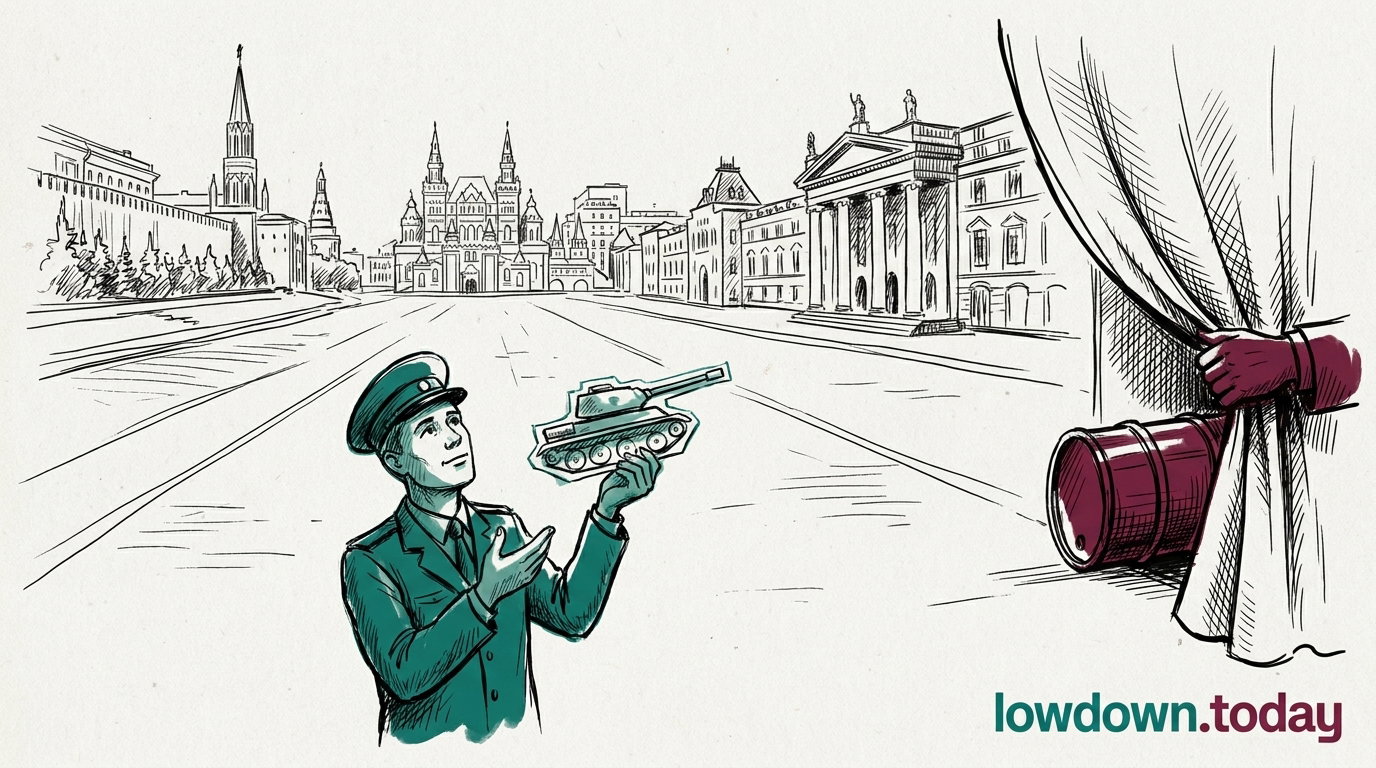
Guo Jiakun, spokesman for the Chinese Foreign Ministry, called the US blockade 'dangerous and irresponsible' on Monday and said it 'will only exacerbate tensions and undermine the already fragile ceasefire agreement.' A second statement the following day repeated the language. Beijing, Guo said, would 'make efforts to help restore peace and stability.' Between the two statements, the Chinese-owned, US-sanctioned tankers Rich Starry and Elpis transited the strait of Hormuz under CENTCOM's non-Iranian-port carve-out without incident. China has filed no formal sanctions challenge.

Beijing's annual oil imports from Iran are roughly a sixth of total crude purchases, the volume that would have given a formal legal challenge both motive and standing. The diplomatic protest and the commercial transit are the same event from different angles. Beijing is arguing against the blockade in public while its tankers use the operational order's gaps in private. The rhetorical register is escalating; the operational register is not. China's leverage sits in what moves, not what is said.

The dual posture is stable only while the carve-out holds. If CENTCOM widens its operational order to include non-Iranian-port traffic, Beijing's quiet mode ends. A formal Chinese challenge at that point would move from press briefing to UN procedural filing and would test the blockade's legality in a way the unsigned presidential posture cannot defend. The same ambiguity that currently lets Chinese crude cross freely is the ambiguity that keeps Beijing's response below the threshold that would force a reckoning over the Pacific. Both sides benefit from the fog, for now.

Deep Analysis

In plain English

China's government publicly called the US blockade 'dangerous and irresponsible' two days running. Across the same two days, two Chinese-owned tankers that the US had already sanctioned for carrying Iranian oil sailed straight through the Strait of Hormuz; because the US military's written order only blocked ships going to Iranian ports, not all Chinese-owned ships. So China is doing two things at once: complaining loudly about the blockade in public, while quietly using the gap the US military left open to keep buying discounted Iranian oil. This is not contradictory from Beijing's perspective; protesting the principle while exploiting the practice is a consistent Chinese foreign policy approach. The tanker transits are the more important signal: they demonstrate that US secondary sanctions, without matching naval enforcement, have no coercive weight over Chinese commercial operations.

Deep Analysis
Root Causes

The structural condition enabling China's dual-register response is CENTCOM's non-Iranian-port carve-out, which was written precisely to avoid triggering Chinese-flag-state incidents. CENTCOM's lawyers understood that boarding a PLA-connected tanker in international waters without a presidential directive or UNSC mandate would create a bilateral incident with no legal defence. By excluding non-Iranian-port traffic, CENTCOM preserved the status quo on China while appearing to execute a blockade.

China's structural incentive is straightforward: Iranian oil at a discount provides roughly 15 per cent of its total crude imports. The dark-fleet architecture Beijing developed since 2022; sanctioned vessels operating outside Western insurance and financial systems; was specifically designed to absorb this kind of commercial environment. The blockade's carve-out is an accidental gift to a supply chain China has been building for four years.

What could happen next?
  • Consequence

    CENTCOM's non-Iranian-port carve-out creates a structural exception for China's dark-fleet operations that cannot be closed without a presidential directive Beijing would contest as an act of economic warfare

    Immediate · 0.85
  • Risk

    If CENTCOM widens its operational order to include non-Iranian-port sanctioned traffic, China's response calculus shifts from quiet protest to potential countermeasures against US commercial interests

    Short term · 0.65
  • Precedent

    China's demonstrated ability to transit US-sanctioned vessels through a US-enforced blockade establishes a template for future secondary-sanctions evasion via dark-fleet architecture in any theatre

    Long term · 0.8
First Reported In

Update #69 · Cooper joins the instrument gap

Chinese Foreign Ministry· 15 Apr 2026
Read original
Causes and effects
This Event
China condemns the blockade it uses
Beijing's rhetorical escalation is running in the opposite direction from its operational posture, because the carve-out CENTCOM wrote lets Chinese tankers transit without any commercial cost to contesting it.
Different Perspectives
EU Council / European Commission
With Orban's veto lifted and Magyar's Tisza government not placing a replacement block, the European Commission is signalling the first 90 billion euro Ukraine loan tranche for late May or early June 2026. Disbursement depends on Magyar's 5 May government formation proceeding to schedule.
Germany
Germany
Russia's Druzhba northern branch transit halt from 1 May removes one of Germany's residual non-Russian crude supply options. The timing compounds Berlin's exposure in the same week Ukrainian strikes drive Russian refinery throughput to its lowest since December 2009.
IAEA / Rafael Grossi
Grossi confirmed the Zaporizhzhia Nuclear Power Plant lost external power for its 14th and 15th times within a single week in late April, with the Ferosplavna-1 backup feeder damaged 1.8 km from the switchyard. He was negotiating a further local ceasefire; the previous IAEA-brokered repair lasted less than a week.
Japan
Japan
Japan authorised direct PAC-3 exports to the United States on 30 April, breaking its post-1945 arms export restrictions to replenish Iran-war-depleted US stockpiles. The White House global Patriot export freeze remains in place; Japan's historic policy shift benefits US readiness without reaching Ukraine.
Kazakhstan
Kazakhstan
Russia's Druzhba northern branch transit halt from 1 May cuts Kazakhstan's access to the German crude market. Astana routes most of its export crude through Russian infrastructure, meaning Moscow's unilateral decision directly constrains Kazakh export diversification despite Kazakhstan's stated neutrality on the war.
Péter Magyar / Tisza Party / Hungary
Magyar targets 5 May for government formation ahead of the 12 May constitutional deadline. Orbán lifted the EU loan veto before leaving office; Magyar supports Hungary's opt-out but has not placed a new veto, leaving the first 90 billion euro tranche on track for late May disbursement.
