Skip to content
Briefings are running a touch slower this week while we rebuild the foundations.See roadmap
Russia-Ukraine War 2026
16APR

White House freezes all Patriot exports

2 min read
14:27UTC

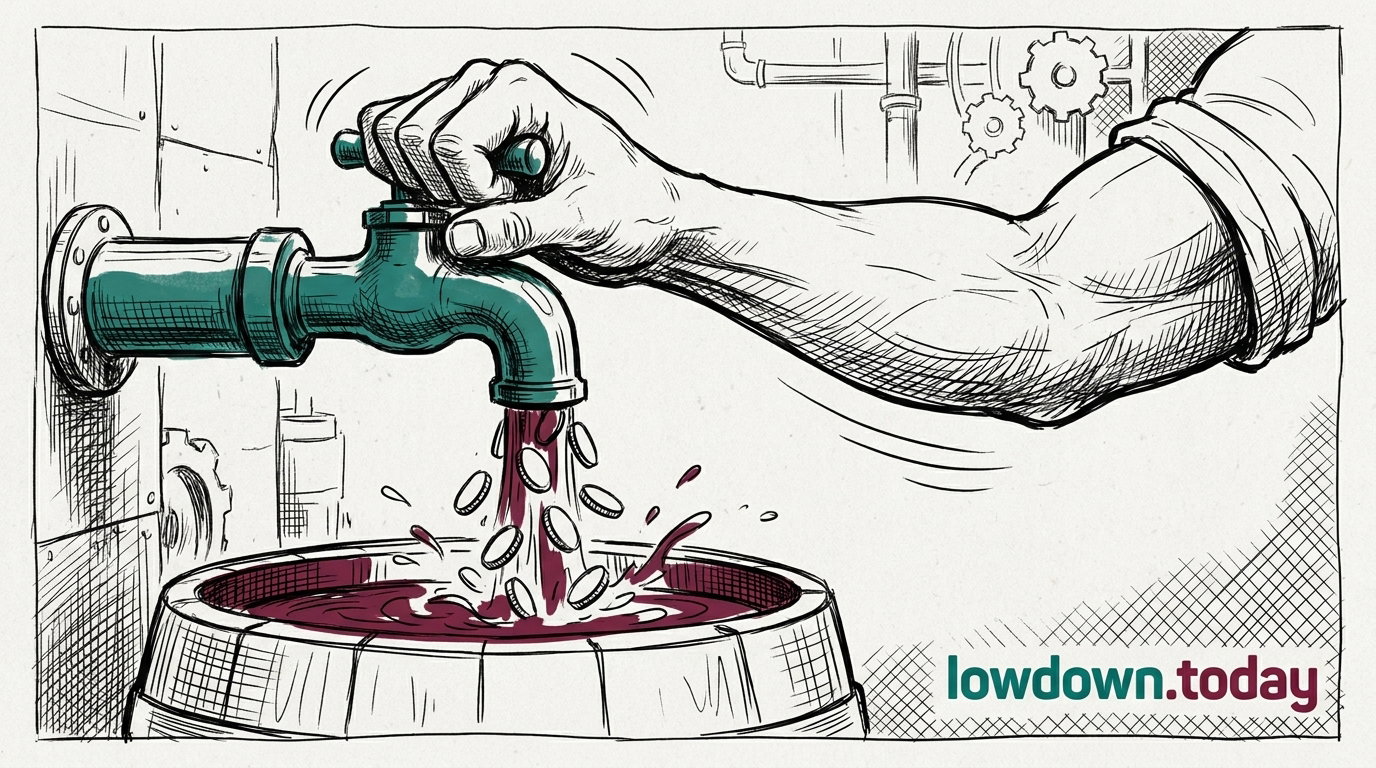
Global Patriot export approvals went on ice after three days of Iran war operations burned through more rounds than the United States builds in an entire year.

ConflictDeveloping
Key takeaway

A Patriot export freeze on top of the production gap leaves Ukraine no resupply route that clears in time.

Defense News and the Washington Post reported this week that the White House suspended PAC-3 export approvals worldwide after more than 800 rounds were expended in three days of Iran war operations 1. Annual US production runs at roughly 600. The arithmetic does not reconcile with even a single restock cycle, let alone two.

For Kyiv, the suspension compounds the Lockheed contract arithmetic covered separately in this briefing. Gulf customers lose near-term deliveries, but Ukraine is the only recipient whose stockpile deadline falls inside the ninety-day window. Zelenskyy's figure from late March did not anticipate the export queue freezing on top of the production gap.

Zelenskyy had already flagged in late March that Ukraine needed 800 interceptors of the same kind the US expended in Iran in three days against roughly 700 Ukraine had received all winter . The export freeze converts that asymmetry from a supply warning into a supply wall. Ukraine's STING interceptor drone, validated a week earlier, does not close the gap for ballistic or cruise threats, which still require the PAC-3 airframe. What Ukraine can do alone is narrower than what it needs Washington to backfill.

Deep Analysis

In plain English

After the recent conflict with Iran, the US used more than 800 Patriot missiles in just three days. To put that in perspective, the US only makes about 600 per year. The White House responded by temporarily stopping all Patriot sales to other countries, including Ukraine, while production catches up. This leaves Ukraine in a queue alongside dozens of other US allies, with no guaranteed timeline for resuming deliveries. Ukraine's air defence shields its cities from ballistic missiles; without interceptors, those shields run dry.

Deep Analysis
Root Causes

The root cause is a production base that was sized for deterrence, not attrition warfare. US PAC-3 production was optimised over two decades for planned peacetime deliveries to Gulf and Asian allies, not for sustained wartime consumption rates. The Iran conflict consumed in 72 hours what US factories produce in 16 months.

A secondary cause is institutional: the US never established a strategic interceptor reserve analogous to the Strategic Petroleum Reserve. Each PAC-3 is allocated to a named buyer at contract signature, leaving no unallocated buffer that could be redirected to Ukraine under emergency authority.

Escalation

The suspension, if maintained beyond six to eight weeks, creates a predictable window for Russia to test Ukraine's depleted Patriot coverage with ballistic missile concentrations on Kyiv or Odesa. Russian targeting patterns historically exploit confirmed air defence gaps within 30-60 days of detection.

What could happen next?
  • Risk

    A sustained suspension creates a measurable window for Russian ballistic missile penetration of Ukrainian air defence coverage within 30-60 days.

  • Consequence

    FMS buyers who hold Patriot systems, including Germany, Netherlands, Japan, and Saudi Arabia, will face their own restocking delays, adding diplomatic friction to existing US alliance management.

First Reported In

Update #12 · Three narrowings of US support for Kyiv

Defense News· 11 Apr 2026
Read original
Different Perspectives
Rafael Grossi, IAEA Director General
Grossi's Update 349 of 7 May recorded a drone strike on ZNPP's radiation monitoring laboratory on 3 May. Rosatom's 17 May public attack on the Secretariat's neutrality degrades the diplomatic ground Grossi needs for the sixth repair ceasefire at day 60 on the single backup line.
Indian Government / Embassy Moscow
The Indian Embassy in Moscow confirmed on 18 May that an Indian national was killed and three hospitalised at a refinery construction site in the 17 May barrage. India is among the largest buyers of discounted Russian crude; the fatality forces a diplomatic protest without changing the purchasing posture.
Recep Tayyip Erdogan, Turkish President
Erdogan met Zelenskyy in Ankara for nearly three hours on 15 May before the Istanbul session, recovering Turkey's 2022 mediator role and reducing Trump's leverage by hosting bilateral talks without Washington in the room. Turkey hosts the NATO Ankara summit on 7-8 July; the Istanbul format gives Erdogan standing at both tables simultaneously.
Viktor Orban / Hungarian Government
Budapest's new cabinet, formed 12 May, holds the institutional veto point on the EU tranche disbursement ahead of the first-half June window. Hungary has previously leveraged EU loan tranches to extract bilateral concessions; the combination of a fresh cabinet and a tight disbursement timeline makes Budapest the single highest-leverage actor in the EU track this fortnight.
European Council / Commission
The Commission is preparing a three-document disbursement package for the 9.1-billion euro first tranche of the EU loan to Ukraine, targeting first-half June, but delivery depends on the Magyar cabinet, which formed on 12 May, not blocking the mechanism. The 20th sanctions package remains in force against Russia.
Donald Trump / US Treasury
Treasury issued GL 134C with a 48-hour gap after GL 134B expired, confirming the waiver series functions as permanent monthly management rather than a wind-down instrument. Washington was absent from the Istanbul room; Treasury Secretary Bessent framed the Cuba carve-out as protecting 'most vulnerable nations', maintaining the fiction that the 30-day bridge has a humanitarian rationale.
