Skip to content
You can now search across every topic, entity and event.What's new
Russia-Ukraine War 2026
16APR

Gulf states order 8,000 Ukraine drones

4 min read
14:27UTC

Three Gulf states have approached a Ukrainian manufacturer for thousands of interceptor drones costing $1,000–$2,000 each — against $13.5 million for a single Patriot round.

ConflictDeveloping
Key takeaway

TAF Industries' Gulf order book proves Ukraine has broken the Western monopoly on viable, deployed air defence solutions.

Three Gulf States have submitted direct purchase requests to TAF Industries, a Ukrainian defence manufacturer: the UAE for 5,000 interceptor drones, Qatar for 2,000, and Kuwait expressing interest 1. The requests followed Zelenskyy's 7 March call with Saudi Crown Prince Mohammed bin Salman , in which he offered Ukraine's counter-drone expertise against Iranian Shaheds — an offer Bloomberg framed as explicitly linked to ceasefire diplomacy.

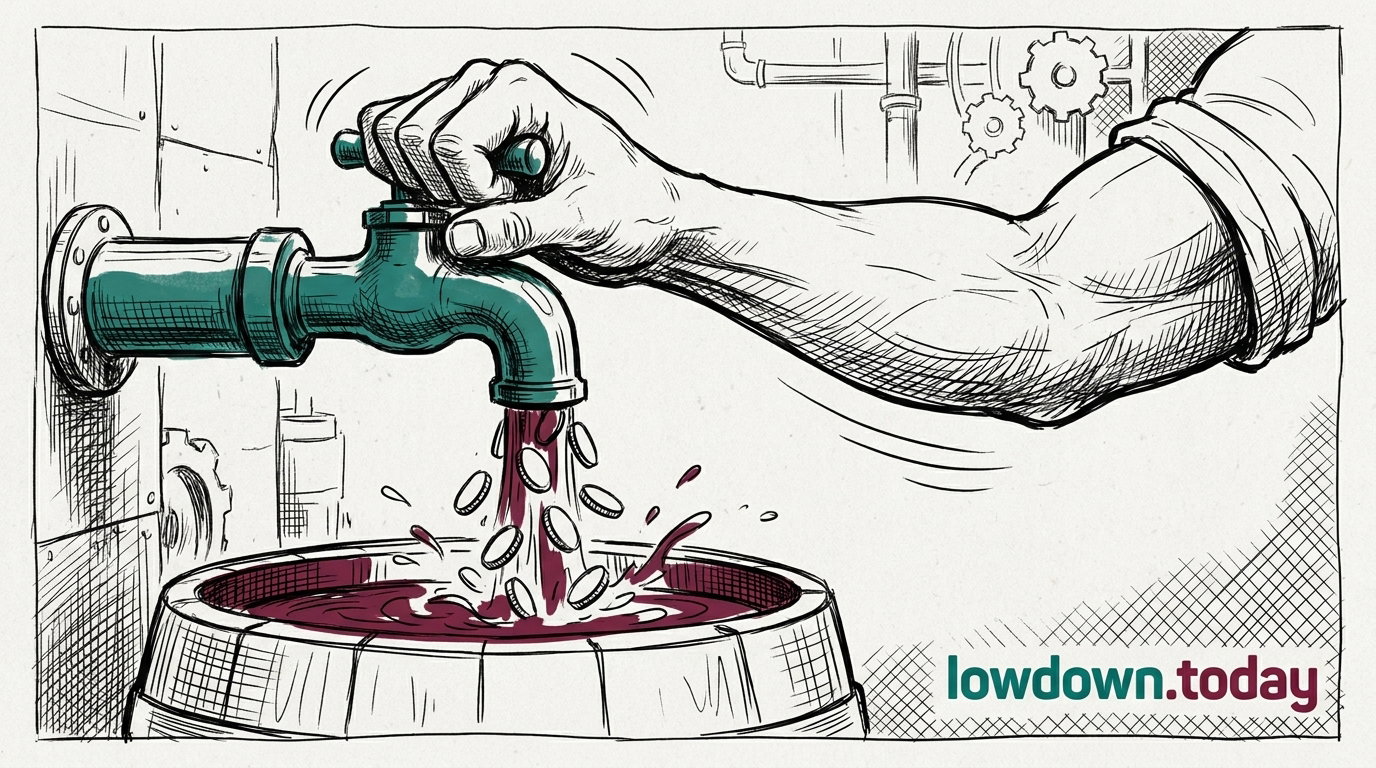
The demand rests on a single ratio. A Ukrainian interceptor drone costs $1,000–$2,000. A PAC-3 MSE round — the Patriot system's most capable interceptor — costs $13.5 million. Gulf States watched roughly a quarter of the global THAAD interceptor inventory burn through in the first week of operations against Iran , with the US spending an estimated $2.4 billion in Patriot rounds across five days. No state defending against mass Shahed attacks can sustain that expenditure rate, and the Shaheds keep coming — they are the same one-way drones Russia launches at Ukrainian cities nightly, manufactured under Iranian licence at Russia's Alabuga plant in Tatarstan.

Ukraine's counter-drone capability was not designed for export. It was built under fire. Three years of defending against Russian drone barrages — now exceeding 9,000 per week — forced Ukrainian engineers to develop cheap, effective interception at a scale no other country has attempted. The radar signatures, flight profiles, and electronic warfare vulnerabilities of the Shahed family are knowledge Ukraine holds because it had no choice but to acquire it. Gulf buyers are purchasing that operational experience as much as the hardware.

Whether these orders can be filled depends on a decision Kyiv has not yet made. Ukraine banned arms exports in 2022 to preserve domestic stocks. TAF Industries can accept orders, but delivery requires the National Security and Defence Council to determine what leaves the country without degrading Ukraine's own air defence — a calculation that grows harder with each weekly escalation in Russian strike volumes.

Deep Analysis

In plain English

Imagine discovering that the only fire extinguisher on the market costs $13.5 million per use. That is roughly the situation Gulf states faced: they had Patriot missiles costing $13.5 million each to shoot down $200 drones, and they were burning through their stocks within days. Ukraine, forced by necessity to solve this problem cheaply, built interceptor drones costing $1,000–$2,000 each. The UAE, Qatar, and Kuwait have now gone directly to the Ukrainian company that makes them. This is not merely a procurement story — it is the first time a non-Western, non-superpower arms producer has offered a working solution to a problem that Western defence giants had documented but failed to address.

Deep Analysis
Synthesis

The UAE's 5,000-unit and Qatar's 2,000-unit requests would require production volumes Ukraine currently dedicates entirely to domestic defence. Servicing export orders requires either expanding manufacturing capacity — which requires capital — or making difficult choices about domestic supply priority.

Gulf sovereign wealth funds (UAE's ADIA at approximately $900 billion AUM, Qatar Investment Authority at approximately $450 billion) have the capital to fund that manufacturing expansion directly, potentially as equity investment in Ukrainian producers rather than simple procurement contracts. This would transform the relationship from buyer–seller to investor–producer, creating a far deeper and more durable interdependency than a purchase order alone.

Root Causes

Western defence contractors operated in near-monopsony procurement environments where governments were sole buyers and competition was constrained by classification requirements, export controls, and multi-decade development cycles. These structural features eliminated cost pressure on interceptor development. Ukraine produced cheap interceptors under acute wartime necessity with zero margin for over-engineering — a classic adversity-driven innovation pathway that peacetime markets do not generate.

What could happen next?
1 precedent1 opportunity1 risk1 consequence1 meaning
  • Precedent

    TAF Industries' Gulf orders establish Ukraine as a legitimate arms exporter in a market previously monopolised by NATO member states and Russia.

    Long term · Assessed
  • Opportunity

    Gulf sovereign wealth fund equity investment in Ukrainian defence manufacturing could create a self-funding production expansion serving both export and domestic needs simultaneously.

    Medium term · Suggested
  • Risk

    Ring-fencing production lines for export contracts may reduce domestic supply at a time when Ukrainian front-line intercept requirements remain at wartime levels.

    Short term · Assessed
  • Consequence

    US and European defence contractors face their first competitive threat in the Gulf air defence market from a non-traditional producer offering battle-proven systems at disruptive prices.

    Medium term · Suggested
  • Meaning

    The $1,000 versus $13.5 million cost comparison defines a new benchmark against which all future air defence procurement decisions will be evaluated by finance ministries worldwide.

    Long term · Assessed
First Reported In

Update #4 · Ukraine pivots to drone exporter

Kyiv Independent· 15 Mar 2026
Read original
Causes and effects
This Event
Gulf states order 8,000 Ukraine drones
The cost disparity between Ukrainian interceptor drones and legacy Western air defence rounds is generating commercial demand that could reshape Ukraine's wartime economy and the global counter-drone market.
Different Perspectives
Belarus
Belarus
Minsk announced completion of its own 37th Separate Airborne Assault Brigade near Gomel, under plans dating to August 2025 rather than a response to any single frontline event this window, keeping its hedge of hosting the war without formally joining Russia's mobilisation drive.
European Union / Operation IRINI states
Italy, Greece and Poland boarded the sanctioned tanker Toa Payoh off Pantelleria under a standing EU mandate rather than a national decision, extending enforcement from the Channel and Baltic and the Black Sea and Azov into the Mediterranean. Italian Defence Minister Guido Crosetto praised the crew; the captain's refusal to produce documentation left detention unconfirmed.
Poland and the NATO eastern flank
Warsaw's Coordination Team said explicitly its forces tracked the 30 July missile incursion and were ready to shoot it down, then flew air cover for an EU tanker interdiction three days later. Poland is simultaneously the war's nearest spillover victim and a contributor to enforcing sanctions against the state causing that spillover.
Ukraine (government, defence establishment and civilians)
Kyiv runs its manpower crisis through acting Defence Minister Yevhen Khmara, whose formal appointment waits for parliament's 18 August return, and a fortnight-old Commander-in-Chief, Mykhailo Drapatyi. Reported attacks on enlistment officers rose from 5 cases in 2022 to 341 in 2025, reaching Odesa's Territorial Recruitment Centre staff directly on 2 August.
Kremlin and Russian domestic economic voices
Moscow has not addressed July's advance-rate collapse or Sberbank's OFZ warning; Novak's diary ran to OPEC+ quota diplomacy with no diesel item logged since 15 July. Economist Nikolai Korzhenevsky calls the Central Bank's RUB 2.3tn in bank lending effectively deficit monetisation, a framing Sberbank's Skvortsov, with his own institutional interest, has not disputed.
IAEA (Rafael Grossi)
IAEA inspectors logged Zaporizhzhia's 22nd loss of off-site power, ten of them in the last three months, after a thunderstorm knocked out the plant's sole surviving backup line. Grossi reads the accelerating frequency, not any single outage, as the safety signal now that the plant's redundancy is exhausted.
