Skip to content
Briefings are running a touch slower this week while we rebuild the foundations.See roadmap
Russia-Ukraine War 2026
5APR

Trump strikes Iran with no war authority

3 min read
19:51UTC

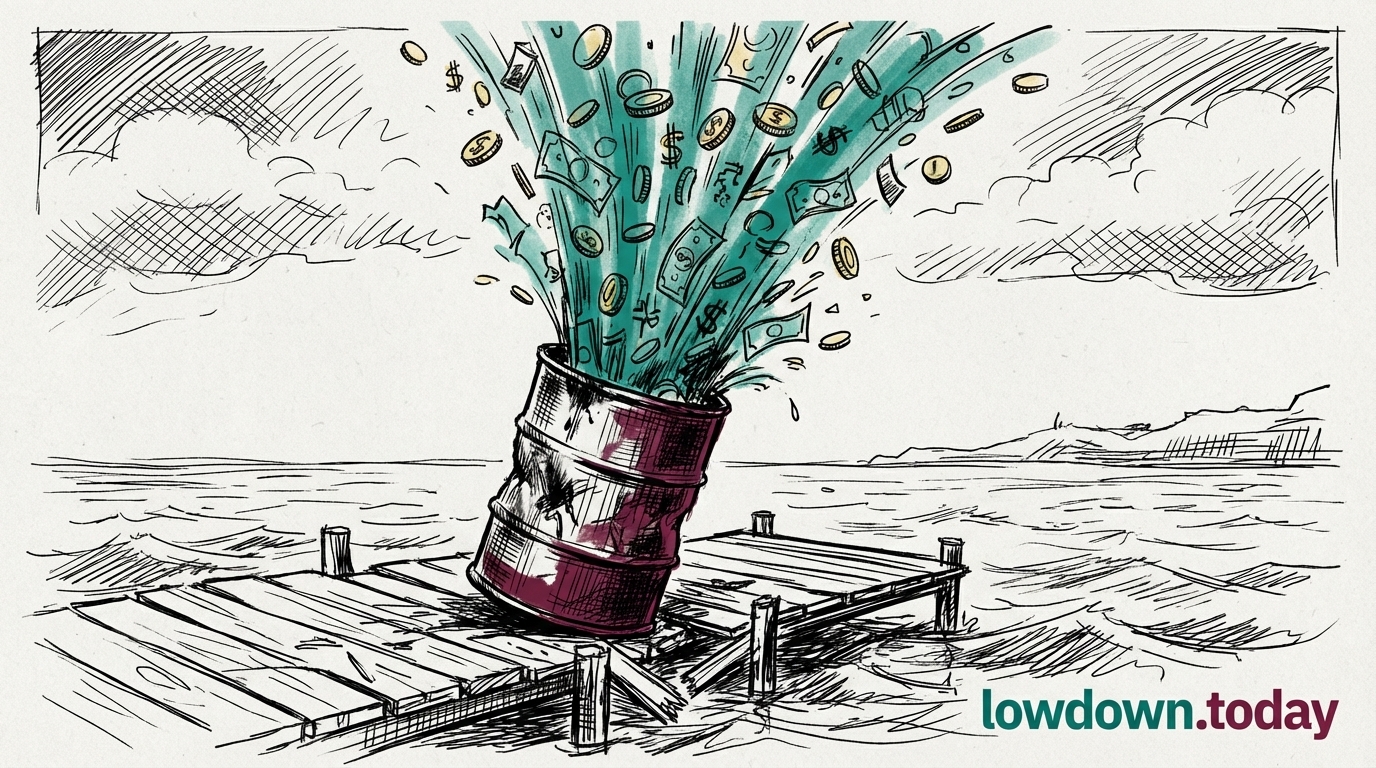
Donald Trump ordered missiles onto Iranian soil with no AUMF and no UN notice, days after both chambers of Congress moved to constrain him.

ConflictDeveloping
Key takeaway

Trump executed an act of war while every document that would normally authorise it stayed unsigned.

Donald Trump ordered strikes on sovereign Iranian territory with no Article 51 notification to the UN Security Council and no new AUMF (Authorisation for Use of Military Force), the statute Congress would normally pass to sanction a war 1. He acted as both chambers moved against him. The House voted 215-208 on 3 June to wind down US involvement , and Senate cloture on a parallel war-powers resolution fell ten votes short . Congress voted to limit the president; the strike order on 9 June bypassed that vote within days of it.

Washington's legal defence rests on Article II self-defence: a president may protect US forces under fire without prior congressional authorisation, and the downed AH-64 Apache supplies the trigger 2. Critics will counter that striking radar sites across four locations on Iranian soil exceeds the immediate defence of one aircraft's crew, both of whom had already been recovered. Whether "self-defence" describes the rescue or the retaliation is the hinge on which the whole claim turns.

The self-defence framing matters because it sidesteps the AUMF question entirely. A defensive strike needs no fresh authorisation, so the recovered Apache crew become the legal pivot rather than a vote on the floor. Trump spent 100 days pairing optimistic deal talk with an unsigned MOU; his first instrument of consequence on Iran arrived as ordnance, not a signature. That distinction is the point. An act of war was executed while every document that would normally precede it stayed unsigned, which leaves Congress legislating against a fact already on the ground.

Deep Analysis

In plain English

In the United States, Congress has the power to declare war. Since 1973 there has also been a law called the War Powers Resolution that says the President must notify Congress within 48 hours of starting a military operation and must stop within 60 days unless Congress approves. President Trump ordered the 9 June strikes without asking Congress for permission, without notifying the United Nations, and days after the House of Representatives voted 215-208 to tell him to wind down the Iran conflict. The administration's legal argument is that the President can order strikes in self-defence as Commander-in-Chief without needing Congress. Critics, including Georgetown Law professors, argue that argument has never been tested in a case where Congress had just voted against the action.

Deep Analysis
Root Causes

Three converging structural conditions made the legal collision on 9 June inevitable. First, the Trump administration's deliberate policy of keeping all Iran-related authority on the verbal track rather than signed paper meant that when it needed a legal basis for strikes, Article II was the only instrument in the field. An AUMF would have required specifying objectives and constraints Congress could hold the administration to.

Second, the War Powers Resolution's own enforcement gap, demonstrated across three consecutive lapse cycles at Days 60, 72 and 93, signalled to the executive that Congress lacked both the votes and the institutional will to constrain it. A resolution that lapses unremedied three times becomes, in practice, a dead letter regardless of its statutory force.

Third, the House 215-208 margin was too thin and too recent to survive a Senate cloture test. With ten senators absent from the cloture count, the administration calculated, correctly in the short term, that no enforcement mechanism would activate before the strikes could be executed.

First Reported In

Update #123 · Trump orders strikes on Iranian soil

Al Jazeera· 10 Jun 2026
Read original
Different Perspectives
North Korea / DPRK
North Korea / DPRK
ISW confirmed the first mounting of DPRK Type-75 MLRS on Russian autonomous UGVs near Kharkiv on 7 June, the latest step in a supply axis that escalated from shells in 2023 to troops in 2024. Pyongyang gains live battlefield data on its ordnance and on Russia's uncrewed-systems programme.
IAEA / Rafael Grossi
Grossi confirmed Chornobyl structural damage with nuclear material metres away and could not attribute the ZNPP 15-hour blackout during the agreed repair window. Six ceasefires brokered and broken at ZNPP, compounded by Rosatom's May attack on IAEA neutrality, have eroded his ability to enforce the windows he negotiates.
Emmanuel Macron / France
Macron co-signed the E3 framework whose line-of-contact baseline marks Europe's first formal acceptance that 1991 borders are not the opening position. France's role carries weight because Macron had previously proposed a European force for Ukraine, and the framework's multinational force point is the vehicle for that.
Keir Starmer / E3
Keir Starmer / E3
Starmer, Macron and Merz met Zelenskyy on 7 June and backed a five-point framework taking the line of contact as the talks baseline, conceding roughly one fifth of Ukraine in exchange for a multinational force and frozen assets. With US mediation ended, the NATO Ankara summit on 7-8 July is the next test.
Vladimir Putin / Kremlin
Putin used SPIEF to reject Zelenskyy's summit letter, citing 'elements of rudeness', and repeated the pre-agreed treaty precondition that has frozen every diplomatic round since May. The SPIEF platform's message of investor confidence was punctured by naval fires visible from St Petersburg, which Moscow declined to dispute in scale.
Ukraine / Unmanned Systems Forces
Commander Brovdi confirmed USF units tracked and set fire to Boikyi at Kronstadt, while Code 9.2 struck the Chonhar Bridge the following day. Ukraine is sequencing strikes for rear-area interdiction and political timing rather than ground gains, trading the Baltic Fleet's home base for the logistics squeeze Russia cannot absorb without rationing its own occupied territory.
