Skip to content
Welcome, thoughtbot's Giant Robots listeners!Start here
Pandemics and Biosecurity
25JUN

Barnyard germ appears to spread in EU saunas

3 min read
15:53UTC

ECDC flagged 50 cases of Dermatophilus congolensis among men who have sex with men across France, Germany and Spain, with evidence suggesting human-to-human spread of a normally animal-only bacterium.

ScienceDeveloping
Key takeaway

An animal bacterium showing apparent human spread is a surveillance question, not a severity one.

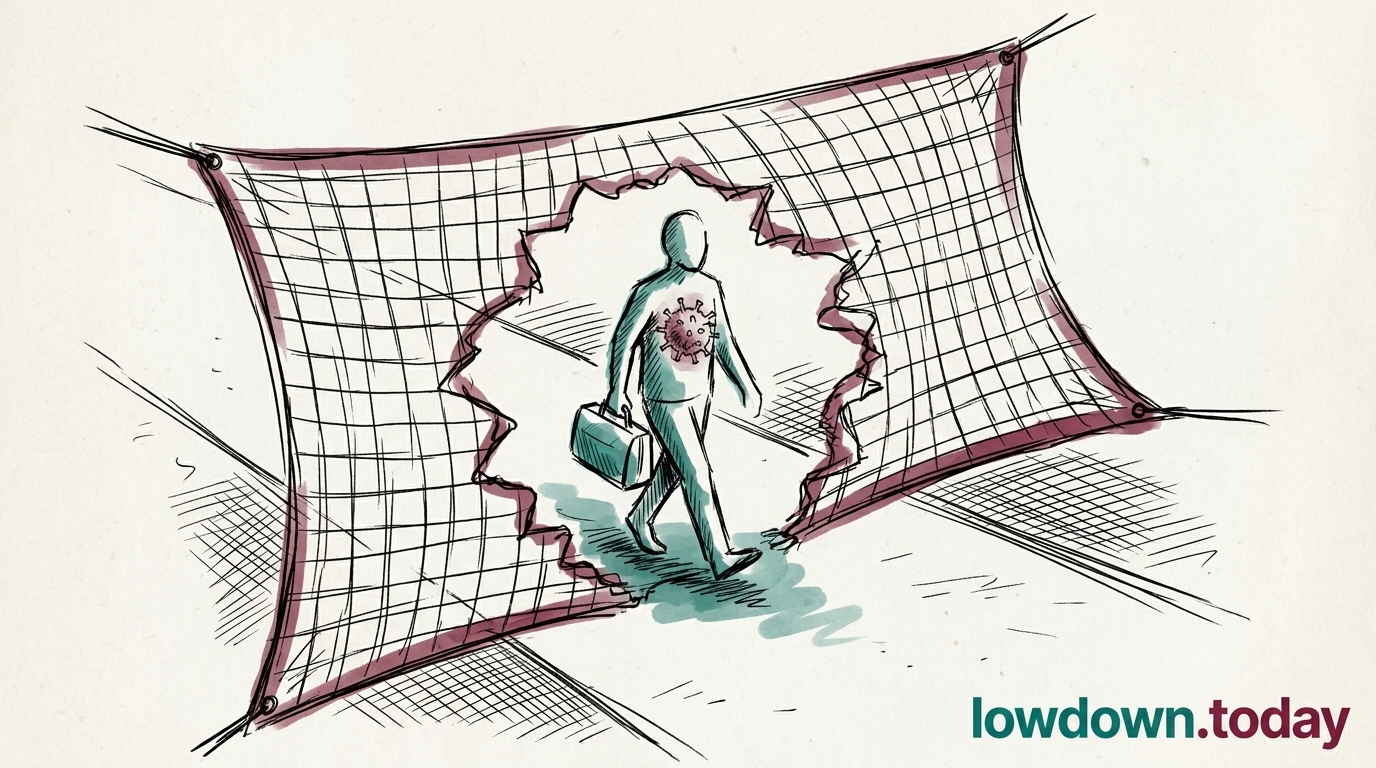
The European Centre for Disease Prevention and Control (ECDC), the EU's disease surveillance agency, flagged 50 cases of Dermatophilus congolensis in its weekly threats report for 30 May to 5 June, among men WHO have sex with men across France, Germany and Spain, linked to sex-on-premises saunas between December 2025 and May 2026⁠1. The bacterium normally causes rain rot in horses and cattle; human infection has until now been rare and incidental. ECDC's own framing is hedged: the reports "may indicate a shift in transmission, with evidence suggesting human-to-human spread, particularly in humid and hot environments"⁠2.

Treat that as a preliminary signal, not a verdict. All 50 cases were mild and recovered fully on antibiotics, with no complications⁠3, so the question here is the transmission route rather than how dangerous the organism is. ECDC has a Rapid Risk Assessment due 23 June; until it lands, the responsible reading is that an animal-associated bacterium is showing apparent person-to-person spread in one specific setting, unusual enough to watch and too early to name as anything more.

The same Week 23 report placed this alongside the rest of the EU surveillance picture, including mpox clade I holding stable to decreasing at 102 cases in April data. One report carrying a novel transmission signal and a reassuring established one at once is the routine of communicable-disease surveillance: most signals resolve as incidental, and the assessment exists to tell which is which.

Deep Analysis

In plain English

Dermatophilus congolensis is a bacterium that normally causes a skin condition called 'rain rot' in horses and cattle. Human infections have historically been extremely rare, occurring only through direct contact with infected animals. ECDC has now found 50 cases in people WHO had no animal contact, all linked to sex-on-premises saunas in France, Germany and Spain between December 2025 and May 2026. All 50 people recovered fully with antibiotics. ECDC says the pattern suggests the bacterium may be passing person to person in hot, humid environments; whether that is confirmed or ruled out will be determined by a formal risk assessment due 23 June.

What could happen next?
  • Risk

    If ECDC's 23 June Rapid Risk Assessment confirms human-to-human transmission, Dermatophilus congolensis would require reclassification from an incidental zoonosis to an emerging sexually associated pathogen , triggering EU member state public health notification obligations and potential venue-specific guidance.

  • Meaning

    The parallel epidemiological signature with the 2022 mpox EU sauna cluster , same venue type, same population, same ECDC 'evidence suggesting' language , indicates EU surveillance systems detected this cluster via the mpox-era MSM network reporting infrastructure established after 2022.

First Reported In

Update #6 · Ebola outbreak gets an R0, and a fork

ECDC· 9 Jun 2026
Read original →
Different Perspectives
IGWG co-chair Tovar da Silva Nunes
The Brazilian co-chair closed the eighth pathogen-sharing session on 18 September without an agreed annex text, the second session in a row to end that way. He presented the outcome as continued commitment, with adoption due at the World Health Assembly in May 2027.
Fraport
Fraport
The Frankfurt Airport operator has told staff to watch for fever, hessenschau reported, after six airport workers caught malaria. Germany does not require insecticide spraying of arriving aircraft cabins, and parasite genotyping to trace the source is due at the end of October.
European Centre for Disease Prevention and Control
ECDC reported the eight Frankfurt Airport malaria cases on 18 September and considers repeated arrivals of infected mosquitoes on aircraft likely. It has not ruled out local mosquitoes, and awaits genotyping due at the end of October.
Pan American Health Organization
PAHO counted 53,957 measles cases in the Americas by 19 September and is supporting Peru's response in Puno and Arequipa. It warns that October's Señor de los Milagros festivities and Pope Leo XIV's November visit could increase transmission.
Bangladesh Directorate General of Health Services
The DGHS recorded 1,030 measles-related deaths and 172,720 suspected cases by 14 September, after a campaign that reached 19.75 million children. Its disease-control director, Halimur Rashid, said further vaccination rounds were expected within two weeks.
Minapharm
Minapharm
The Egyptian drugmaker and its Berlin subsidiary ProBioGen were awarded up to US$16.5m by CEPI on 27 August to take a Bundibugyo vaccine into a Phase 1 trial in Africa. Final manufacture is planned for Cairo, making it CEPI's first Bundibugyo candidate with an African producer.
