Skip to content
Welcome, thoughtbot's Giant Robots listeners!Start here
Pandemics and Biosecurity
25JUN

An animal microbe goes person to person

2 min read
15:53UTC

ECDC's 17 June risk assessment confirmed 97 cases of Dermatophilus congolensis across six European countries and judged human-to-human spread the most likely route, though the disease stays mild.

ScienceDeveloping
Key takeaway

A once animal-only bacterium is now judged to spread between people in Europe, though it stays mild.

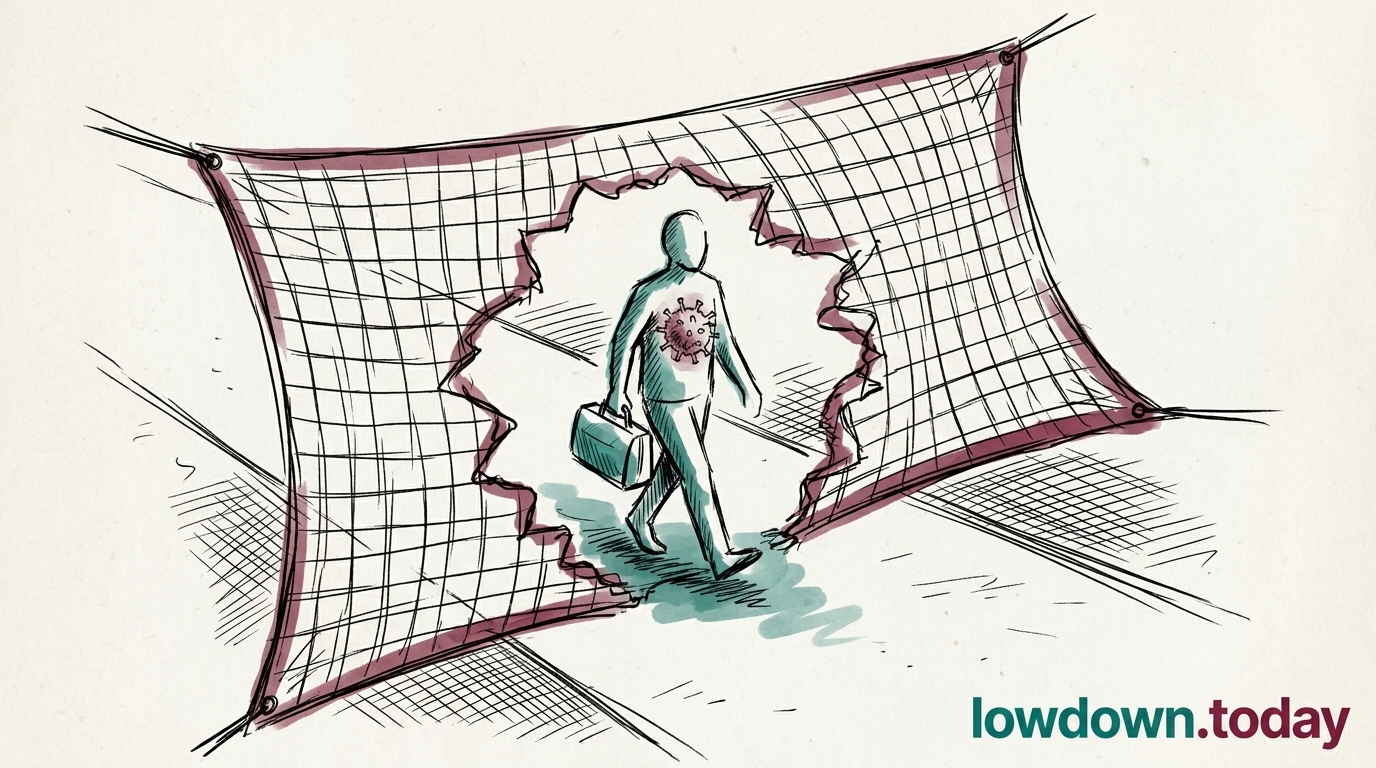
The European Centre for Disease Prevention and Control (ECDC) published a rapid risk assessment on Wednesday 17 June confirming 97 cases of Dermatophilus congolensis across six countries, including new cases in Norway and Austria⁠1. Dermatophilus congolensis is a gram-positive bacterium that causes Dermatophilosis, a skin infection traditionally seen in livestock; a rapid risk assessment is the standard tool ECDC issues to grade an emerging threat for EU member states. The agency judged human-to-human spread through close contact the most likely transmission route, while rating the disease itself mild, antibiotic-responsive, and the risk to the population very low.

Dermatophilus congolensis is an animal-associated organism now assessed as moving between people, and ECDC's reading has escalated step by step: from the 5 June ECDC notice of 50 European sauna-linked cases, through the peer-reviewed documentation of sexual transmission published in June, to a count that has now nearly doubled and a formal verdict that person-to-person spread is the leading explanation. A pathogen that establishes a human transmission route, even a mild one, is the kind of signal surveillance exists to catch early, before the route widens. The mild presentation is reassuring for any individual patient; the route is what warrants the watch.

Deep Analysis

In plain English

Dermatophilus congolensis is a bacterium that normally infects animals, particularly horses, cattle and sheep, causing a crusty skin disease called rain scald or mud fever. It very rarely affects people. In 2025-2026, ECDC has confirmed that it has been spreading among people in Europe through close skin contact, particularly in places like saunas and certain social settings. As of 17 June 2026, there are 97 confirmed cases in six European countries: France, Germany, Spain, Sweden, Norway and Austria. The disease causes mild skin lesions and responds well to standard antibiotics. ECDC rates the risk to the general public as very low. This is a surveillance story: scientists tracking a zoonotic bacterium establishing new person-to-person spread for the first time, rather than an immediate public health emergency.

What could happen next?
  • Precedent

    The Dermatophilus congolensis case count doubling from 50 to 97 in 12 days likely reflects reporting improvement after the 5 June ECDC notice rather than true incidence acceleration, illustrating how surveillance signals can amplify apparent outbreak speed.

First Reported In

Update #8 · Ebola reaches France through a screening blind spot

European Centre for Disease Prevention and Control· 25 Jun 2026
Read original →
Different Perspectives
IGWG co-chair Tovar da Silva Nunes
The Brazilian co-chair closed the eighth pathogen-sharing session on 18 September without an agreed annex text, the second session in a row to end that way. He presented the outcome as continued commitment, with adoption due at the World Health Assembly in May 2027.
Fraport
Fraport
The Frankfurt Airport operator has told staff to watch for fever, hessenschau reported, after six airport workers caught malaria. Germany does not require insecticide spraying of arriving aircraft cabins, and parasite genotyping to trace the source is due at the end of October.
European Centre for Disease Prevention and Control
ECDC reported the eight Frankfurt Airport malaria cases on 18 September and considers repeated arrivals of infected mosquitoes on aircraft likely. It has not ruled out local mosquitoes, and awaits genotyping due at the end of October.
Pan American Health Organization
PAHO counted 53,957 measles cases in the Americas by 19 September and is supporting Peru's response in Puno and Arequipa. It warns that October's Señor de los Milagros festivities and Pope Leo XIV's November visit could increase transmission.
Bangladesh Directorate General of Health Services
The DGHS recorded 1,030 measles-related deaths and 172,720 suspected cases by 14 September, after a campaign that reached 19.75 million children. Its disease-control director, Halimur Rashid, said further vaccination rounds were expected within two weeks.
Minapharm
Minapharm
The Egyptian drugmaker and its Berlin subsidiary ProBioGen were awarded up to US$16.5m by CEPI on 27 August to take a Bundibugyo vaccine into a Phase 1 trial in Africa. Final manufacture is planned for Cairo, making it CEPI's first Bundibugyo candidate with an African producer.
