Skip to content
Welcome, thoughtbot's Giant Robots listeners!Start here
Pandemics and Biosecurity
9JUN

Isolation slips as Ebola funding arrives

2 min read
09:58UTC

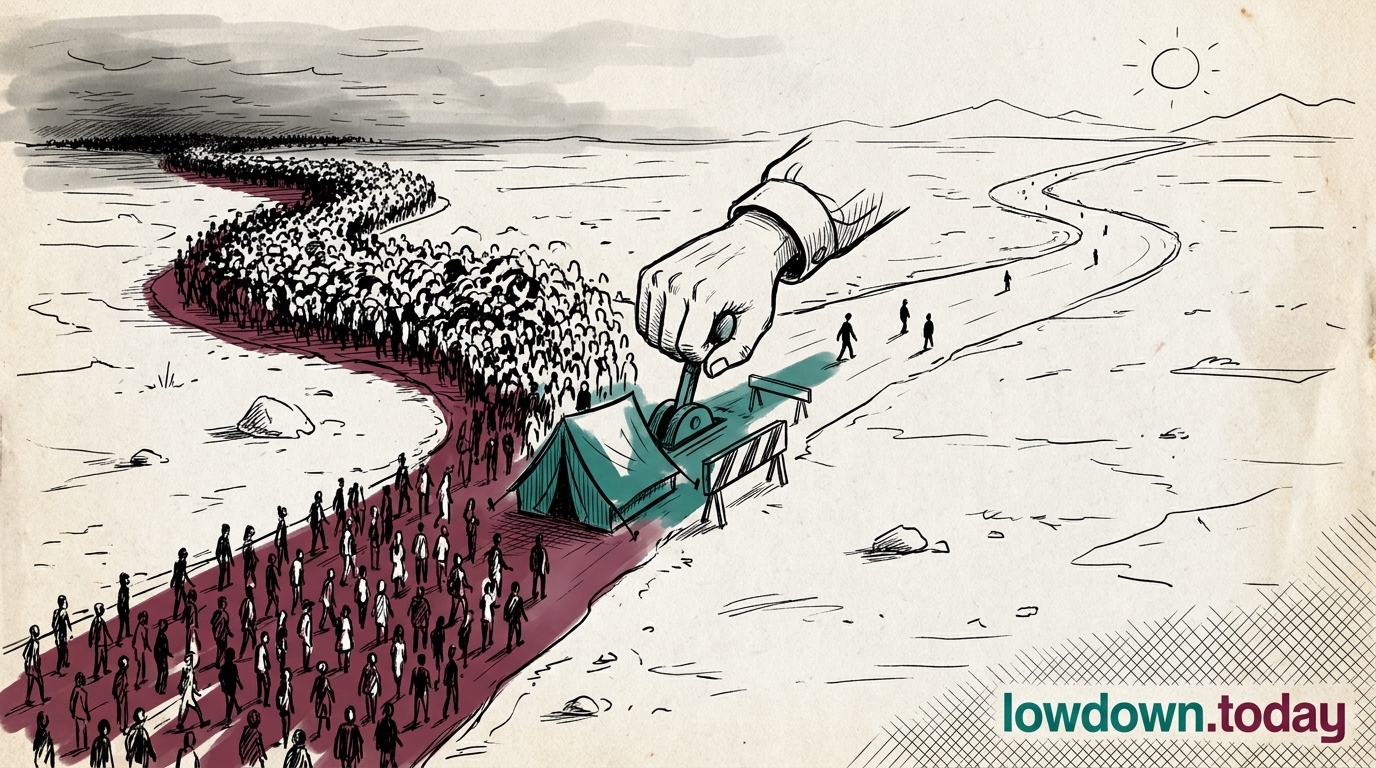
Patient isolation in DR Congo's Bundibugyo outbreak fell to roughly 39% by 13 July, sliding away from the 70% mark the CDC's model says decides the epidemic.

ScienceAssessed
Key takeaway

The Bundibugyo response has more money, trials and tests than ever, yet the measure that decides its course keeps slipping.

Patient isolation in the DR Congo Bundibugyo outbreak fell to roughly 39%, with 753 of 1,926 confirmed patients hospitalised in isolation as of 13 July, on the European Centre for Disease Prevention and Control (ECDC) tracker⁠1. The World Health Organization (WHO) had put the rate at 44% on 3 July, in its Disease Outbreak News bulletin DON612. Between those two dates the figure fell rather than rose.

The US Centers for Disease Control and Prevention (CDC) modelled the outbreak in June at a reproduction number of 2.51, the average number of people each case infects, and named a single fork: at 70% patient isolation the epidemic collapses, and below it the worst-case runs reach 20,000 cases. The rate at which patients reach isolation decides the trajectory, because every unisolated patient can seed the next chain of infection while a hospitalised one cannot.

Every input money can buy has moved forward this month: vaccine financing, the first treatment-trial doses, and the first Bundibugyo diagnostic cleared onto WHO's Emergency Use Listing, its fast-track route for unlicensed products in an emergency. The one logistics variable the model said would decide the outcome has gone backwards instead.

A falling isolation percentage partly tracks faster case-finding, a swelling denominator, rather than any pure loss of ward capacity. The workforce strain running alongside it, the responder infections and the unpaid front-line staff, argues that the deterioration is real rather than a statistical artefact.


Deep Analysis

In plain English

Isolating a sick patient, keeping them apart from others so they cannot spread the virus, is one of the most powerful tools against Ebola. Health officials have modelled that if 70% of confirmed patients are properly isolated, the outbreak's worst-case scenarios mostly disappear. Right now, only about 39% of confirmed patients in DR Congo's outbreak are isolated, down from 44% a week and a half earlier, even as international donors have pledged large sums of money. This matters because isolation capacity, not funding alone, still determines whether the outbreak keeps growing.

Deep Analysis
Root Causes

Isolation fell to 39% even as donor funding accelerated because pledged money takes months to become physical isolation beds, staffed wards and functioning ambulance routes, while the caseload it must serve keeps growing in real time; DR Congo's Bundibugyo count has now passed 1,481 confirmed cases.

Ituri's security terrain compounds the lag: the same ADF and CODECO militia activity that limited contact tracing to roughly 71% at DON607 in June continues to restrict which villages responders can safely reach to isolate patients at all.

What could happen next?
  • Risk

    Continued slippage below 44% isolation raises the probability, per the CDC's own simulation runs, of the outbreak reaching 20,000 cases.

First Reported In

Update #10 · Ebola's responders are now the casualties

ECDC· 14 Jul 2026
Read original →
Different Perspectives
Pan American Health Organization
PAHO warned on 20 October that El Niño is set to intensify as the dengue season begins, and issued a regional screwworm alert on 16 October. It wants veterinary and human health workers reporting into one surveillance system.
UK Health Security Agency
UKHSA links three Salmonella Enteritidis clusters to imported eggs and has two large importers under investigation without naming either. Its sequencing led the Food Standards Agency to recall eggs from Kyiv producer Yasensvit.
ECDC
ECDC
ECDC says Europe's West Nile season affected a broader area than any before and calls Germany's first local Sindbis virus case not unexpected, since the virus was already found in German mosquitoes and birds. It cautions that missing clade data limit how far Europe's clade I mpox rise can be read.
Ghana Ministry of Health
Health Minister Kwabena Mintah Akandoh declared a yellow fever outbreak in the Upper West Region after a Dakar laboratory confirmed three cases, all of whom died. Ghana plans an emergency vaccination campaign in three districts this month.
Government of Côte d'Ivoire
Spokesperson Amadou Coulibaly reported 23 yellow fever cases and 11 deaths in Bounkani on 14 October and said the country holds more than 400,000 vaccine doses. He did not say how many cases were laboratory-confirmed, which leaves the outbreak's true size unclear.
World Health Organization
WHO says no cause has been found for the Irkutsk technician's death and a laboratory-associated exposure cannot be fully excluded. Tedros Adhanom Ghebreyesus urged states to finish the pathogen-sharing annex that holds the Pandemic Agreement back from signature.

Written with AI from Lowdown's published reporting. Not individually reviewed by an editor. Editorial standards.
