Skip to content
You can now search across every topic, entity and event.What's new
Pandemics and Biosecurity
9JUN

Ebola cases pass 1,481 as isolation lags

3 min read
09:58UTC

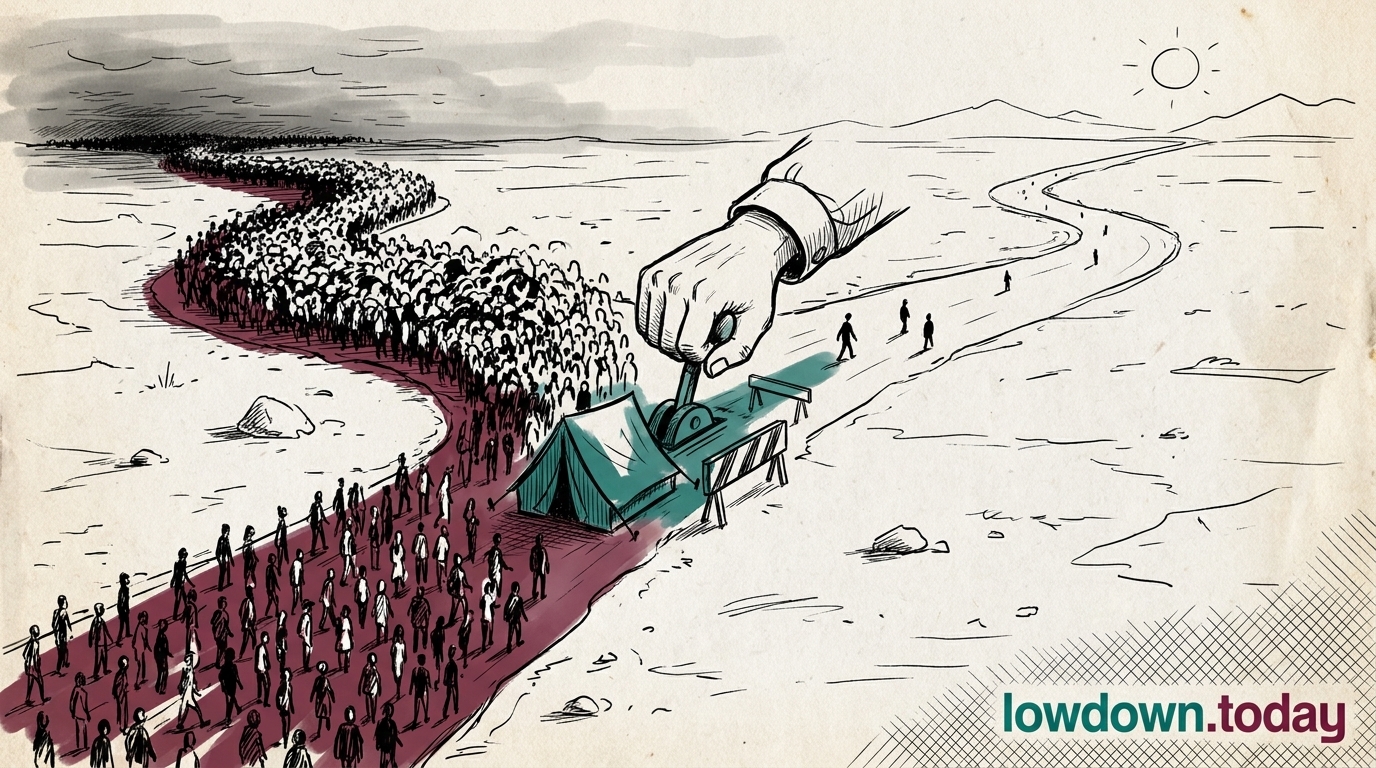
WHO's DON612 put the Bundibugyo outbreak at 1,481 confirmed cases and 454 deaths on 3 July, with patient isolation near 44 percent, still short of the level modelling says would break transmission.

ScienceDeveloping
Key takeaway

WHO's DON612 logged 1,481 Bundibugyo cases with isolation near 44 percent, still short of the model's 70 percent fork.

WHO Disease Outbreak News DON612, published Friday 3 July, put the Bundibugyo outbreak at 1,481 confirmed cases, with 1,460 in DR Congo, 20 in Uganda and one in France , alongside 454 deaths and a case-fatality ratio of 30.9 percent 1. That is a 35 percent rise in nine days, up from the 1,094 cases logged on 24 June .

The patient-isolation rate, the share of confirmed patients kept in isolation, rose from 35 percent on 24 June to about 44 percent by 30 June, or 641 of 1,460 DRC patients, per South Africa's National Institute for Communicable Diseases and the EU's disease-control agency, the ECDC 2. That sits well short of the 70 percent at which the CDC model, built on a reproduction number of 2.51, collapses its worst case to a one-in-a-hundred tail . Contact-tracing follow-up, a separate figure meaning how many listed contacts are actually visited, climbed from 21 percent to 83.2 percent in Ituri and 81 percent in North Kivu. Isolation decides whether transmission breaks; follow-up only builds the list of WHO to watch.

Most of those cases now trace back through the hospitals meant to contain them. 102 healthcare workers have been infected in DRC and 25 have died, up from the 34 infections counted in mid-June . This is nosocomial spread, transmission inside care settings, and it has been the outbreak's hardest edge since the first nurses died at Mongbwalu in May.

Cases are still climbing and isolation still trails 70 percent, so the outbreak sits on the high-case-count side of the model's fork even as both operational numbers improve. The move from 35 to 44 percent buys less than the remaining climb to 70 will, because the CDC curve is non-linear, with most of the outbreak-ending benefit concentrated between roughly 50 and 70 percent. Two operational numbers improved this week; patient isolation, the one that decides whether the epidemic burns out, did not cross the fork.

Deep Analysis

In plain English

Isolation means moving a confirmed patient to a treatment unit where they cannot infect others; contact tracing means finding everyone that patient was near before diagnosis and checking on them daily for 21 days, Ebola's incubation window. WHO's DON612 report shows these two efforts moving at very different speeds. Isolating patients, at about 44% of cases, still trails the 70% level modelling suggests is needed to bring the outbreak under control. Finding and following up contacts is going much better, at 83.2% in Ituri and 81% in North Kivu, up sharply from just 21% earlier. So contact tracers are finding people fast; the bottleneck is getting confirmed patients into a bed once found.

Deep Analysis
Root Causes

Patient isolation and contact-tracing follow-up measure two different constraints and should not be read as one problem. Isolation, at roughly 44%, is capped by how many treatment-unit beds exist in Ituri and North Kivu; DRC's Ministry of Health has not published a bed-expansion timeline to match the case count's 35% rise since 24 June.

Contact-tracing follow-up, at 83.2% in Ituri and 81% in North Kivu, is a workforce and trust problem instead: it depends on enough trained tracers reaching listed contacts before they disperse, and on those contacts believing cooperation carries no risk of forced hospitalisation.

The scale of that workforce challenge has grown alongside the outbreak: healthcare-worker infections alone have risen from 34 in mid-June to 102 now, thinning the pool of trained staff available to do the tracing.

What could happen next?
  • Risk

    If isolation stays below the 70% threshold CDC modelling flags while case counts keep rising at roughly 35% per nine-day period, DRC's treatment-unit bed capacity becomes the binding constraint on the outbreak's trajectory rather than case-finding.

First Reported In

Update #9 · Ebola's toolkit arrives, outbreak climbs

WHO· 5 Jul 2026
Read original
Different Perspectives
UK Health Security Agency
UKHSA said egg consumption remains the strongest signal in its 207-case Salmonella Enteritidis investigation. The genomic cluster and 38% hospitalisation among people with available information make exposure identification a public-health priority.
GLEWS+
GLEWS+
GLEWS+ assessed spillover risk from clade B MERS in Nile Basin camels as high if the clade establishes, while rating evidence for spread in camel populations low confidence. The joint assessment makes whole-genome sequencing the next test of the threat.
WHO Regional Office for Africa
WHO's Africa office said transmission in DR Congo is outpacing control efforts after laboratory capacity reached 19 sites and treatment capacity exceeded 1,300 beds. The assessment puts access, insecurity, community deaths and late care-seeking ahead of a simple equipment shortage.
People in Guatemala
People in Guatemala
Guatemala's population now carries the region's largest reported measles burden, with 30,371 confirmed cases and 26 deaths. The scale shifts practical attention from the Mexico-centred frame that followed the World Cup's travel consequences.
Pan American Health Organization
PAHO rated regional measles risk very high after recording 47,459 confirmed cases and 44 deaths through week 28. It names vaccination coverage, accumulated susceptibles and mass gatherings with broad international participation as general risk factors.
Chinese health authorities
China reported three human H9N2 cases to WHO between 10 and 16 July: two four-year-olds recovered, a 44-year-old man remains in intensive care, the first severity signal in a cluster that has produced 173 cases and 2 deaths globally since 2015. The subtype is distinct from the H5N1 series this topic otherwise tracks.
