Skip to content
You can now search across every topic, entity and event.What's new
Pandemics and Biosecurity
9JUN

80% of Ebola cases now untraced

3 min read
09:58UTC

WHO told a 20 July briefing that more than 80% of new Bundibugyo cases in DR Congo arise outside any known contact chain. Tedros ranked the outbreak third-largest on record.

ScienceDeveloping
Key takeaway

Four in five new Ebola cases now appear outside the contact lists the response is built to work from.

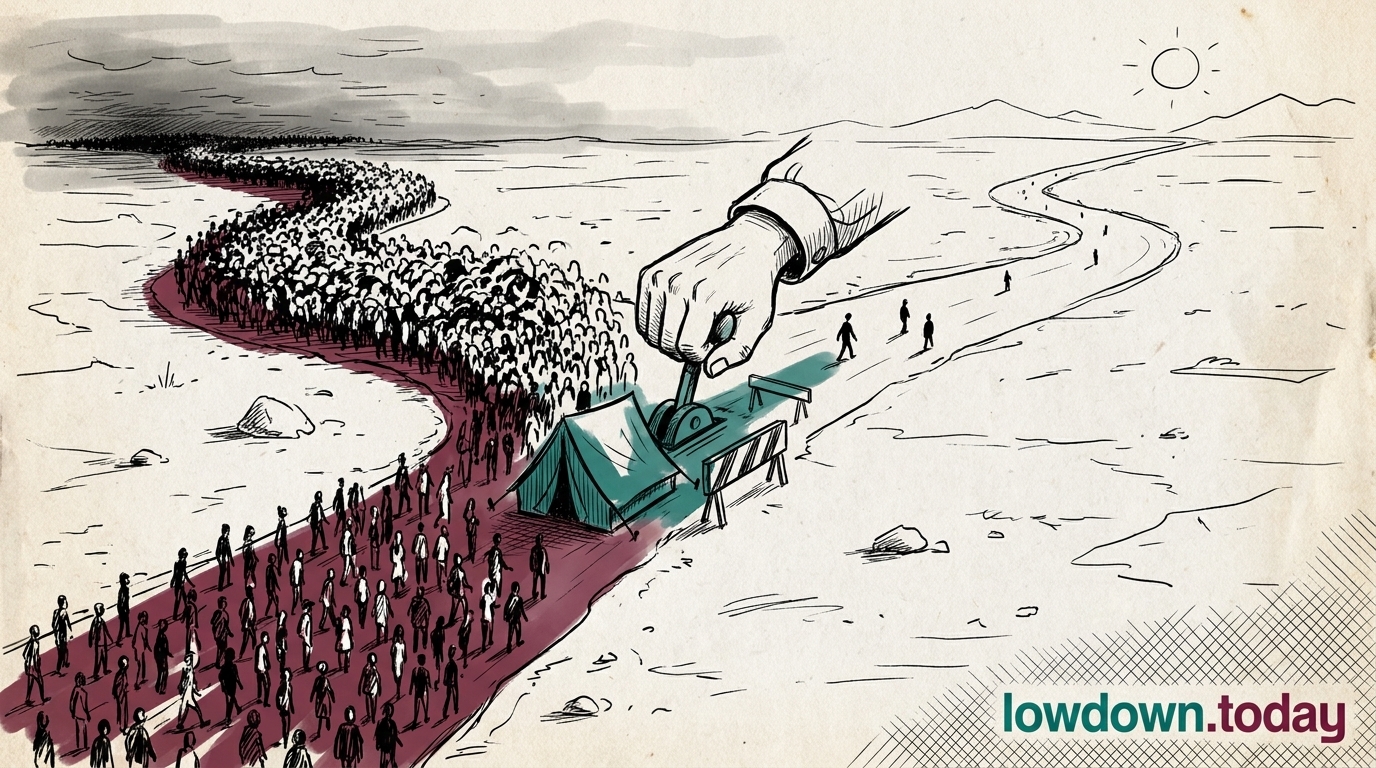
World Health Organization (WHO) officials said at a briefing on Monday 20 July that more than 80% of new Bundibugyo Ebola cases in DR Congo now arise outside any known contact chain 1. Bundibugyo is a rare Ebola species first identified in Uganda in 2007. A contact chain is the documented trail linking a new case back to a known infected person, and it is the list every containment tool works from. A response that cannot see where its next case is coming from is no longer tracing an epidemic; it is counting one.

The scale arrived with the same briefing. The European Centre for Disease Prevention and Control (ECDC), the EU's infectious disease agency, recorded 2,344 confirmed cases and 930 deaths through 18 July, with 724 patients hospitalised in isolation 2. That puts isolation coverage, the share of confirmed patients held in hospital rather than at large in the community, near 31%. It stood at 39% a week ago and 44% on 3 July . The US Centers for Disease Control and Prevention (CDC) modelled this outbreak in June at a reproduction number of 2.51, the average number of people each case infects, and named 70% isolation as the point at which transmission collapses . Coverage has moved away from that fork at every reporting point since.

Tedros Adhanom Ghebreyesus, WHO's Director-General, called this the third-largest Ebola outbreak on record and drew the comparison himself: the 2018-20 Kivu epidemic in eastern DRC took more than ten months to reach 2,000 confirmed cases, and this one took two 3. A single day, 17 to 18 July, added 83 confirmed cases and 40 deaths 4.

The calmer reading of that falling percentage deserves a hearing. There are 724 people in isolation now, more than at any earlier point, and a percentage can fall while absolute capacity rises if case-finding improves and the denominator grows faster than the wards. Lethality supports the calm view too: WHO's DON613 bulletin of 17 July gives a case-fatality ratio of 39%, sitting between the 30% recorded in Uganda's 2007 Bundibugyo outbreak and the 50% recorded in DRC in 2012 5. Set against the only two prior outbreaks of this species, 39% is what Bundibugyo has always done. The 80% figure is what defeats the benign reading. Better case-finding pushes cases into known contact lists; it does not push them out.

Deep Analysis

In plain English

Contact tracing means health workers find everyone a sick person has been near, so they can watch those people for symptoms before the disease spreads further. WHO now says more than 80 out of every 100 new Ebola cases in this outbreak cannot be linked back to anyone already known to be infected. That means health workers are no longer catching the virus before it reaches new people, they are only finding out after it already has.

Deep Analysis
Root Causes

Ituri Province's wet-season roads become near-impassable for surveillance teams trying to reach rural health zones, and gold-mining migration constantly reseeds the province with untraced contacts moving between zones.

A second structural cause: CODECO and ADF activity in Djugu Territory restricts the house-to-house tracing that dense urban outbreaks, such as Uganda's Kampala cluster, rely on for containment.

What could happen next?
  • Meaning

    The 80% figure converts a resourcing question into a surveillance-blindness question: DRC and WHO no longer know most of the outbreak's transmission tree.

    Immediate · Assessed
  • Risk

    Untraced spread raises the odds a case reaches an airport or border crossing before any contact list exists to warn responders there.

    Short term · Suggested
  • Precedent

    If it holds, this would be the first Bundibugyo outbreak where the tracing system itself, rather than external violence, is named as the point of failure.

    Medium term · Suggested
First Reported In

Update #11 · Ebola outruns its own contact tracing

ECDC· 21 Jul 2026
Read original
Different Perspectives
UK Health Security Agency
UKHSA said egg consumption remains the strongest signal in its 207-case Salmonella Enteritidis investigation. The genomic cluster and 38% hospitalisation among people with available information make exposure identification a public-health priority.
GLEWS+
GLEWS+
GLEWS+ assessed spillover risk from clade B MERS in Nile Basin camels as high if the clade establishes, while rating evidence for spread in camel populations low confidence. The joint assessment makes whole-genome sequencing the next test of the threat.
WHO Regional Office for Africa
WHO's Africa office said transmission in DR Congo is outpacing control efforts after laboratory capacity reached 19 sites and treatment capacity exceeded 1,300 beds. The assessment puts access, insecurity, community deaths and late care-seeking ahead of a simple equipment shortage.
People in Guatemala
People in Guatemala
Guatemala's population now carries the region's largest reported measles burden, with 30,371 confirmed cases and 26 deaths. The scale shifts practical attention from the Mexico-centred frame that followed the World Cup's travel consequences.
Pan American Health Organization
PAHO rated regional measles risk very high after recording 47,459 confirmed cases and 44 deaths through week 28. It names vaccination coverage, accumulated susceptibles and mass gatherings with broad international participation as general risk factors.
Chinese health authorities
China reported three human H9N2 cases to WHO between 10 and 16 July: two four-year-olds recovered, a 44-year-old man remains in intensive care, the first severity signal in a cluster that has produced 173 cases and 2 deaths globally since 2015. The subtype is distinct from the H5N1 series this topic otherwise tracks.
