Skip to content
Briefings are running a touch slower this week while we rebuild the foundations.See roadmap
Pandemics and Biosecurity
9JUN

Donors pledge $500m, 57% over target

3 min read
09:58UTC

Donors pledged nearly $500 million for the Bundibugyo Ebola response at an Africa CDC summit on 26 May, 57% above the $319 million target. South Africa doubled its pledge; the Gates Foundation gave $15 million.

ScienceDeveloping
Key takeaway

Donors raised nearly $500 million for the Ebola response, 57% over target, removing money as the binding constraint.

Donors pledged nearly $500 million for the Bundibugyo Ebola response at a summit convened by the Africa CDC on Tuesday 26 May, 57% above the $319 million the agency said it needed to cover June to November 1. The Africa CDC is the African Union's continental disease body, headquartered in Addis Ababa, and it has led this response from the front, declaring a continental emergency a day before the WHO's 17 May global declaration .

South Africa doubled its pledge to $5 million and the Gates Foundation committed $15 million, split $5 million to the Africa CDC and $10 million to the WHO 2. An oversubscribed appeal is rare in outbreak finance, where pledging conferences usually close below target and disburse later still.

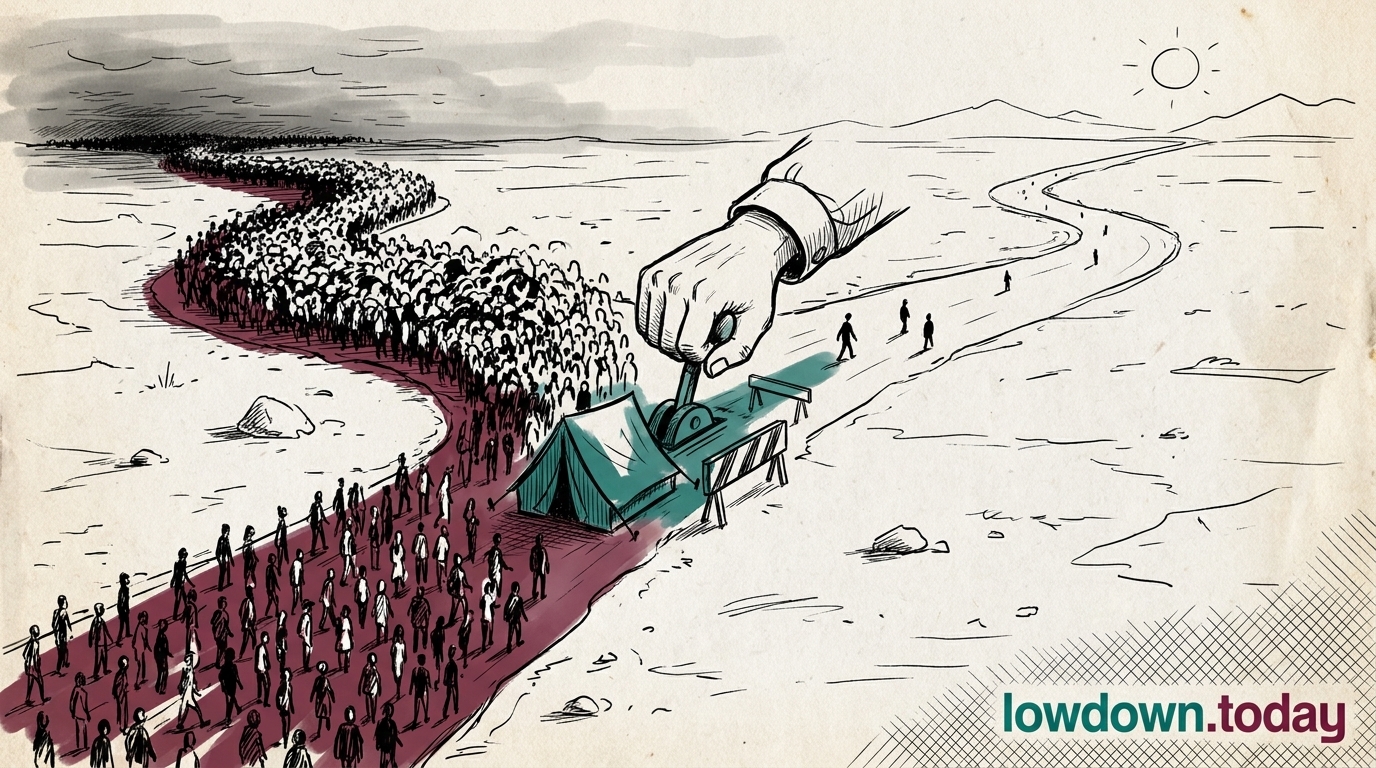
The pledge total reframes the rest of the week. With confirmed cases up 58% in the same window , the binding constraints on this response are no longer financial. Reaching patients in contested territory, holding community trust, and authorising a treatment that does not yet have regulatory clearance are the problems a funding summit cannot solve.

Deep Analysis

In plain English

When a major disease outbreak happens, governments and foundations pledge money to pay for the response: treatment centres, protective equipment, lab tests, and the salaries of contact tracers who track down people who may have been exposed. On 26 May, donors pledged almost $500 million for the Bundibugyo Ebola response in DRC and Uganda. That is 57% more than the $319 million that Africa CDC said it needed for the next six months. Governments often take weeks or months to release funds after making a pledge, yet treatment centres need to pay staff every week. Pledged money on a summit stage and cash in a responder's bank account rarely arrive together. The gap between a headline pledge and a bank transfer reaching the field can determine whether an outbreak is contained quickly or drags on for months.

Deep Analysis
Root Causes

The 57% funding overshoot against the Africa CDC target reflects a structural shift in outbreak financing since the 2018-2020 Kivu response, when the United States contributed approximately $266 million in USAID assistance.

With that bilateral channel dismantled, donor governments that previously sheltered behind US leadership are now publicly pledging directly to multilateral mechanisms. This creates a more diffuse donor base that is harder to coordinate but also harder for any single government to defund unilaterally.

A second root cause is the absence of a standing Pandemic Fund rapid-disbursement window with immediate liquidity. The World Bank's Pandemic Fund, established in 2022 after COVID-19, has a multi-week grant-approval cycle; it is not designed to bridge operational cash gaps in the first 30 days of a PHEIC. Africa CDC's positioning as the summit convenor is partly a response to that institutional gap.

What could happen next?
  • Risk

    Slow pledge-to-disbursement conversion could leave operational partners cash-constrained during the critical first 30 days after the summit, when transmission is at its most concentrated.

  • Opportunity

    African Union-led direct disbursement mechanisms, if pre-positioned and tested on this response, could permanently replace US bilateral financing as the primary rapid-response funding channel for future African outbreaks.

First Reported In

Update #5 · Ebola money arrives, the cure does not

Africa CDC· 2 Jun 2026
Read original
Causes and effects
This Event
Donors pledge $500m, 57% over target
Money has stopped being the constraint on this response, which sharpens the question of why the outbreak is still accelerating.
Different Perspectives
World Health Organization
WHO's DON606 recalibration to confirmed-only reporting gives the clean baseline the CDC model rests on, but the apparent fall from 1,040 to 534 carries misinterpretation risk WHO communications have not pre-empted. The PABS deadlock ahead of IGWG7 and continuing MBP134/remdesivir assessment without authorisation make WHO the body most able to accelerate the two decisions that could change the outbreak's trajectory.
European Union (ECDC)
ECDC's Week 23 CDTR tracked four simultaneous non-Ebola signals: the Dermatophilus congolensis novel-transmission cluster across France, Germany and Spain; a 4.2-fold malaria surge in Mayotte; the Salmonella ST2045 multi-country cluster; and two new Saudi MERS cases. The continental early-warning layer is carrying a full multi-pathogen picture while Bundibugyo dominates headlines.
Uganda
Uganda
Uganda's 19 confirmed cases are concentrated in Kampala and Wakiso, an urban cluster that applied the 2022 Sudan-ebolavirus playbook; the Bwera border laboratory shortens cross-border confirmation to same-day. Uganda's regulatory authority must co-sign before MBP134 or remdesivir can dose any patient.
Democratic Republic of the Congo
Kinshasa shares Bundibugyo sequence data in real time with no treaty-guaranteed access to the vaccines that data informs, and its health minister called the US entry ban discriminatory while negotiating an early lift. DRC accounts for 515 of 534 confirmed cases and faces IS-controlled access blockades in Mambasa that health authorities cannot resolve.
United States (HHS/CDC)
HHS expanded the Ebola entry ban to green-card holders on 5 June, widening a restriction expiring around 17 June against WHO advice. The CDC simultaneously published the R0=2.51 modelling, the sharpest analytical contribution to the response, from a federal bench that holds the NIH and acting CDC director roles in one person.
Imperial College London / Cori and Ferguson
Anne Cori and Neil Ferguson place the case-fatality ratio at 30 to 40 per cent and read the 6.8-to-1 suspected-to-confirmed ratio as evidence that the laboratory figure understates true lethality. Many people die before a swab reaches them.
