Skip to content
You can now search across every topic, entity and event.What's new
Pandemics and Biosecurity
9JUN

Africa CDC wins direct pandemic funding

4 min read
09:58UTC

The Pandemic Fund accredited Africa CDC as an Implementing Entity on 17 June, the first continental health agency anywhere to spend pandemic money without routing it through WHO or the World Bank.

ScienceDeveloping
Key takeaway

Africa CDC can now hold and spend pandemic money on its own authority, not through WHO or the World Bank.

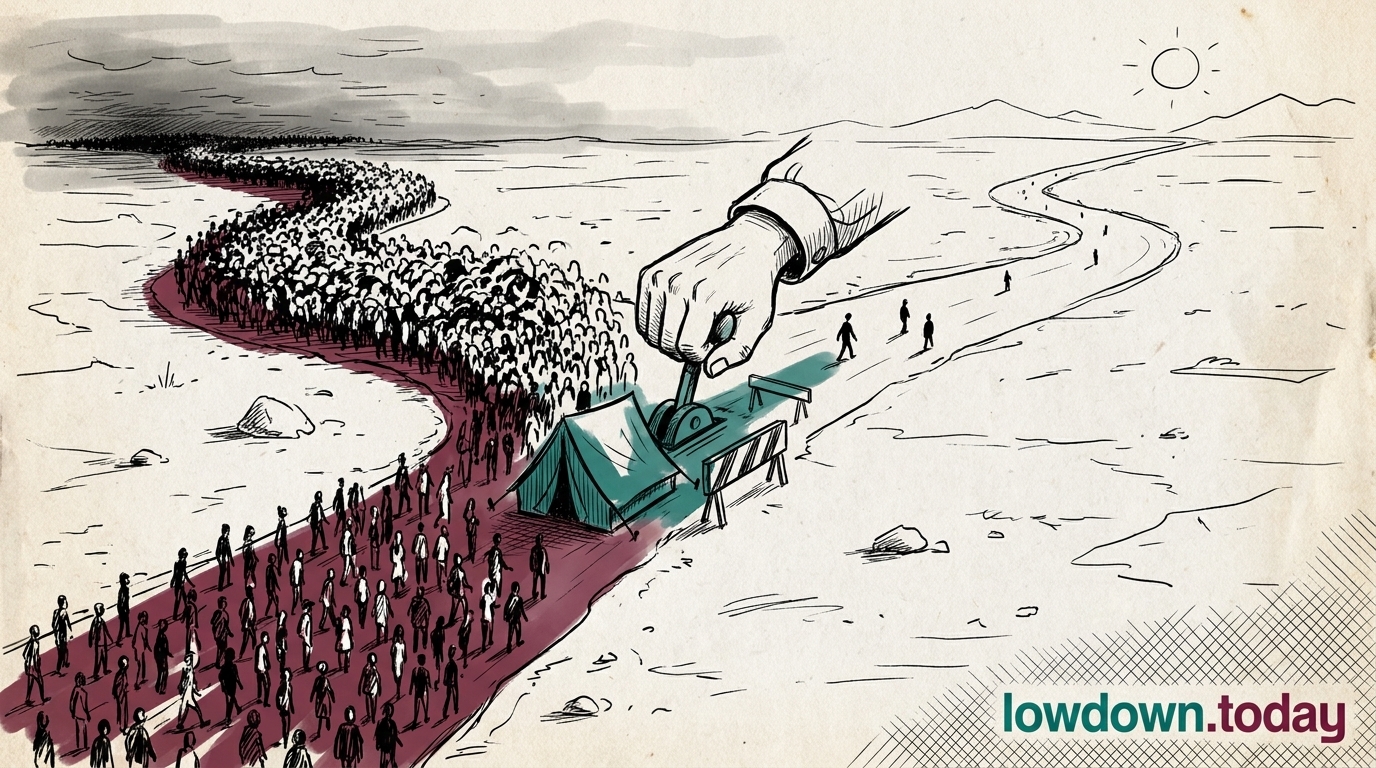
The Pandemic Fund Governing Board accredited Africa CDC as an Implementing Entity on Wednesday 17 June, making it the first African Union institution and the first continental public-health agency anywhere to receive the status 1. The Pandemic Fund is a G20-backed multilateral body, housed at the World Bank, that finances pandemic preparedness and response. Accreditation lets Africa CDC receive and spend its money directly, rather than through an intermediary.

Until now, Pandemic Fund money for African programmes flowed through the World Health Organization (WHO) or the World Bank, which held the fiduciary controls and carried the audit and delivery burden, leaving Africa CDC a recipient rather than a channel. Direct-implementation status moves those controls to Africa CDC itself, changing WHO decides how outbreak money moves on the continent. The accreditation pairs with an African Union High-Level Meeting the next day, Thursday 18 June, that mobilised $910m in Ebola pledges, pushing aggregate funding past the roughly $990m raised earlier .

Read across the outbreak, the accreditation completes a sequence. Africa CDC declared the continental emergency a full day before WHO's own highest alert and raised $500m at its own summit before the larger African Union tranche . The 17 June accreditation now hands Africa CDC the financing channel as well, the institutional capstone of that sequence. The counter-case is concrete: money pledged is not money disbursed, and an agency founded in 2016 now inherits, at this scale for the first time, the fiduciary and delivery risk the World Bank intermediary used to absorb.

Deep Analysis

In plain English

Until 17 June 2026, there was a global fund specifically designed to pay for pandemic preparedness and response: the Pandemic Fund, set up by G20 countries in 2022. But Africa CDC, despite being Africa's main public health agency, could not receive money directly from it. Any funds had to go through the World Bank or the World Health Organization first, adding time and administrative steps. The Pandemic Fund's governing board changed that on 17 June, officially accrediting Africa CDC as an organisation that can receive and manage the money itself. Africa CDC is the first continental public health agency anywhere in the world to achieve this status. The practical difference: when money needs to flow quickly to stop an outbreak, removing the intermediary steps can save weeks. The day after this accreditation, a special African Union meeting of heads of state pledged a further $910 million for the Ebola response.

Deep Analysis
Root Causes

The direct implementation gap that this accreditation closes was itself a product of how the Pandemic Fund was designed at the G20 Bali Summit in 2022: the founding framework privileged World Bank and WHO as implementing entities because they had the existing fiduciary infrastructure that donor governments required.

African institutions were structurally subordinate not because of any explicit exclusion but because the eligibility criteria (audit capacity, financial management systems, legal accountability frameworks) effectively required Western-standard institutional maturity.

Africa CDC publicly criticised this exclusion at the time of the Pandemic Fund's first call for proposals. The accreditation granted on 17 June 2026 is the institutional acknowledgement that Africa CDC has met those fiduciary standards, a milestone that took four years from the Fund's launch to the first African public health agency accreditation.

What could happen next?
  • Precedent

    Africa CDC's Pandemic Fund accreditation establishes that continental public health agencies can meet G20-standard fiduciary requirements and receive direct multilateral financing, a model other regional bodies (PAHO, SEARO) may follow.

    Medium term · Assessed
  • Opportunity

    Direct Pandemic Fund access enables Africa CDC to contract logistics and supply providers independently of World Bank procurement timelines, potentially reducing outbreak-response deployment time by weeks.

    Short term · Assessed
  • Meaning

    Africa CDC has now declared first, funded first, and gained independent financing access in the Bundibugyo response, a sovereignty shift in continental health governance that began with the mpox clade I sequencing precedent and has accelerated through each phase of the PHEIC.

    Long term · Assessed
First Reported In

Update #8 · Ebola reaches France through a screening blind spot

Africa CDC· 25 Jun 2026
Read original
Different Perspectives
UK Health Security Agency
UKHSA said egg consumption remains the strongest signal in its 207-case Salmonella Enteritidis investigation. The genomic cluster and 38% hospitalisation among people with available information make exposure identification a public-health priority.
GLEWS+
GLEWS+
GLEWS+ assessed spillover risk from clade B MERS in Nile Basin camels as high if the clade establishes, while rating evidence for spread in camel populations low confidence. The joint assessment makes whole-genome sequencing the next test of the threat.
WHO Regional Office for Africa
WHO's Africa office said transmission in DR Congo is outpacing control efforts after laboratory capacity reached 19 sites and treatment capacity exceeded 1,300 beds. The assessment puts access, insecurity, community deaths and late care-seeking ahead of a simple equipment shortage.
People in Guatemala
People in Guatemala
Guatemala's population now carries the region's largest reported measles burden, with 30,371 confirmed cases and 26 deaths. The scale shifts practical attention from the Mexico-centred frame that followed the World Cup's travel consequences.
Pan American Health Organization
PAHO rated regional measles risk very high after recording 47,459 confirmed cases and 44 deaths through week 28. It names vaccination coverage, accumulated susceptibles and mass gatherings with broad international participation as general risk factors.
Chinese health authorities
China reported three human H9N2 cases to WHO between 10 and 16 July: two four-year-olds recovered, a 44-year-old man remains in intensive care, the first severity signal in a cluster that has produced 173 cases and 2 deaths globally since 2015. The subtype is distinct from the H5N1 series this topic otherwise tracks.
