Skip to content
You can now search across every topic, entity and event.What's new
Pandemics and Biosecurity
21JUL

Burned clinic rebuilt as access fails

3 min read
09:12UTC

A treatment centre in eastern DRC was torched by protesters and then rebuilt, the Africa CDC and WHO reported on 29 May. Tedros, who visited Ituri on 28 May, said stopping transmission depends entirely on humanitarian access.

ScienceDeveloping
Key takeaway

A second DRC treatment centre was torched and rebuilt, and Tedros tied the outbreak's fate entirely to humanitarian access.

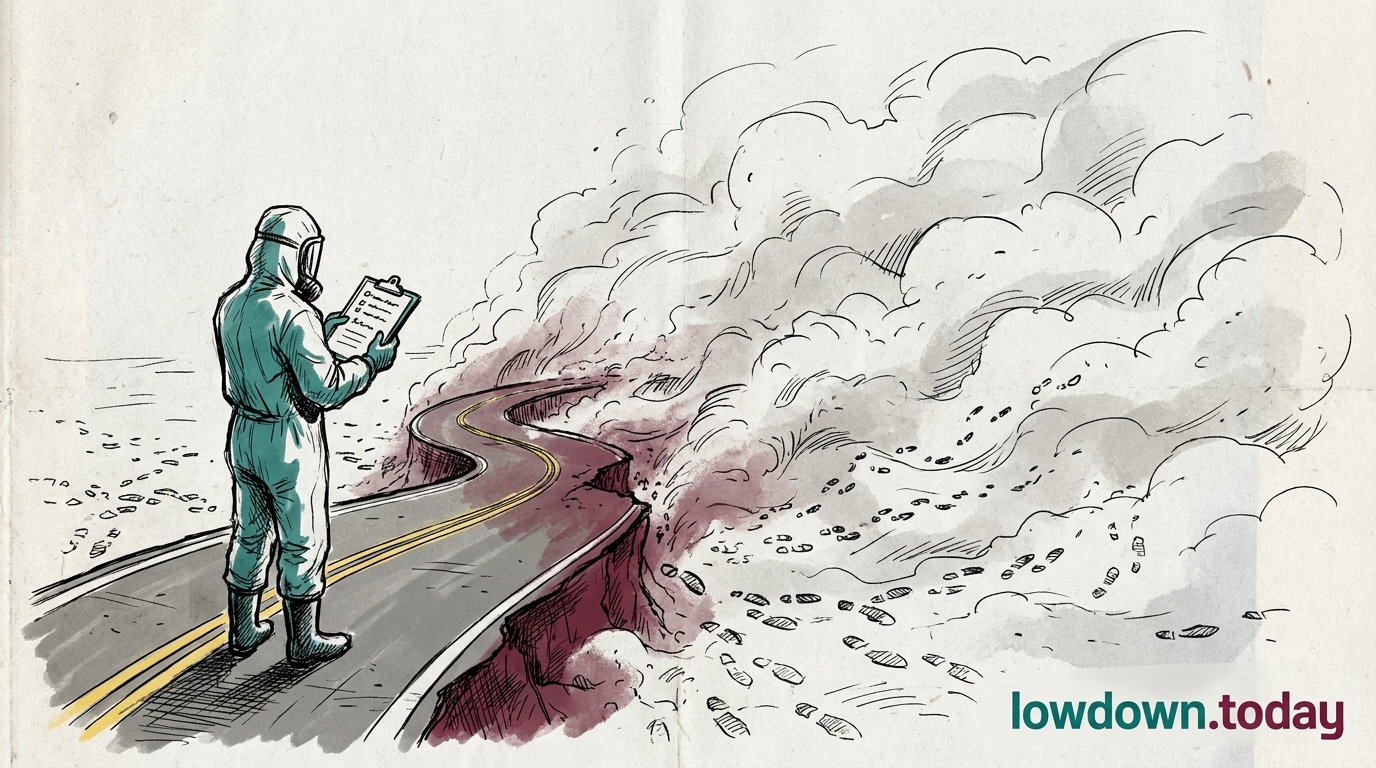
A treatment centre in eastern Democratic Republic of Congo was burned by protesters and then rebuilt, the Africa CDC and WHO response reported on Friday 29 May 1. This is a separate incident from the South Kivu facility torched earlier in May , and the repetition is the worrying part: two clinics attacked in two zones points to a pattern of Community distrust rather than a single flashpoint.

WHO Director-General Tedros Adhanom Ghebreyesus visited Ituri Province on Thursday 28 May and put the constraint plainly on Wednesday 27 May: "Stopping this Ebola transmission depends entirely on humanitarian access" 2. Much of the outbreak zone sits in territory contested by the M23 armed group, a Rwandan-backed force that has held parts of eastern DRC since February 2025; DON605 records attacks on health facilities slowing the response 3.

With no vaccine and no licensed treatment, responders cannot vaccinate their way out of distrust as they could in the Zaire outbreaks. Tracing contacts and isolating cases depends on residents accepting responders into their communities, so each torched clinic removes the one tool the response has left. The WHO is leaning on a counter-narrative of recovery: five Bundibugyo patients were discharged on Sunday 31 May 4.

Deep Analysis

In plain English

In the DRC outbreak zone, a treatment centre was attacked and set on fire by local residents, then rebuilt. This is not an isolated incident; a separate facility in South Kivu province was also torched in May (a prior event in this briefing covers that case). Treatment centres are where people with Ebola symptoms are isolated and cared for; without them, sick people remain at home and can pass the virus to family members. The attacks happen because communities sometimes distrust or resent how outbreak responders behave: arriving from outside, taking patients away, and returning bodies for burial. WHO Director-General Tedros Adhanom Ghebreyesus visited Ituri Province on 28 May and stated that stopping transmission depends entirely on communities allowing health workers access. M23, an armed group that controls parts of eastern DRC, is also blocking or slowing the response in the areas it controls.

Deep Analysis
Escalation

Two confirmed treatment-centre arson incidents in eight days (South Kivu in May, Ituri in late May) represent a worsening pattern that follows the Kivu 2018-20 precedent closely. The current contact-tracing rate of 21% of named contacts is already below the 80% threshold associated with containment in modelling studies by the London School of Hygiene and Tropical Medicine. Further infrastructure destruction will drive contact-tracing coverage lower, not higher.

What could happen next?
  • Risk

    Treatment centre arson combined with M23 access restrictions reduces the DRC response's physical infrastructure faster than it can be rebuilt, creating a cyclical coverage gap in the most heavily affected Ituri health zones.

First Reported In

Update #5 · Ebola money arrives, the cure does not

World Health Organization· 2 Jun 2026
Read original
Causes and effects
This Event
Burned clinic rebuilt as access fails
Against a virus with no vaccine and no treatment, community engagement is the primary tool, and a burned clinic destroys exactly that.
Different Perspectives
UK Government
UK Government
The Biological Security Strategy implementation report published 14 July commits the UK to deciding within twelve months whether to make DNA-synthesis screening mandatory, backed by GBP 1.83bn for biosecurity centres. It is a preemptive move on a threat that has not yet produced a UK incident.
Cambodia's Ministry of Health
Cambodia confirmed a nine-month-old girl in Phnom Penh as its fourth 2026 H5N1 case on 11 July, the country supplying four of the world's seven new human cases since February. The ministry's confirmed-case cadence is running well ahead of a US surveillance system that has recorded nothing new since March.
Knowledge Ecology International
KEI published proposed annex text on the day IGWG7 opened that would attach benefit-sharing duties to a product's market registration, regardless of whether the manufacturer used shared samples or only downloaded sequence data. It is the Africa Group's fallback position if the sample-based bargain fails to bind.
European Union
European Union
The EU and other industrialised states backed a hybrid model built on centralised infrastructure with more flexible access terms, the opposite design choice from the Africa Group's. Brussels wants conditions handled contractually once samples reach shared facilities, not attached to national custody of the material itself.
Africa Group / Algeria
Algeria, speaking for the Africa Group at IGWG7, backed distributed national and regional laboratories under binding access conditions, arguing that supplying states must keep legal control of samples rather than surrender them into shared infrastructure.
Uganda's Ministry of Health
Uganda discharged its last confirmed patient on 16 July and opened a 42-day countdown to declaring its own outbreak over, closing at 20 cases and 2 deaths with no new case since 21 June. This is a closing chapter running alongside DR Congo's still-worsening one, contingent on a border DRC can no longer see across.