Skip to content
You can now search across every topic, entity and event.What's new
Pandemics and Biosecurity
21JUL

Ebola crosses into M23-held South Kivu

3 min read
09:12UTC

The first confirmed Bundibugyo case in South Kivu appeared in territory held by the M23 rebel movement, where the patient died undiagnosed and residents torched a treatment facility as responders arrived.

ScienceDeveloping
Key takeaway

An outbreak that reaches rebel-held South Kivu outlasts the institutions built to contain it.

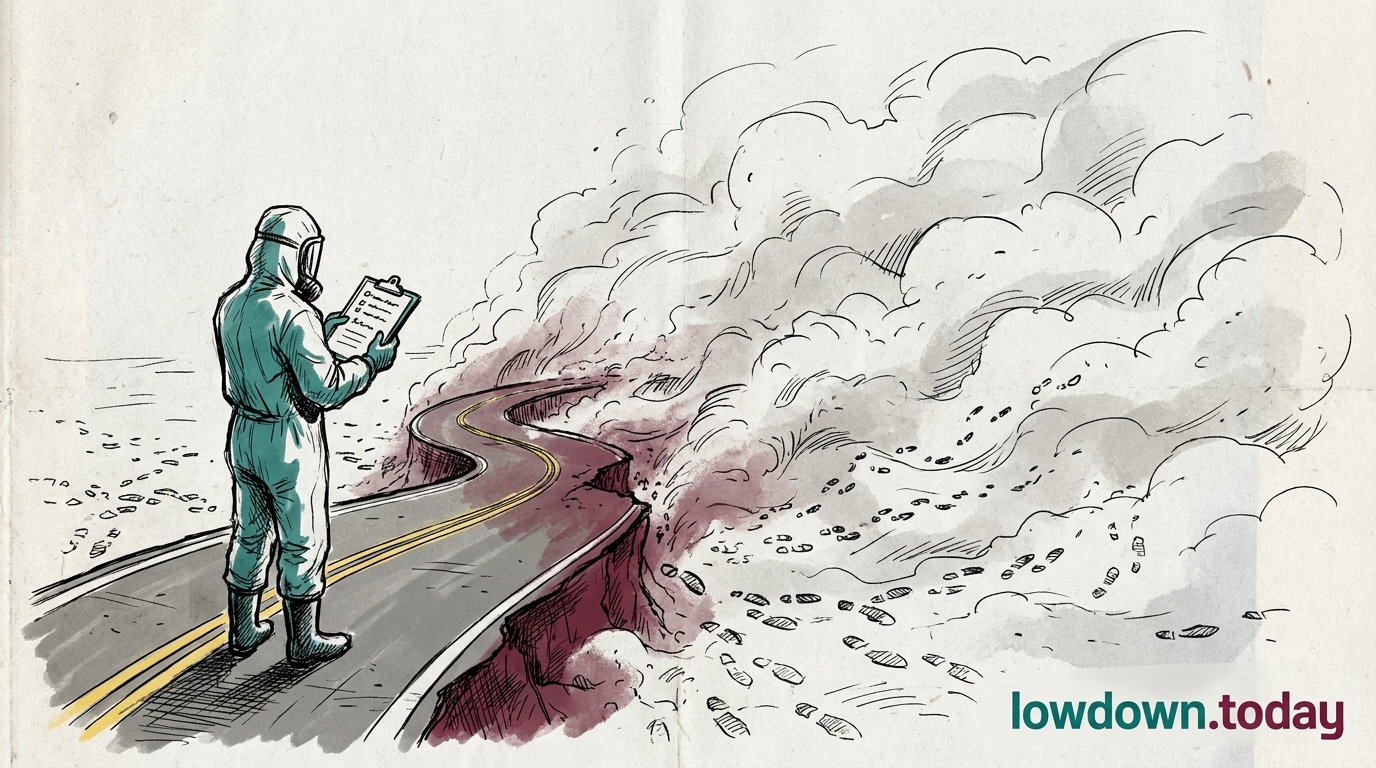
The first confirmed Bundibugyo Ebola case outside Ituri has appeared in South Kivu, the eastern DRC province held by the M23 rebel movement since February 2025 1. The patient, a 28-year-old, died before the diagnosis could be confirmed, and residents set fire to a treatment facility as responders arrived 2. M23 is a Rwandan-backed armed group; the territory it governs has no outbreak-management apparatus and no prior Ebola experience.

The crossing changes what kind of problem this is. Inside Ituri the response is at least a contest, however badly it is going under the 21% tracing ceiling logged in WHO's outbreak data . South Kivu offers no institution to work with at all. The 21-day contact monitoring, isolation wards and safe-burial teams that define an Ebola response all assume a public authority that can compel and protect; a rebel administration provides none of that, and the torched clinic shows the local trust deficit a response would have to overcome before it could begin.

This is the mechanism by which an outbreak outlasts its own emergency declaration. Africa CDC moved early and Uganda contained two imported cases with no onward spread , which shows containment is possible where the state functions. South Kivu removes that precondition. The India-Africa summit was postponed as the geography shifted 3, a small diplomatic casualty that signals how quickly a contained DRC health event becomes a regional one once it escapes the zones where anyone can act on it.

Deep Analysis

In plain English

South Kivu is a province in eastern DRC that has been controlled since February 2025 by M23, a rebel armed group backed by Rwanda. M23 has no hospitals, no disease-monitoring systems, and no government health authority. When Ebola crosses into territory they control, the standard outbreak tools cannot be used: tracing who a patient has been near, isolating them, monitoring for symptoms. A 28-year-old patient died there before doctors could even confirm the diagnosis. Local residents, frightened by the arrival of health teams in protective equipment, set fire to a treatment facility. This is not unusual: distrust of outside health workers was also a problem during the 2018-2020 DRC Ebola outbreak, the deadliest in that country's history.

Deep Analysis
Root Causes

South Kivu's inclusion in the outbreak corridor follows directly from Ituri's 21% contact follow-up rate (event-00): untraced contacts become the transmission chains that cross provincial and armed-group borders through gold-trade movement corridors.

The INRB (Institut National de Recherche Biomedicale) nine-day species confirmation lag meant the community-to-signal gap was over four weeks; by the time Bundibugyo was identified, transmission chains were already multi-generational. M23 has no public-health counterpart; it has no equivalent of the DRC Ministry of Health's operational reach, however imperfect that reach is in Ituri itself.

What could happen next?
  • Risk

    M23-held territory has no outbreak-management infrastructure; a transmission cluster establishing there would be functionally invisible to WHO and Africa CDC surveillance systems until patients cross into DRC government-held areas.

  • Precedent

    The South Kivu crossing sets a structural precedent for this PHEIC: if a single untraced contact can reach armed-group territory, the IHR Temporary Recommendations on exit screening are inadequate for an outbreak whose geographic perimeter includes ungoverned space.

First Reported In

Update #4 · Ebola triples, response misfires

Al Jazeera· 24 May 2026
Read original
Different Perspectives
UK Government
UK Government
The Biological Security Strategy implementation report published 14 July commits the UK to deciding within twelve months whether to make DNA-synthesis screening mandatory, backed by GBP 1.83bn for biosecurity centres. It is a preemptive move on a threat that has not yet produced a UK incident.
Cambodia's Ministry of Health
Cambodia confirmed a nine-month-old girl in Phnom Penh as its fourth 2026 H5N1 case on 11 July, the country supplying four of the world's seven new human cases since February. The ministry's confirmed-case cadence is running well ahead of a US surveillance system that has recorded nothing new since March.
Knowledge Ecology International
KEI published proposed annex text on the day IGWG7 opened that would attach benefit-sharing duties to a product's market registration, regardless of whether the manufacturer used shared samples or only downloaded sequence data. It is the Africa Group's fallback position if the sample-based bargain fails to bind.
European Union
European Union
The EU and other industrialised states backed a hybrid model built on centralised infrastructure with more flexible access terms, the opposite design choice from the Africa Group's. Brussels wants conditions handled contractually once samples reach shared facilities, not attached to national custody of the material itself.
Africa Group / Algeria
Algeria, speaking for the Africa Group at IGWG7, backed distributed national and regional laboratories under binding access conditions, arguing that supplying states must keep legal control of samples rather than surrender them into shared infrastructure.
Uganda's Ministry of Health
Uganda discharged its last confirmed patient on 16 July and opened a 42-day countdown to declaring its own outbreak over, closing at 20 cases and 2 deaths with no new case since 21 June. This is a closing chapter running alongside DR Congo's still-worsening one, contingent on a border DRC can no longer see across.