Skip to content
Briefings are running a touch slower this week while we rebuild the foundations.See roadmap
Media's AI Pivot
10MAY

AP runs SMART STORIES and journalist buyouts in same fortnight

5 min read
16:44UTC

The Associated Press co-championed the SMART STORIES open-standards consortium for AI news production interoperability in the same fortnight it offered voluntary buyouts to journalists, two postures that are factually concurrent rather than causally linked but are running through the same 178-year-old wire service.

IndustryDeveloping
Key takeaway

AP runs SMART STORIES and AI buyouts concurrently; how it resolves the tension travels through every consortium signatory.

The Associated Press co-championed the SMART STORIES open-standards consortium for agentic news production interoperability in the same fortnight that it offered voluntary buyouts to journalists as part of an internal restructuring around AI 1. AP's editorial-tech leadership ran the consortium work; the buyouts ran through cost-side restructuring under separate organisational reporting lines. The two postures are factually concurrent rather than causally linked, and AP has not framed them as connected.

Holding the two postures inside the same organisation makes the contradiction worth flagging without forcing a causal claim the public record cannot support. AP's external voice talks interoperability, open standards and humans in the loop. AP's internal voice talks structural workforce reduction at a 178-year-old wire service that has never restructured this way before. The framing question the public disclosures do not yet answer is whether AP's editorial leadership and cost leadership share a single AI thesis or are working from incompatible ones. RTL Group's German operation is the European parallel. RTL Deutschland cut 600 jobs in late 2025 alongside AI deployment that reduces youth-protection screening time by up to 80% 2, and group CEO Thomas Rabe has framed AI as the explicit substitute for the cut headcount rather than as a complementary tool.

AP is the busiest test case in news for whether the two postures can sit inside the same organisation, because every other SMART STORIES signatory, NBCUniversal, the BBC, ITV, Sky, the Washington Post, is watching how AP resolves the tension. If AP's buyouts hit the editorial workflow the consortium is designing for, the consortium signal weakens; if the buyouts run cleanly through cost-side functions and editorial output holds, the open-standards thesis gets a 178-year-old proof point. Either reading travels through the rest of the consortium membership when the SMART STORIES proof-of-concept demos land at the September IBC. Without the public organisational chart that connects the two AP work streams, the editorial standard for the next fortnight is restraint: report what is known, name what is not, and let the disclosures that follow set the causal claim.


Deep Analysis

In plain English

The Associated Press, which provides news to thousands of publications worldwide, made two significant announcements in the same fortnight: it offered voluntary redundancy packages to some of its journalists, and it joined a nine-member consortium to build an open technical standard for AI news production. The two announcements came from different parts of the organisation and AP has not framed them as connected. The tension is this: AP is publicly advocating for a future of AI-powered news production that, in the European parallel (RTL Deutschland), has resulted in job cuts alongside AI deployment. AP's position as a not-for-profit news cooperative means its incentives are somewhat different from commercial publishers, but its journalists and their union are watching whether the consortium work leads to more automation and fewer roles, or to a managed transition that protects editorial jobs.

Deep Analysis
Root Causes

AP's buyout programme reflects the same structural revenue pressure as Reach plc's ({{EVREF:event-1}}): the wire service's member subscriptions, which fund its editorial operations, have been declining as local newspapers (its primary customers) consolidate and reduce their wire-service spending.

AI-automation of routine reporting tasks (earnings report briefs, sports results, weather alerts) reduces the per-story cost basis and therefore the minimum viable revenue per member needed to sustain editorial operations.

The SMART STORIES consortium leadership is a different decision, driven by AP's institutional interest in ensuring that AI production standards do not create a dependency on a single commercial vendor whose priorities AP cannot influence.

AP's not-for-profit cooperative structure gives it a distinctive incentive to invest in open standards: unlike a commercial publisher that competes with peer publishers, AP's member newspapers are its customers, and a world in which AP's content infrastructure becomes dependent on a single AI vendor's proprietary format creates counterparty risk for all AP members simultaneously.

What could happen next?
  • Consequence

    RTL Deutschland's 600 job cuts alongside AI deployment is the realised case that SMART STORIES consortium critics point to as AP's likely trajectory; whether AP's cooperative structure allows a different outcome will be tested over the 18 months after the September 2026 IBC demonstration.

    Medium term · 0.6
  • Risk

    If AP's Q2 2026 member subscription revenue shows further decline alongside the buyout programme, the public record will become harder to frame as structurally non-causal between the AI investment and the workforce reduction — increasing reputational and labour-relations exposure for AP's SMART STORIES leadership role.

    Short term · 0.65
  • Opportunity

    AP's not-for-profit structure and cooperative membership model gives it a credibility advantage over commercial publishers in advocating for open AI standards: it can argue that its incentive is genuinely member welfare rather than profit extraction, which matters for regulatory and standards-body recognition.

    Medium term · 0.7
First Reported In

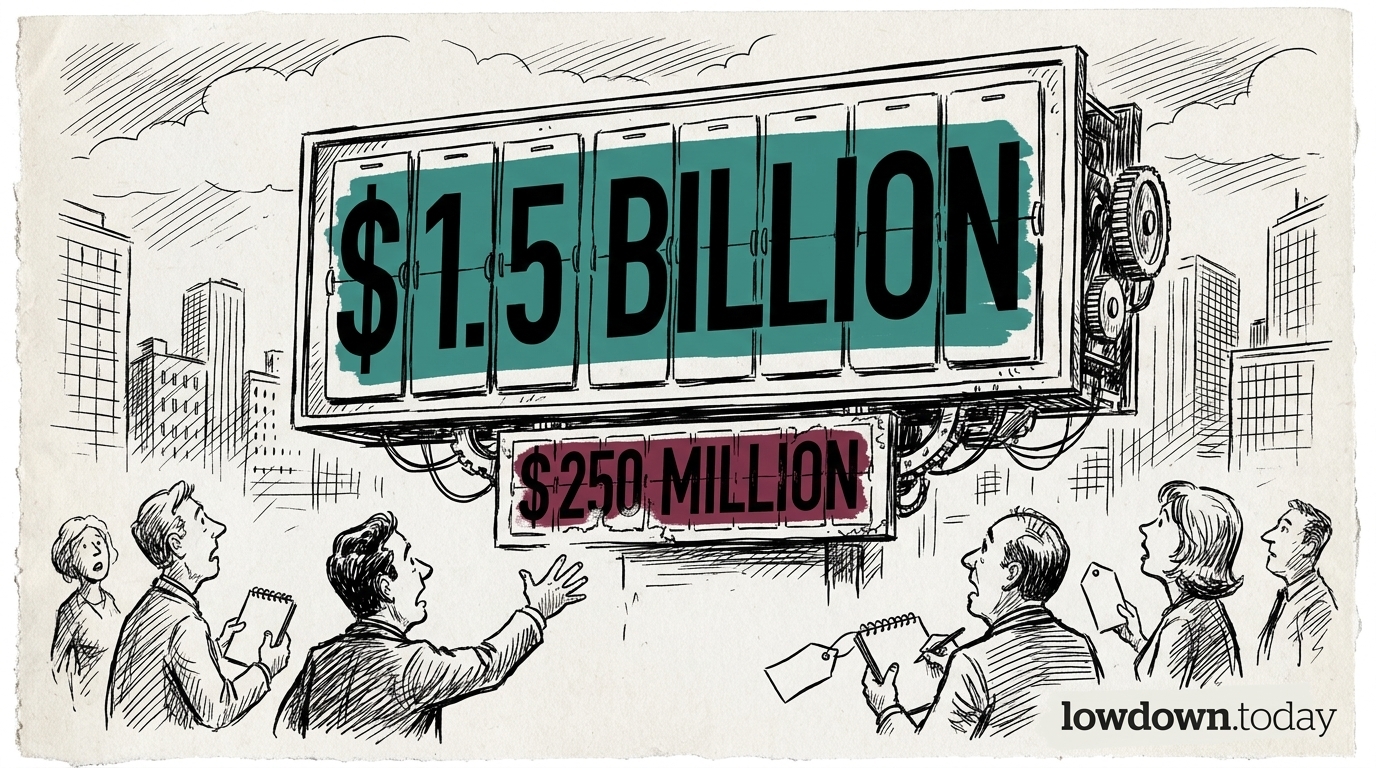
Update #1 · News Corp names $1.5bn AI settlement

IBC Show· 10 May 2026
Read original
Different Perspectives
Sport rights holders (DAZN and Genius Sports)
DAZN's 30 April TikTok Serie A livestream and Genius Sports' Moment Engine launch mark the shift from social as the clip-reel to social as the live channel. Rights holders are ceding first-window distribution control in exchange for monetisation share and audience access, with DAZN's AI Delta Protocol reducing transport costs to make free livestreams viable on a P&L.
SMART STORIES consortium (IBC Accelerator)
Nine organisations including AP, BBC, NBCUniversal, Sky and ITV are building an open standard for story-context portability across agentic editing vendors. NBCUniversal VP Alex Bassett called the target 'something close to a minimum viable product rather than a simple proof of concept', with demonstrations due at IBC Amsterdam in September 2026.
EU regulators (AI Act Article 50)
Article 50 transparency obligations take effect 2 August 2026, with 84 days remaining and no major EU broadcaster publicly signed to the Code of Practice. The enforcement window coincides with the Q1 2026 earnings cycle, compressing the compliance decision horizon for RTL Group, M6 and ProSiebenSat.1.
Reach plc (UK mid-tier publisher)
Reach's April trading update disclosed a pay-per-usage AWS deal alongside Q1 group revenue down 6.9% and digital revenue down 8.1%. The framing treats usage-based licensing as a structural hedge against ad-revenue decline, with 'active discussions with several other tech platforms' signalling deliberate counterparty diversification.
News Corp (US tier-1 publisher)
Robert Thomson named the $1.5bn anticipated Anthropic settlement on the Q3 FY2026 earnings call, using 'anticipated' rather than 'agreed' as the settlement remains live. Reading a specific dollar figure into an SEC-filed transcript closes the information asymmetry that kept bilateral AI deal terms private across the industry.
