Skip to content
Briefings are running a touch slower this week while we rebuild the foundations.See roadmap
Iran Conflict 2026
16MAY

Brent above $116, set for record month

2 min read
12:41UTC

Brent crude advanced above $116, up 72% from pre-war levels and heading for its largest monthly increase on record. Markets are pricing prolonged conflict, not resolution.

ConflictAssessed
Key takeaway

Markets are pricing prolonged war, not imminent resolution.

Brent Crude advanced above $116 per barrel on 30 March, approximately 72% above its pre-war level of $67.41. 1 The monthly gain is heading for a record. Goldman Sachs maintained a $14 to $18 per barrel geopolitical risk premium is baked into the price. Global stock markets extended their selloff as Houthi entry and the US military build-up stoked prolonged-conflict fears.

The price trajectory tells the story of a market that has abandoned hope of a quick resolution. Brent settled at $112.57 on 28 March , already elevated by Houthi entry. Trump's oil seizure statement, the third consecutive Houthi attack on Israel, and Pentagon confirmation of ground operations planning pushed it above $116 two days later.

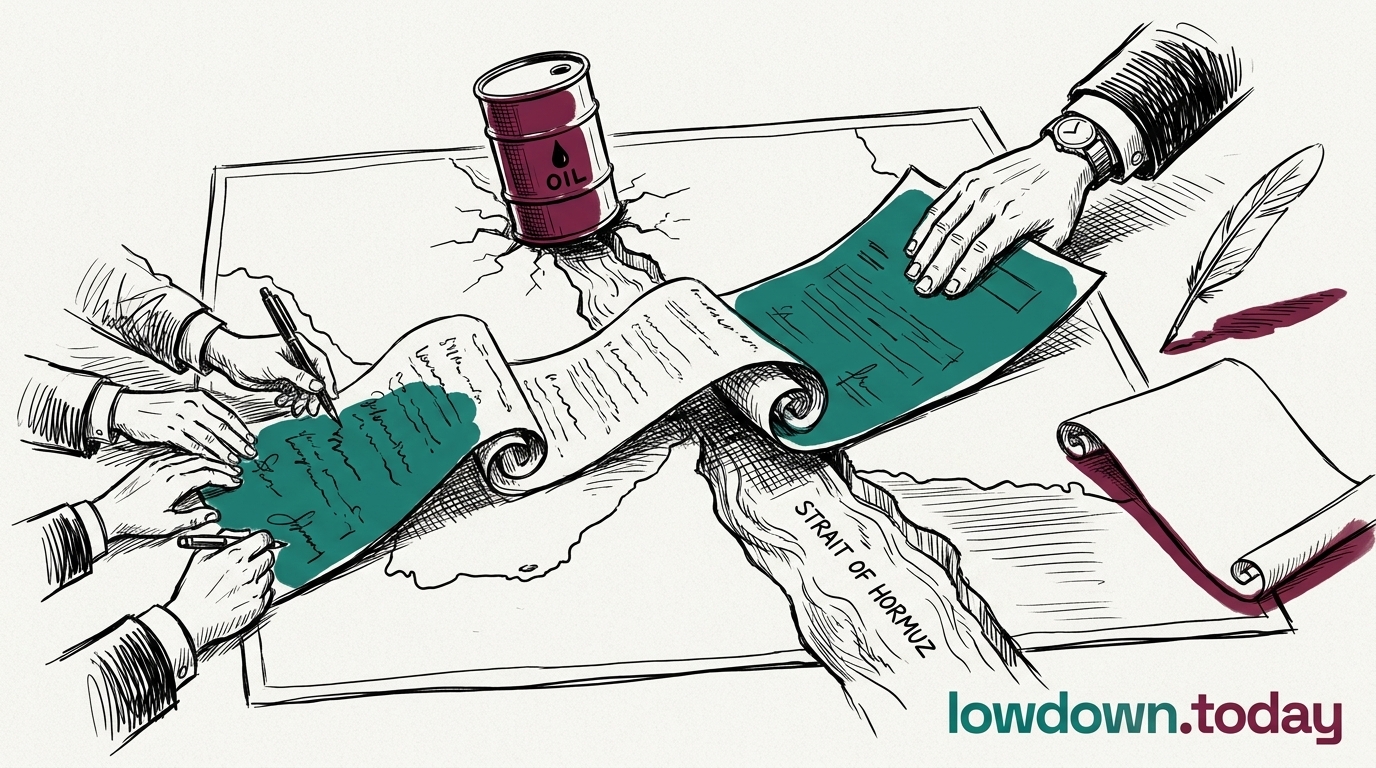
AIS tracking data paints a bleaker picture than headline prices suggest. Shadow fleet vessels account for 80% of Hormuz transits in March, up from 15% in February . Legitimate commercial traffic has effectively stopped: approximately three transits per 24 hours against a pre-war baseline of 138. The Hormuz 'reopening' is a reorganisation of traffic to benefit non-US-aligned operators, denominated in yuan, under IRGC naval supervision.

The 6 April deadline for Trump's power plant strike threat is six days away. If the deadline passes without diplomatic movement and the 82nd Airborne stages forward from Kuwait, Goldman's risk premium estimate will need revision upward. Every dollar on Brent translates to approximately 2.5 pence per litre at UK petrol pumps within a week.

Deep Analysis

In plain English

Brent crude is the main international benchmark for oil prices. Before the war started, a barrel of oil cost $67. By 30 March it cost over $116. That is a 72% increase in one month. Higher oil prices feed through into everything: petrol and diesel costs, heating bills, the price of food and goods that are transported, and the cost of making plastic and chemicals. The monthly increase is on track to be the largest in recorded history. Goldman Sachs, the US bank that tracks commodity prices, says there is an extra $14 to $18 on every barrel just because of the war risk. The closer US ground forces get to Iran's oil export terminal at Kharg Island, the higher the risk premium is likely to rise.

What could happen next?
  • Risk

    The 6 April power plant strike deadline, with no diplomatic movement, risks a further price spike beyond Goldman's current risk-premium estimate if Trump follows through.

  • Consequence

    The IEA's 400 million barrel emergency release has not stabilised prices. Markets are treating this as a structural supply disruption, not a temporary spike amenable to reserve releases.

First Reported In

Update #52 · Trump wants Iran's oil; 3,500 Marines land

Bloomberg· 30 Mar 2026
Read original
Different Perspectives
India (BRICS meeting host, grey-market beneficiary)
New Delhi hosted the BRICS foreign ministers' meeting on 14 May that Araghchi attended under the Minab168 designation, giving India a front-row seat to Iran's diplomatic positioning. India's state refiners have been absorbing discounted Iranian crude through grey-market routing since April; Brent at $109.30 means every barrel sourced outside the formal market generates a structural saving.
Hengaw / Kurdish human rights monitors
Hengaw's daily reports from Iran's Kurdish provinces remain the sole independent cross-check on Iran's judicial activity during the conflict. Two executions across Qom and Karaj Central prisons on 15 May and five Kurdish detentions on 15-16 May indicate the wartime judicial pipeline is operating independently of military tempo.
Pakistan (mediator and bilateral partner)
Islamabad spent its diplomatic capital as the US-Iran MOU carrier to secure LNG passage for two Qatari vessels through a bilateral Pakistan-Iran agreement, spending its mediation credit for direct economic gain. China's public endorsement of Pakistan's mediatory role on 13 May is the structural reward.
China and BRICS bloc
Beijing endorsed Pakistan's mediatory role on 13 May, one day after the BRICS foreign ministers' meeting in New Delhi. Chinese state banks are processing PGSA yuan toll payments; China has not commented on its vessels' continued Hormuz passage, but benefits structurally from a non-dollar toll system it did not design.
Iraq (bilateral passage partner)
Baghdad negotiated a 2-million-barrel VLCC transit without paying PGSA yuan tolls, offering political alignment in lieu of cash. Iraq's position inside Iran's adjacent bloc makes it the natural first bilateral partner and a template for how Tehran structures passage deals with states that cannot afford Western coalition membership.
Bahrain and Qatar (Gulf signatories)
Both signed the Western coalition paper while hosting US Fifth Fleet and CENTCOM's Al Udeid base, respectively. Qatar occupies the sharpest contradiction: it is on coalition paper while simultaneously receiving LNG passage through the bilateral Iran-Pakistan track, a position Doha has tacitly accepted from both sides.