Skip to content
Briefings are running a touch slower this week while we rebuild the foundations.See roadmap
Iran Conflict 2026
16MAY

Abu Dhabi Gas Facility Ablaze After Intercept Debris Strike

3 min read
12:41UTC

Debris from an intercepted projectile set Abu Dhabi's Habshan gas facility alight on 3 April. Cumulative UAE intercepts have now reached 457 ballistic missiles and 2,038 UAVs, with 19 ballistic missiles and 26 UAVs intercepted in two days alone.

ConflictDeveloping
Key takeaway

Habshan's fire from intercept debris shows UAE defences cannot fully prevent secondary damage even when missiles are stopped.

Abu Dhabi's Habshan gas processing facility caught fire on 3 April from debris of an intercepted projectile, according to UAE WAM. The strike was intercepted; the fire was not. The distinction between a direct hit and intercept debris has become operationally significant as the attack tempo increases.

The UAE Ministry of Defence's cumulative intercept totals now stand at 457 ballistic missiles, 2,038 UAVs, and 19 cruise missiles, up from 438 ballistic missiles and 2,012 UAVs as recently as Day 34 . Nineteen ballistic missiles and 26 UAVs were intercepted in two days alone. CENTCOM has described Iranian strike capability as 'dramatically curtailed.' The intercept data does not support that characterisation.

Habshan processes gas from the Rub al-Khali basin and feeds downstream UAE energy infrastructure. A fire at the facility, even from debris rather than a direct hit, affects processing capacity. The ADNOC bypass pipeline running from Abu Dhabi to Fujairah reached 71% utilisation as of Day 34 , meaning available redundancy is already constrained.

A Bangladeshi farm worker was killed by UAE air defence shrapnel in Fujairah on 1 April . The Habshan fire follows the same lethal-debris pattern. The UAE's missile defence system is performing its function; the secondary effects of that function are accumulating across the country's civilian and energy infrastructure.


Deep Analysis

In plain English

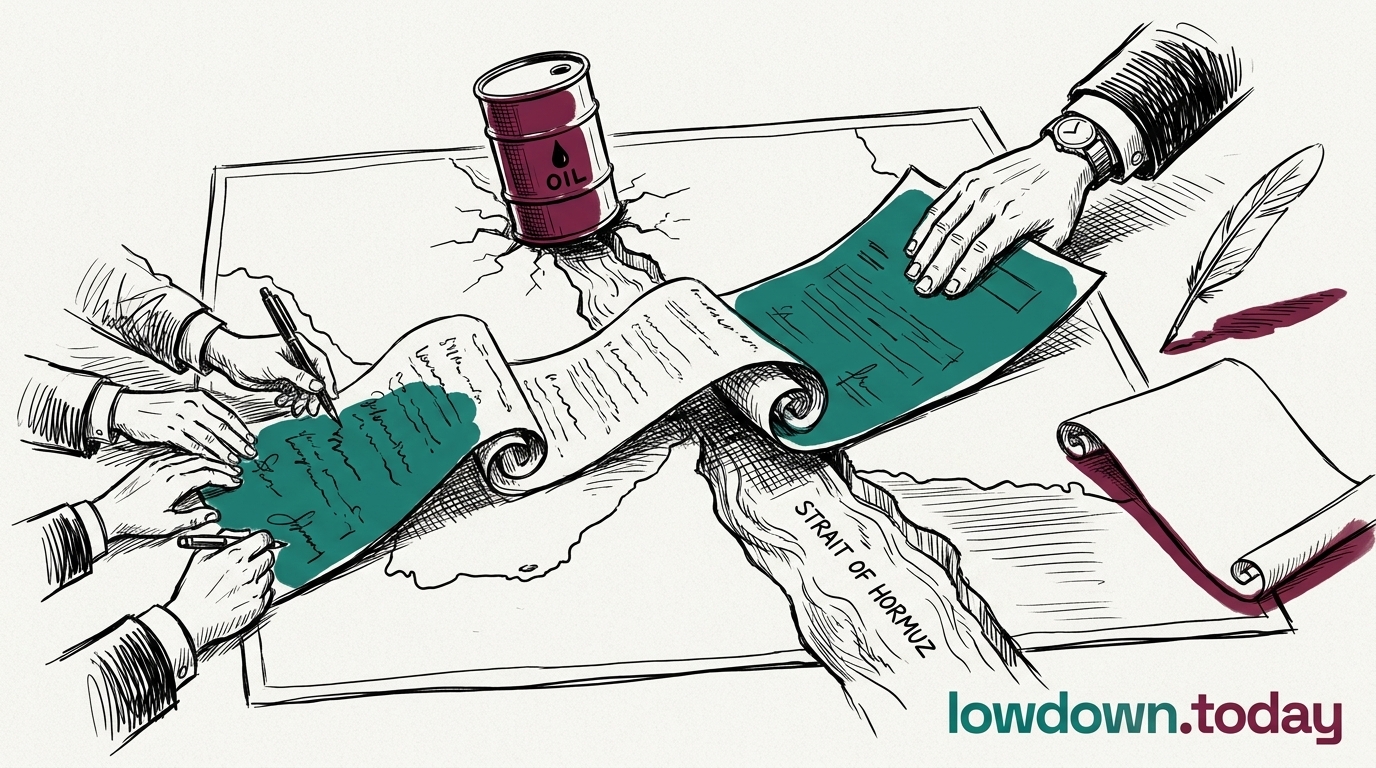
Iran is charging ships $1 for every barrel of oil they carry through the Strait of Hormuz, and it is now a law rather than just a wartime demand. Ships that refuse can go around Africa, adding weeks and significant cost to the journey. Some countries have already negotiated exemptions; everyone else pays.

Deep Analysis
Root Causes

The toll emerged from the IRGC's need to fund ongoing operations while Iran's oil export revenues are under maximum pressure sanctions. At $1/barrel with 16 transits, daily revenue is modest, but codification in law signals this is designed to outlast the conflict as a permanent Iranian revenue stream.

The stablecoin and yuan denomination reflects Iran's broader strategy of decoupling from dollar-denominated financial infrastructure, which has been in development since the reimposition of JCPOA sanctions in 2018.

Escalation

Stabilising in a narrow sense — codification reduces the unpredictability of the toll system by setting a clear price. But the legal permanence is escalatory in terms of the long-term structural conflict: the US cannot accept Iranian toll authority over an international strait without a formal legal and diplomatic challenge.

What could happen next?
  • Precedent

    Codifying the toll in Iranian law creates a permanent legal basis that will survive any ceasefire, requiring a specific diplomatic instrument to reverse.

    Long term · High
  • Risk

    OFAC action against the specific stablecoins used for toll collection would create a financial enforcement confrontation with stablecoin issuers operating in US-adjacent jurisdictions.

    Short term · Medium
  • Consequence

    Asian LNG importers face permanent Hormuz premium pricing regardless of conflict resolution; the structural cost is now baked into the market.

    Medium term · High
First Reported In

Update #57 · Bridge strike kills eight; Army chief fired

UAE WAM / Ministry of Defence· 3 Apr 2026
Read original
Causes and effects
This Event
Abu Dhabi Gas Facility Ablaze After Intercept Debris Strike
Habshan is a critical node in the UAE's gas processing infrastructure. The fire from intercept debris, not a direct strike, shows that a successful air defence system can still generate significant secondary damage on the ground.
Different Perspectives
India (BRICS meeting host, grey-market beneficiary)
New Delhi hosted the BRICS foreign ministers' meeting on 14 May that Araghchi attended under the Minab168 designation, giving India a front-row seat to Iran's diplomatic positioning. India's state refiners have been absorbing discounted Iranian crude through grey-market routing since April; Brent at $109.30 means every barrel sourced outside the formal market generates a structural saving.
Hengaw / Kurdish human rights monitors
Hengaw's daily reports from Iran's Kurdish provinces remain the sole independent cross-check on Iran's judicial activity during the conflict. Two executions across Qom and Karaj Central prisons on 15 May and five Kurdish detentions on 15-16 May indicate the wartime judicial pipeline is operating independently of military tempo.
Pakistan (mediator and bilateral partner)
Islamabad spent its diplomatic capital as the US-Iran MOU carrier to secure LNG passage for two Qatari vessels through a bilateral Pakistan-Iran agreement, spending its mediation credit for direct economic gain. China's public endorsement of Pakistan's mediatory role on 13 May is the structural reward.
China and BRICS bloc
Beijing endorsed Pakistan's mediatory role on 13 May, one day after the BRICS foreign ministers' meeting in New Delhi. Chinese state banks are processing PGSA yuan toll payments; China has not commented on its vessels' continued Hormuz passage, but benefits structurally from a non-dollar toll system it did not design.
Iraq (bilateral passage partner)
Baghdad negotiated a 2-million-barrel VLCC transit without paying PGSA yuan tolls, offering political alignment in lieu of cash. Iraq's position inside Iran's adjacent bloc makes it the natural first bilateral partner and a template for how Tehran structures passage deals with states that cannot afford Western coalition membership.
Bahrain and Qatar (Gulf signatories)
Both signed the Western coalition paper while hosting US Fifth Fleet and CENTCOM's Al Udeid base, respectively. Qatar occupies the sharpest contradiction: it is on coalition paper while simultaneously receiving LNG passage through the bilateral Iran-Pakistan track, a position Doha has tacitly accepted from both sides.



