Skip to content
Briefings are running a touch slower this week while we rebuild the foundations.See roadmap
Iran Conflict 2026
11MAY

US Oil Sanctions Waiver Expires 11 April Amid Confusion

2 min read
14:01UTC

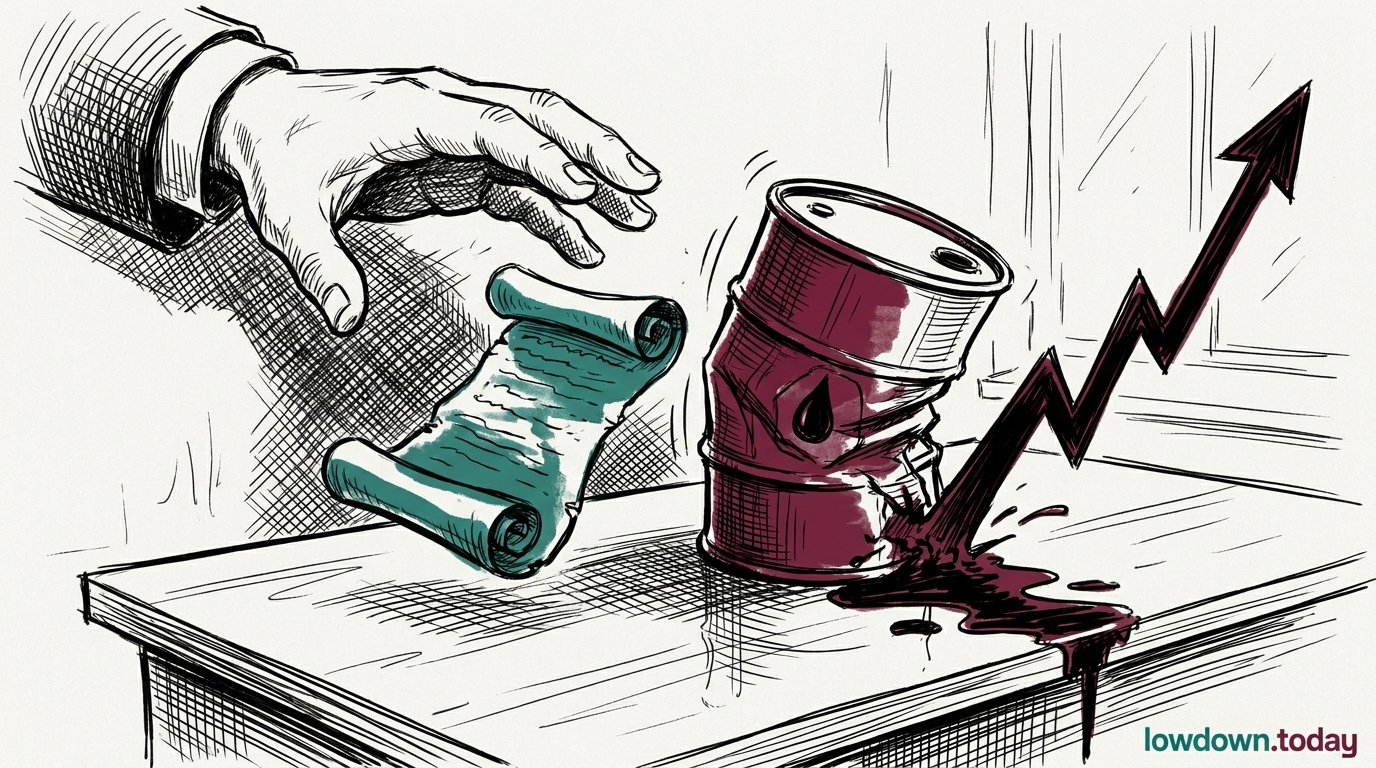
OFAC's GL 134A expires 11 April; at $121 per barrel, any extension would hand Russia far more revenue than when the waiver was issued at $73, while simultaneous vessel desanctioning created contradictory signals.

ConflictDeveloping
Key takeaway

GL 134A expiry on 11 April is the binary choice: extension at $121/barrel or lapse compounding Russia's crisis.

OFAC issued General License 134 on 12 March, covering the roughly 124 million barrels of Russian crude at sea , amended it to GL 134A on 19 March, and faces a binary decision on its 11 April expiry. At $73 per barrel when issued, the waiver was defensible as market stabilisation. At $121, the same licence authorises far greater per-barrel income than its design contemplated.

OFAC added Iran, North Korea, and Cuba exclusions to GL 134A one week after the original licence, a rapid amendment suggesting Treasury received evidence that cargoes were being redirected toward sanctioned parties. On 31 March, OFAC separately removed sanctions on three Russian cargo vessels: Fesco Magadan, Fesco Moneron, and SV Nikolay.

The contradictory pattern, tightening the licence's terms while reducing pressure on named Russian vessels, is consistent with an administration managing competing objectives across the Iran war and Ukraine simultaneously. The Atlantic Council warned that extension at current prices "risks sustaining Russia's war effort."


Deep Analysis

In plain English

The US government gave Russia a special oil sales exemption that expires on 11 April. When it was issued, oil prices were around $73 per barrel. Now that the Iran war has pushed prices to $121, extending the same exemption would hand Russia much more money than originally intended. At the same time, the US removed sanctions on three Russian ships while tightening the exemption's rules — sending confusing signals about American policy toward Russia.

What could happen next?
  • Risk

    GL 134A extension at $121/barrel would constitute the largest single US-authorised revenue transfer to Russia since sanctions began.

First Reported In

Update #11 · Russia Sells Less Oil but Earns More

Mayer Brown· 5 Apr 2026
Read original
Causes and effects
This Event
US Oil Sanctions Waiver Expires 11 April Amid Confusion
The GL 134A expiry is a binary US policy signal: extension at $121 per barrel directly subsidises Moscow's war revenue; lapse combined with Baltic terminal damage would compound Russia's export crisis.
Different Perspectives
Israel
Israel
Israeli strikes on Hezbollah positions in Lebanon continued through the weekend, maintaining the secondary front. The IDF has publicly named Mojtaba Khamenei as an assassination target; his courier-governance mode complicates targeting but does not remove him from the order.
Russia
Russia
Putin told a Moscow press conference that Washington, not Tehran or Moscow, killed the Russia-custody uranium arrangement by demanding US-territory-only storage. Neither Tehran nor Washington has corroborated the account, which appeared in second-tier outlets only, consistent with a trial balloon rather than a formal position.
United Kingdom
United Kingdom
HMS Dragon was redeployed from the Eastern Mediterranean to the Middle East on 9 May, the first physical European platform commitment to the Gulf. The Ministry of Defence called it "prudent planning" while publishing no rules of engagement, no tasking order, and no vessel name, committing a named asset to a conflict zone before the political instrument authorising it exists.
United Arab Emirates
UAE air defences intercepted two Iranian drones over its territory on 10 May, a kinetic escalation six days after the Fujairah oil terminal strike that drew no formal protest. The three-state simultaneous operation, not the severity of individual strikes, appears to have crossed the threshold at which the GCC states collectively began responding.
Saudi Arabia
Saudi Arabia
Riyadh issued the first formal Gulf-state protest of the conflict on 10 May, demanding an "immediate halt to blatant attacks on territories and territorial waters of Gulf states", ending 10 weeks of channelling displeasure through OPEC+ quota discussions. The protest forecloses Saudi Arabia's preferred quiet-channel role and reduces the functioning back-channel architecture to Pakistan alone.
Qatar
Qatar
Doha is simultaneously a strike target, the site of the Safesea Neha attack 23 nautical miles offshore, and an active MOU mediator: Qatar's prime minister met Rubio and Vance in Washington the same weekend. Whether Qatar issues its own formal protest or maintains its dual role is the critical escalation indicator for the week of 11 May.



