Skip to content
Briefings are running a touch slower this week while we rebuild the foundations.See roadmap
Iran Conflict 2026
10MAY

MOFCOM names five Chinese refineries under Blocking Rules

4 min read
14:22UTC

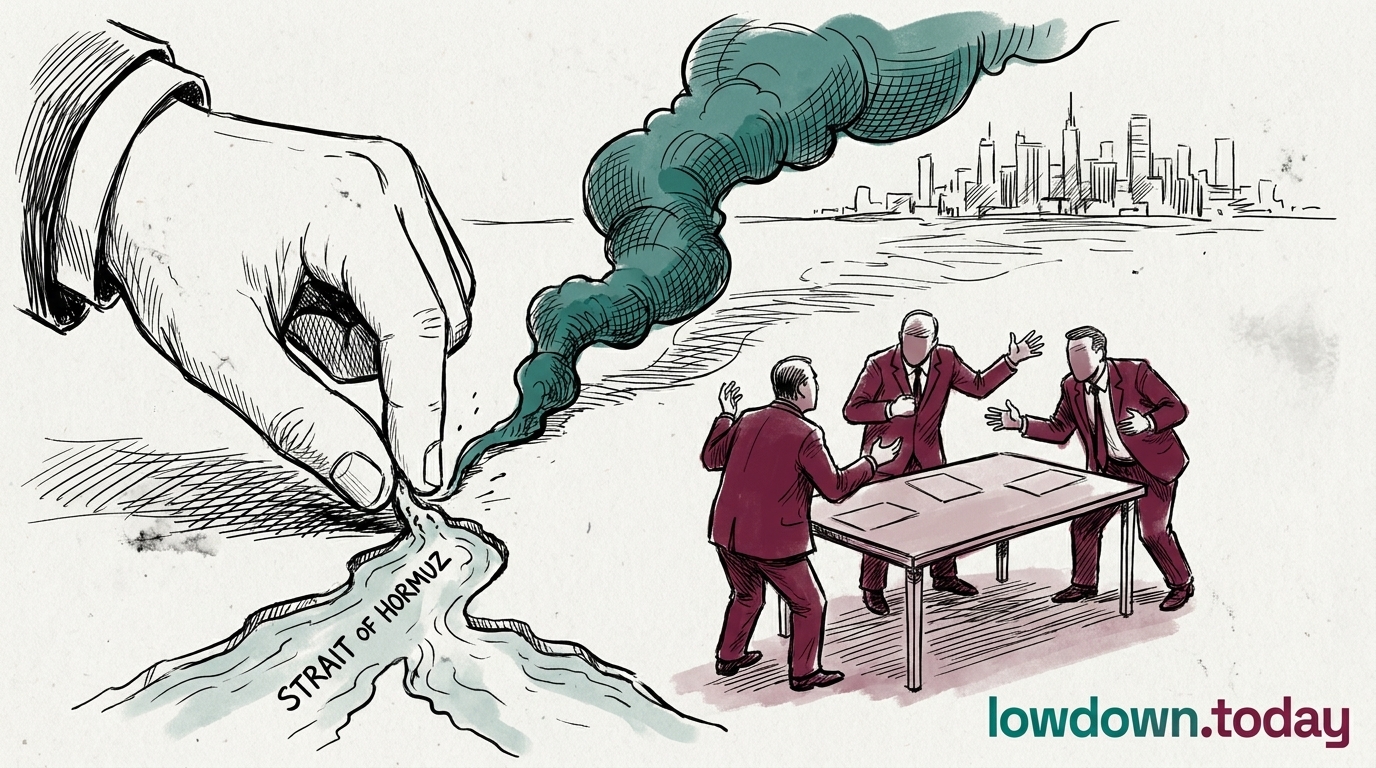
China's Ministry of Commerce identified the five refineries shielded from OFAC compliance under its 2 May Blocking Rules order: Hengli Petrochemical (Dalian), Shandong Shouguang Luqing, Shandong Jincheng, Hebei Xinhai Chemical, and Shandong Shengxing.

ConflictDeveloping
Key takeaway

The OFAC enforcement counterparty is now named at entity level; each new US designation lands in a clearer Chinese counter-frame.

MOFCOM, China's Ministry of Commerce, published on 2 May 2026 the five Chinese refineries protected under its Blocking Rules order: Hengli Petrochemical (Dalian), Shandong Shouguang Luqing, Shandong Jincheng, Hebei Xinhai Chemical, and Shandong Shengxing. 1 The activation of the 2021 Blocking Rules was already documented ; the public identification of the five protected entities is the new beat.

The Blocking Rules are China's 2021 statutory instrument allowing Chinese parties to defy extraterritorial foreign sanctions and recover damages through Chinese courts. The order forbids the named refineries from complying with OFAC's Iran sanctions regime, which had previously designated Hengli Petrochemical under sanction package SB0472 with a General Licence V wind-down . Hengli alone runs 400,000 barrels per day at Dalian, making it China's second-largest independent refinery; it is also the most exposed of the five to OFAC secondary-sanction action, which is why MOFCOM placed it at the top of the list.

The named list creates two operational facts. First, the protected refineries can now legally process Iranian crude under Chinese law without exposure to civil liability inside China for the same activity that creates US sanctions exposure. Second, the OFAC enforcement counterparty is now identified; any further US designations under the GL-W toll alert will hit named entities the Chinese state has explicitly placed under protection, raising the diplomatic cost of each new designation. The four other refineries, all Shandong or Hebei independents, sit further down the OFAC priority list and were probably named to spread the political cost of the carve-out beyond a single flagship plant.

The sequencing matters. MOFCOM published the names on the same Sunday Trump announced Project Freedom and Pakistan delivered the first US written reply . The Chinese counter-sanctions architecture is now visible at the entity level for the first time since the war began; the next OFAC tier of designations against named recipients, charity rails, embassies, or FX houses, will land in a clearer Chinese counter-frame than any previous round.

Deep Analysis

In plain English

China published the names of five oil refineries it is legally shielding from US sanctions. The refineries are among those the US Treasury has tried to penalise for buying Iranian oil, which is under US sanctions because of the Iran war. China's 2021 Blocking Rules bar Chinese companies from following US sanctions that Beijing has declared illegal. MOFCOM's published list names the five refineries specifically shielded, creating a direct conflict between Chinese law and OFAC's existing Hengli designation. It also creates a new legal right: any Chinese company that loses business because someone else obeyed US sanctions can now sue in Chinese courts for compensation.

Deep Analysis
Root Causes

China's publication of the five named refineries reflects a structural dependency the Blocking Rules are designed to protect: Hengli Petrochemical (Dalian) alone processes 400,000 bpd, a capacity that cannot be easily replaced with non-Iranian crude at current OPEC output levels. The four smaller Shandong refineries collectively represent approximately 200,000 bpd of additional Iranian crude processing capacity. Together they account for a meaningful share of China's independent refining sector.

The Blocking Rules activation also reflects a domestic political calculation. Chinese industrial ministries have lobbied for MOFCOM to protect refineries facing direct OFAC designation since the Hengli SB0472 action in April. Publishing the five names converts a regulatory dispute into a national-interest protection framing, giving MOFCOM cover to escalate if OFAC responds with additional designations.

What could happen next?
  • Precedent

    A publicly named Chinese Blocking Rules list creates a direct conflict of law that OFAC must address. If OFAC designates the five named refineries as blocked persons, it forces third-country banks and insurers to choose between US and Chinese legal obligations, fragmenting the dollar-based sanctions architecture.

    Medium term · 0.73
  • Risk

    Article 9's private right of action in Chinese courts creates litigation exposure for any Western shipping, banking, or insurance firm that has complied with OFAC designations against Hengli, even if that compliance occurred before the Blocking Rules were activated.

    Short term · 0.66
  • Consequence

    The five-refinery list is a floor, not a ceiling. If OFAC adds additional Chinese refinery designations, MOFCOM has the legal architecture to expand the named list without passing new legislation.

    Medium term · 0.79
First Reported In

Update #88 · 15,000 troops unsigned; Pakistan carries first reply

Geopolitechs / Business Today Malaysia· 4 May 2026
Read original
Causes and effects
This Event
MOFCOM names five Chinese refineries under Blocking Rules
The named-refinery list is the operational substance of an order whose activation was already known; the public identification of beneficiaries crystallises the China carve-out from US Iran sanctions.
Different Perspectives
Gulf shipping and insurance markets
With Hormuz and Bab el-Mandeb both hostile at once, war-risk underwriters face their first dual-chokepoint pricing problem; the rerouting hedge that absorbed one closure is gone for Israeli-linked hulls. Any deal that reopens Hormuz without a Houthi stand-down clause delivers only partial shipping relief.
Russia and China
Russia and China
Russia and China met IAEA chief Grossi jointly in Geneva on 5 June to coordinate an advance blocking position against Washington's censure resolution, the first documented instance of proactive pre-session obstruction rather than reactive post-vote dissent. Beijing's move came four days after OFAC designated Shanghai Qianye Energy under Iran energy sanctions.
Saudi Arabia
Saudi Arabia
Saudi Arabia was left out of the emergency $4.01 billion Patriot waiver Qatar received on 2 May as its own PAC-3 stocks ran near-empty from intercepting Iranian salvoes over Aramco facilities. Riyadh is on a standard 18-month FMS queue behind a production line booked through 2030, with no equivalent priority to Qatar's Al Udeid basing role.
Houthis (Ansar Allah)
The Houthis declared a complete ban on Israeli Red Sea navigation on 8 June and struck Jaffa, their first attack on Israeli territory since April, seven days after the Tasnim authorisation to activate other fronts including Bab el-Mandeb. The declaration put both chokepoints under hostile authority simultaneously.
Iran
Iran
Iran agreed the 9 June mutual halt after the Mahshahr exchange and coordinated with Russia and China to block Washington's IAEA censure resolution, using the Board as a second front while the bilateral pause held on the military one. Tehran's acceptance of the Lebanon carve-out contradicts the linkage position it stated on 1 June.
Benjamin Netanyahu and the IDF
Israel struck the Karun Petrochemical plant at Mahshahr on 8 June over Trump's explicit objection, then agreed a halt with Iran the following day scoped on Israeli terms with Lebanon carved out. Netanyahu's posture is that the IDF will not accept Iranian missile factories as off-limits regardless of US diplomatic timelines.