Skip to content
Briefings are running a touch slower this week while we rebuild the foundations.See roadmap
Iran Conflict 2026
10MAY

Iran narrows enrichment gap to 3-5 years

4 min read
14:22UTC

Iran shifted its enrichment-pause offer from a firm five-year proposal to a three-to-five-year range; Washington's demand remains 20 years.

ConflictDeveloping
Key takeaway

Iran moved two years on enrichment duration; the weapons posture has not moved.

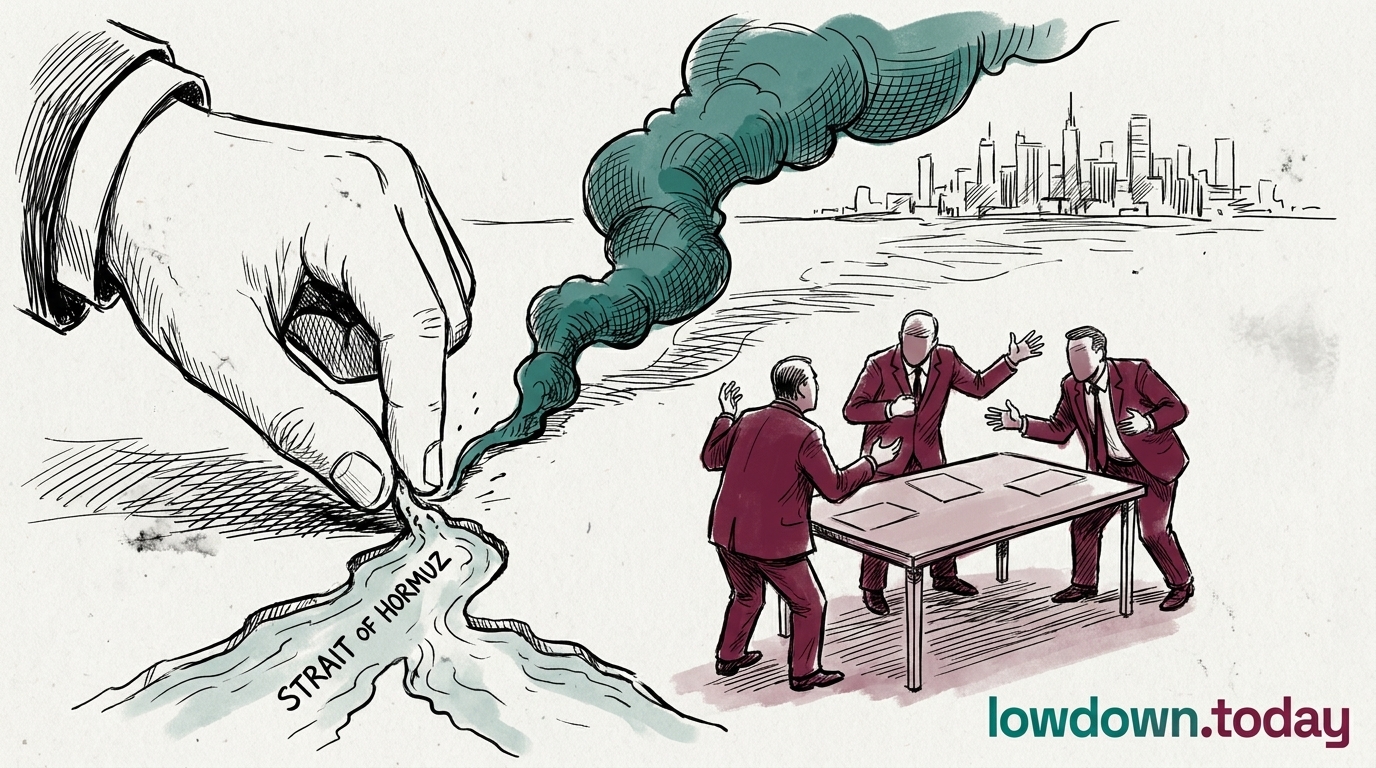
Iran shifted its enrichment-pause offer on 16 April from a firm five-year proposal to a three-to-five-year range, delivered alongside the Munir framework . That is a movement of two years on the downside of the range and zero on the upside. Washington's demand has not moved: 20 years. The arithmetic gap is still 15 years at the most generous reading and 17 at the less generous one.

The movement matters nonetheless because it breaks the first-offer lock that had held since the Islamabad round collapsed. A 3-5 range is the diplomatic signal that Iran expects the final figure to be negotiated, not ratified, which is a posture change from the unilateral five Araghchi had held publicly. Abbas Araghchi's prior CBS confirmation that Iran cannot currently enrich uranium at any surviving facility due to strike damage adds a complicating wrinkle: the thing being negotiated is a pause on an industrial capability that physically does not exist today. The range is therefore a marker on future reconstruction, not a freeze on present operations.

Verification is the harder problem. The IAEA has been locked out since the Majlis voted 221-0 on 11 April to suspend all cooperation, which means any pause, at three years or thirty, is currently unverifiable in either direction. The four-country monitoring framework Munir carried from Tehran is the only mechanism with traction to close that gap, but its membership is not public and its technical authority alongside IAEA is not spelled out. A verification architecture without named verifiers produces movement on paper without movement on the ground.

The harder wall remains doctrinal. Supreme Leader Mojtaba Khamenei's written position ruling out nuclear-weapons negotiation continues to hold. Tehran has conceded on monitoring and on enrichment duration; it has not conceded on weapons posture. A negotiation that moves on verification timelines without moving on weapons architecture is a confidence-building sequence, not a settlement. Whether Washington will accept movement on the sequence before movement on the architecture is the operating question through the 22 April ceasefire expiry.

Deep Analysis

In plain English

Iran and the US are trying to agree on how long Iran should pause its uranium enrichment , the process that, at higher concentrations, can lead to nuclear weapons. Iran is now offering a three-to-five-year pause; the US wants twenty years. The gap is enormous. But there is an additional complication: Iran's parliament voted to kick out the UN nuclear inspectors who would verify any pause. Without those inspectors, any agreement is largely unverifiable. Iran also says its enrichment facilities are too damaged to operate anyway, which raises the question of what exactly the pause would be pausing.

Deep Analysis
Root Causes

The enrichment pause negotiation's core structural problem is that Iran cannot currently enrich uranium at any surviving facility due to strike damage (confirmed by Araghchi on CBS on 13 April). This creates a paradox: Iran is being asked to pause something it is already unable to do, while the US is treating the pause as a concession Iran must actively make.

The verification gap compounds this: without IAEA inspectors present, there is no mechanism to confirm that Iran's facilities are damaged rather than simply dormant, which means any 'pause' commitment is not independently verifiable.

The three-to-five-year range also reflects a structural Iranian negotiating constraint: the Majlis suspension of IAEA cooperation can only be reversed by a parliamentary vote, which requires political cover that the four-country monitoring framework discussed in event-04 might provide, but only if the US accepts a non-IAEA verification body, which it has not signalled it will.

Escalation

Marginally de-escalatory: the range shift shows negotiating movement and signals that Khamenei's 'matter of life' statement has not foreclosed all diplomacy. However, the IAEA suspension means any agreed pause is unverifiable without a parallel monitoring-restoration agreement that does not yet exist.

What could happen next?
  • Opportunity

    The three-to-five-year range creates a potential overlap with a US counterproposal in the ten-to-fifteen-year range; a bridging offer in that zone is arithmetically possible even if politically remote.

  • Risk

    The IAEA monitoring suspension makes any enrichment-pause agreement legally unverifiable; the US cannot certify Iranian compliance to Congress without IAEA access, making a deal politically unsellable domestically.

First Reported In

Update #71 · Netanyahu learned from the media

PBS NewsHour / Associated Press· 17 Apr 2026
Read original
Different Perspectives
International human rights monitors (NetBlocks, IHR, Hengaw)
NetBlocks recorded 1,704 cumulative hours of near-total internet blackout for roughly 90 million Iranians on Day 74, while IHR documented ongoing executions under emergency provisions. These organisations are the only active monitoring windows into a civilian population cut off from the global internet for 71 consecutive days.
UK / France coalition
The Royal Navy confirmed HMS Dragon's Hormuz deployment on its own website on 11 May, converting a press-reported presence into declared force posture; UK and French defence ministers hosted a coalition meeting the same day. Britain and France are now the only named contributors to a Hormuz escort mission all five allies Trump originally asked had declined.
Saudi Aramco / Gulf producers
Saudi Aramco CEO Amin Nasser warned on 11 May that a Hormuz closure could remove 100 million barrels of weekly supply from global markets (roughly 15 million barrels per day for a week), a figure that dwarfs any OPEC+ swing capacity. The warning functions as both a price-floor signal and a public pressure on Washington to protect transit.
Beijing / Chinese Government
China has not publicly acknowledged the four Hong Kong-registered entities designated on 11 May or extended MOFCOM's Blocking Rules cover to HK-domiciled firms. Xi Jinping hosts Trump on 14–15 May having already de-risked state-bank balance sheets via NFRA's quiet loan halt, entering the summit partially compliant before any negotiation.
Tehran / Iranian Government
Foreign Minister Araghchi described Iran's 10-point counter-proposal as 'reasonable and responsible' via spokesman Baqaei on 11 May, and widened the mediator pool by meeting Turkish, Egyptian, and Dutch counterparts in a single day. Tehran is buying procedural runway while Trump's verbal rejection went unmatched by any written US counter.
Trump White House
Trump White House
Trump called the ceasefire 'on massive life support' and dismissed Iran's 10-point counter-proposal as 'a piece of garbage' on 11 May, while departing for Beijing two days later with no signed Iran instrument to show Congress. The verbal maximum and the paper void coexist: the administration is running a legal pressure campaign through Treasury while the president free-lances the rhetoric.