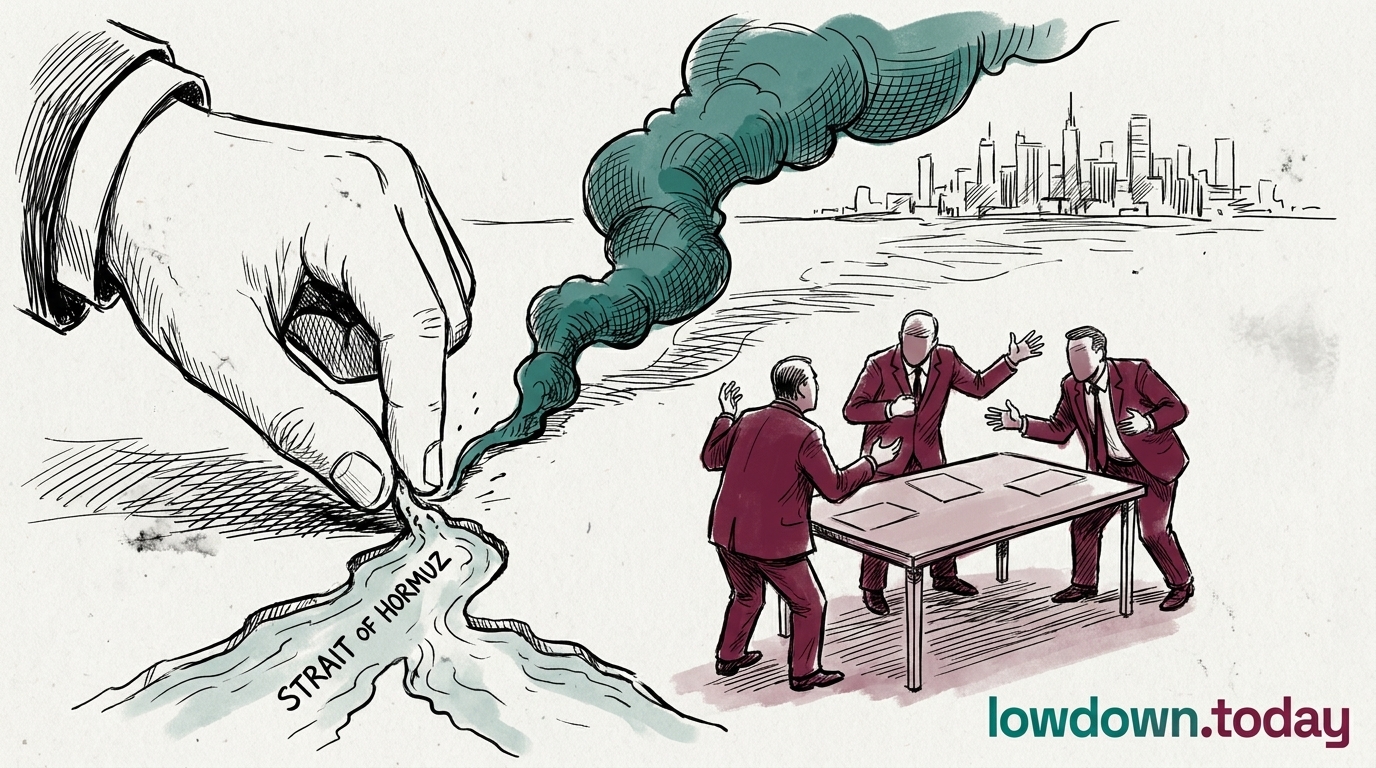
The National Financial Regulatory Administration (NFRA) privately instructed China's four largest state banks before 1 May to halt new yuan loans to Hengli Petrochemical and four other US-sanctioned refineries, Bloomberg confirmed on 7 May1. The four banks are ICBC, Agricultural Bank of China, China Construction Bank and Bank of China. Existing credit was not called. On 2 May, the Ministry of Commerce (MOFCOM) publicly told the same five firms to defy OFAC under Announcement No. 21, activating Beijing's 2021 Blocking Rules.
Beijing wrote the contradiction on purpose. The four banks are observing the NFRA stop-loan order while ignoring MOFCOM's defiance instruction in practice: they treat their Hengli loan books as the binding constraint, not Beijing's public posture. China complies quietly where state-bank balance sheets would take the loss and defies publicly where the cost is rhetorical.
The calendar is what makes the dual signal load-bearing. The 24 May wind-down deadline for General Licence V (GL-V), OFAC's authorisation for orderly Hengli wind-down, falls 16 days out. The Trump-Xi summit in Beijing falls in 6 days, on 14-15 May. Treasury Secretary Scott Bessent confirmed Iran will be on the summit agenda, and CNBC reported the Iran focus may delay tariff and rare-earth progress2. The summit is not expected to produce a written China-side sanctions instrument on Iran. Its function will be diplomatic pressure on Tehran to accept the MOU sequencing now sitting in Araghchi's ministry.
One reading casts NFRA's order as Beijing taking out balance-sheet insurance against an MOU collapse. If Iran's reply expires without a deal and Trump tightens enforcement, the four banks have already stopped extending credit they would have to write off. If the MOU is signed, GL-V is extended or moot, and the NFRA instruction was a low-cost piece of risk management that produced a domestic-defiance narrative as a side effect.
A second reading runs through audience design. NFRA's quiet bank instruction and MOFCOM's public order are addressed to the same five firms simultaneously. Beijing complies at the balance-sheet level (satisfying Western counterparty risk managers) while maintaining the rhetorical posture of sovereign defiance (satisfying domestic audience and Tehran). If MOFCOM Announcement No. 21 is later quietly withdrawn, the public posture becomes stranded without a formal mechanism. The summit outcome will determine which reading lands, with Donald Trump and Xi Jinping facing each other on 14 May.


