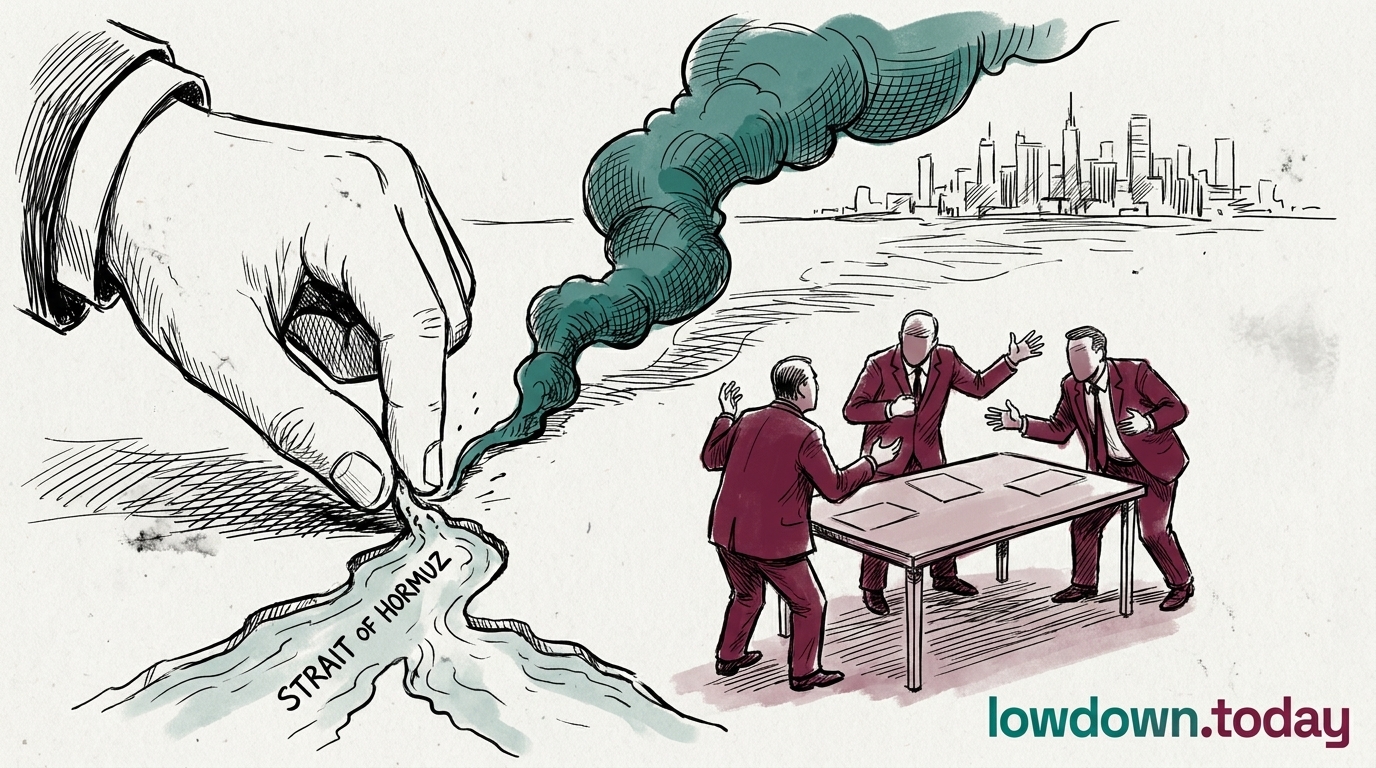
Brent Crude settled at $101.70 per barrel on 4 May 2026, completing a four-session decline from the $123 post-war high of 30 April.1 The cumulative move of $21.30, about 17 per cent, is the war's largest sustained price drop and is distinct in pattern from any single-session fall recorded since fighting began on 28 February.
Each leg of the decline tracked a separate diplomatic trigger. The first was the UAE's exit from OPEC's quota framework on 30 April, which broke the cartel cohesion holding the post-war price floor. The second was Trump's rejection of Iran's 14-point ceasefire text on 1 May, which carried a $14.83 single-session fall. The third was the Project Freedom announcement on 3 May, which markets read as a humanitarian-framed escort rather than a kinetic escalation. The fourth was the Pakistan-channel US written reply on the same Sunday, which markets read as the first procedural step toward a settled paper diplomacy.
Markets are pricing four sequential signals, not reacting to a single Truth Social post. The IRGC issued a 30-day ultimatum on 3 May demanding the United States end its port blockade of Iran. The Majlis national security commission ruled that Project Freedom would be considered a violation of the ceasefire. Both sit on the other side of the trade. A single mine, a single small-boat interception, or a single written rejection through the same Pakistani diplomats would reverse the $21 concession in one session; market positioning suggests a $15 to $20 rebound on a confirmed IRGC fire on a Project Freedom escort.
UK pump prices remain roughly 8 to 10 pence per litre above the pre-war baseline at the standard wholesale-pass-through lag. A reversal would push another 5 to 7 pence onto the litre within two to three weeks. Wholesale gas remains decoupled because Hormuz LNG is largely Qatar-routed and unaffected for now.


