Skip to content
Briefings are running a touch slower this week while we rebuild the foundations.See roadmap
Iran Conflict 2026
8MAY

Russia spends 38% of budget on war

4 min read
11:07UTC

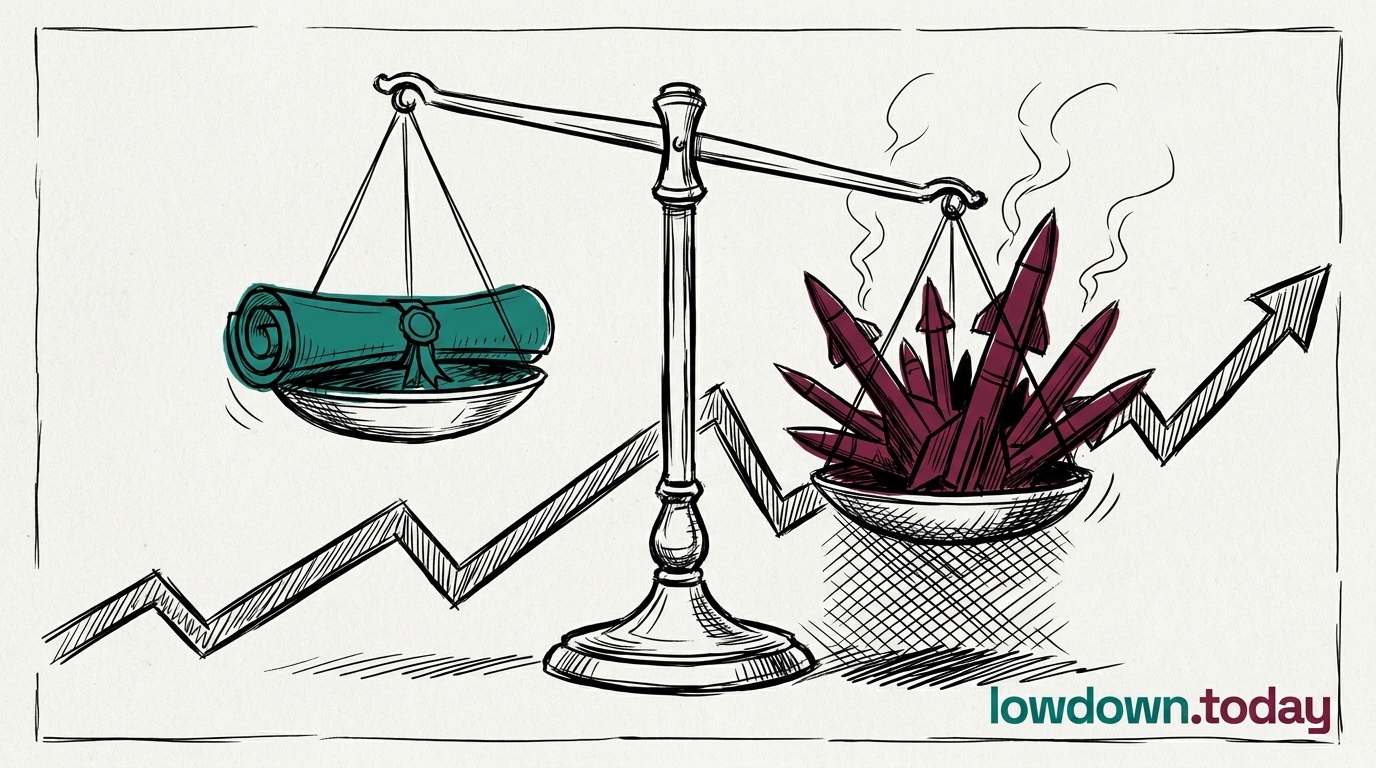
SIPRI data shows Moscow directing 38–40 per cent of federal spending to defence — a share not seen since the Soviet Union — while its fiscal reserves drain toward zero.

ConflictDeveloping
Key takeaway

Russia's defence budget has reached Soviet-era proportions, consuming fiscal reserves that cannot be rebuilt during wartime.

Professor Julian Cooper's analysis, published by SIPRI, puts Russia's 2026 defence and security allocation at 16.8 trillion rubles — 38 to 40 per cent of all federal spending 1. Army and weapons procurement alone accounts for 12.93 trillion rubles, the largest single budget category since the USSR. Total military expenditure reaches $165.6 billion, or 5.8 per cent of GDP, with 84 per cent classified — meaning independent verification of the actual spending breakdown is impossible 2.

The share-of-budget figure requires a specific comparison. The late Soviet Union devoted an estimated 15 to 25 per cent of GDP to defence (CIA and DIA estimates diverged throughout the Cold War), but it ran a command economy where the state controlled all output. Russia must sustain a wartime budget inside a market economy, and the seams are visible. The National Wealth Fund has been drained to historic lows. The budget deficit stands at 3.78 trillion rubles (1.6 per cent of GDP) — manageable by international standards, but running in one direction. Oil and gas revenues fell roughly 32 per cent year-on-year in January, with Urals Crude below $38 per barrel against Brent at $62.50 . Russian arms exports have simultaneously collapsed by 64 per cent over the most recent five-year measurement period , confirming that domestic military-industrial output is being consumed internally rather than generating export revenue.

Cooper's assessment is direct: economic pressure "is unlikely to stop the war in Ukraine" 3. One variable supports that judgement. SIPRI notes the Iran conflict may improve Russia's fiscal outlook through higher energy prices — consistent with the €510 million in daily fossil fuel revenue recorded during the conflict's first fortnight , a 14 per cent jump above February's average. The Treasury's 12 March waivers on 124 million barrels of Russian oil provide additional relief on the revenue side .

The budget tells a clear story about priorities: Moscow has chosen guns over everything else. What it cannot reveal is the breaking point. Russia's Central Bank has used aggressive interest rate policy to contain the inflationary pressure that wartime spending generates, but 38–40 per cent of federal spending directed to a single purpose leaves minimal flexibility for civilian infrastructure, social spending, or responding to economic shocks. The National Wealth Fund was built from two decades of oil revenue precisely to absorb those shocks. It is now nearly gone. Russia is running a wartime economy without a safety net — sustainable as long as the war goes well and energy prices hold, catastrophically exposed if either variable turns.

Deep Analysis

In plain English

Russia is spending nearly 40 pence of every government pound on its military — a level not seen since the Soviet Union. Its emergency savings fund (the National Wealth Fund) is nearly empty after years of drawdowns. The government is running a deficit, meaning it is borrowing to sustain both the war and civilian obligations. When savings run out and borrowing costs rise, governments face stark choices: cut social spending, raise taxes, or inflate the currency. Russia is approaching that decision point, with no buffer remaining.

Deep Analysis
Synthesis

Russia's fiscal parameters — NWF depleted, Soviet-era budget proportion, growing deficit — represent a historically rare window of maximum Western economic leverage. That window has an uncertain duration: the Iran conflict's energy revenue bonus could extend Russian fiscal runway by 12–18 months. The simultaneous US enforcement dismantling (Event 11) means this leverage window may close unused, with no equivalent pressure point available once the NWF is fully exhausted.

Root Causes

The 84% classification rate of Russia's military budget is not merely strategic opacity — it reflects the deep integration of defence production into nominally civilian state enterprises (Rostec subsidiaries, regional military-industrial plants) that obscure the true economic mobilisation footprint. This structural opacity means external analysts systematically underestimate actual defence expenditure and cannot accurately calibrate the fiscal breaking point.

What could happen next?
  • Consequence

    Defence spending at 38–40% of federal expenditure is crowding out civilian healthcare and infrastructure investment, degrading Russia's human capital base over a multi-year horizon.

    Long term · Assessed
  • Risk

    An oil price correction — from Iran conflict resolution or global demand weakness — would hit the federal budget directly with no NWF buffer remaining to absorb the shock.

    Medium term · Assessed
  • Risk

    Iran conflict energy price inflation may extend Russia's fiscal runway by 12–18 months, frustrating Western assumptions about economic pressure as a war-termination mechanism.

    Short term · Suggested
  • Meaning

    The 84% classification rate prevents accurate external assessment of Russian fiscal durability, introducing irreducible uncertainty into any war-termination timeline estimate.

    Immediate · Assessed
First Reported In

Update #6 · Ukraine sends negotiators as front reverses

SIPRI· 20 Mar 2026
Read original
Causes and effects
This Event
Russia spends 38% of budget on war
The budget reveals a strategic bet: Russia is wagering the war ends before its fiscal position becomes untenable. The National Wealth Fund's depletion removes Moscow's primary shock absorber. If energy prices fall or the Iran conflict ends — removing the oil windfall — there is no reserve left to cushion the gap between wartime expenditure and peacetime revenue.
Different Perspectives
International human rights monitors (NetBlocks, IHR, Hengaw)
NetBlocks recorded 1,704 cumulative hours of near-total internet blackout for roughly 90 million Iranians on Day 74, while IHR documented ongoing executions under emergency provisions. These organisations are the only active monitoring windows into a civilian population cut off from the global internet for 71 consecutive days.
UK / France coalition
The Royal Navy confirmed HMS Dragon's Hormuz deployment on its own website on 11 May, converting a press-reported presence into declared force posture; UK and French defence ministers hosted a coalition meeting the same day. Britain and France are now the only named contributors to a Hormuz escort mission all five allies Trump originally asked had declined.
Saudi Aramco / Gulf producers
Saudi Aramco CEO Amin Nasser warned on 11 May that a Hormuz closure could remove 100 million barrels of weekly supply from global markets (roughly 15 million barrels per day for a week), a figure that dwarfs any OPEC+ swing capacity. The warning functions as both a price-floor signal and a public pressure on Washington to protect transit.
Beijing / Chinese Government
China has not publicly acknowledged the four Hong Kong-registered entities designated on 11 May or extended MOFCOM's Blocking Rules cover to HK-domiciled firms. Xi Jinping hosts Trump on 14–15 May having already de-risked state-bank balance sheets via NFRA's quiet loan halt, entering the summit partially compliant before any negotiation.
Tehran / Iranian Government
Foreign Minister Araghchi described Iran's 10-point counter-proposal as 'reasonable and responsible' via spokesman Baqaei on 11 May, and widened the mediator pool by meeting Turkish, Egyptian, and Dutch counterparts in a single day. Tehran is buying procedural runway while Trump's verbal rejection went unmatched by any written US counter.
Trump White House
Trump White House
Trump called the ceasefire 'on massive life support' and dismissed Iran's 10-point counter-proposal as 'a piece of garbage' on 11 May, while departing for Beijing two days later with no signed Iran instrument to show Congress. The verbal maximum and the paper void coexist: the administration is running a legal pressure campaign through Treasury while the president free-lances the rhetoric.