Skip to content
Briefings are running a touch slower this week while we rebuild the foundations.See roadmap
Iran Conflict 2026
7MAY

Trump frees Venezuela oil; Hormuz shut

4 min read
12:43UTC

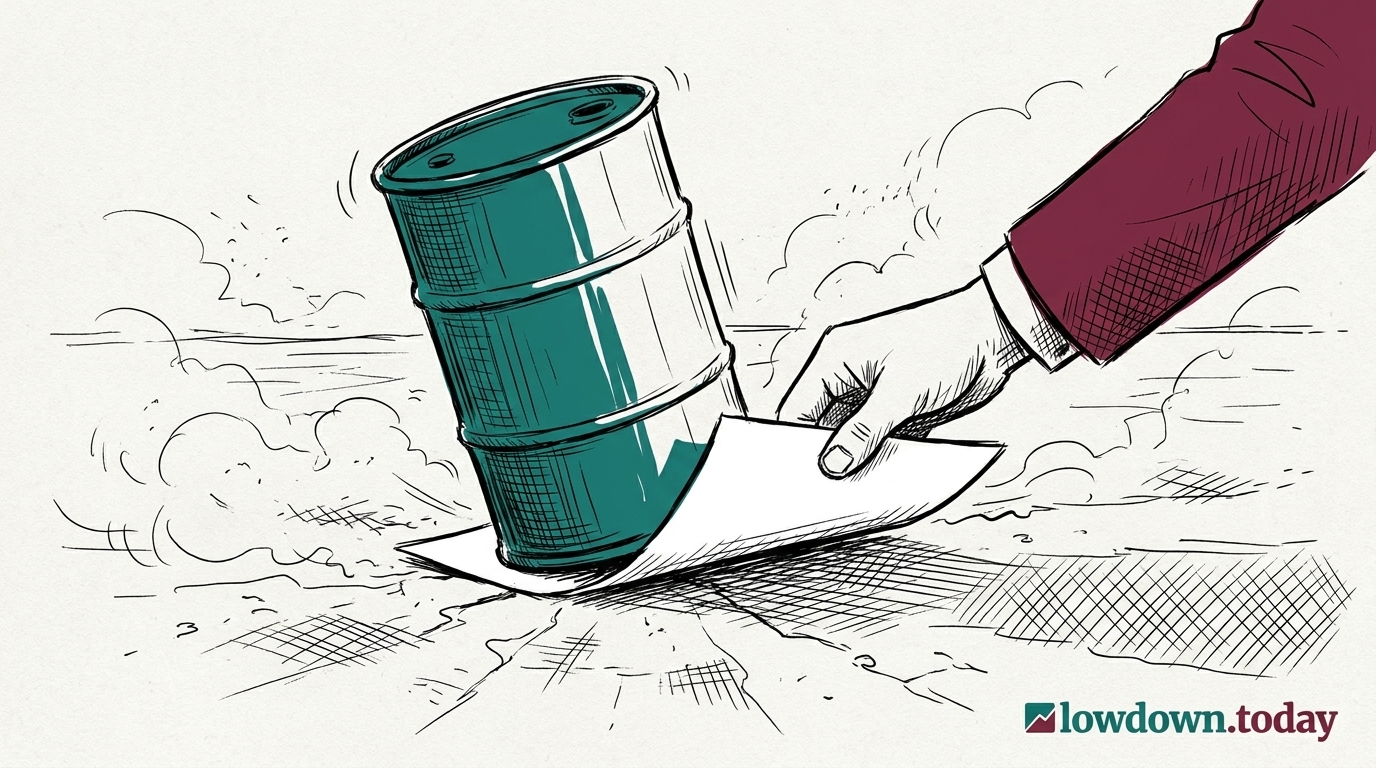
Two emergency supply-side measures in a single day — Venezuelan crude authorisation and a Jones Act waiver — join a growing list of marginal fixes for a disruption measured in millions of barrels per day.

ConflictDeveloping
Key takeaway

Venezuela's collapsed production capacity means this authorisation adds marginal barrels, not a supply solution.

The Administration took two actions on 19 March to contain oil prices. The Treasury issued a broad authorisation for Venezuela's PDVSA to sell crude on global markets, with payments routed through a US-controlled account 1. Trump separately waived the Jones Act for 60 days, suspending the requirement that energy cargoes shipped between American ports travel on US-flagged vessels 2. Neither measure was accompanied by a volume target or explanation of expected impact.

Venezuela holds the world's largest proven crude reserves — an estimated 300 billion barrels — but production has collapsed from roughly 3.3 million barrels per day in the late 1990s to approximately 900,000 bpd under two decades of mismanagement, underinvestment, and sanctions. Even with full authorisation, Venezuela lacks the rigs, skilled workforce, and pipeline infrastructure to raise output meaningfully within weeks. Any gains would take months and measure in the low hundreds of thousands of barrels — a fraction of the 17 million barrels per day that transited Hormuz before the closure. The US-controlled payment structure also limits Caracas's incentive: Maduro gains sanctions relief but not full revenue sovereignty.

The Jones Act waiver addresses a narrower problem. The 1920 Merchant Marine Act restricts US coastal shipping to American-built, American-owned, American-crewed vessels — a constraint that creates artificial scarcity on domestic routes during supply disruptions. The 60-day suspension allows foreign-flagged tankers to move oil between American ports, easing redistribution of existing supply. It adds no new barrels to the global market.

This is the fourth supply-side lever The Administration has pulled in a week. Trump waived Russian oil sanctions on 15 March, drawing objections from six of seven G7 members and a warning from Zelenskyy that it could hand Moscow $10 billion . Treasury Secretary Bessent acknowledged that Iranian tankers were being allowed through Hormuz to "supply the rest of the world" . Now Venezuela and the Jones Act. Each measure works at the margin. None addresses what US Navy officials described as an Iranian "Kill box" at Hormuz, where daily commercial transits have fallen to single digits against a pre-war average of 138 . The seven-nation Hormuz statement published hours later committed no warships and set no timeline. The Administration is reaching for every available lever except the one that would require either military de-escalation or the allied naval commitment no country has been willing to provide.

Deep Analysis

In plain English

The Jones Act is a 1920 law requiring goods shipped between US ports to travel on American-built, American-crewed vessels. It protects US maritime workers but raises the cost of moving energy between domestic ports in a crisis. Waiving it for 60 days allows cheaper foreign ships to carry oil and gas between, say, Louisiana refineries and the US Northeast — easing distribution bottlenecks at the margin. Separately, authorising Venezuela's state oil company PDVSA to sell on global markets is a significant policy reversal: Trump's first term was defined by maximum-pressure sanctions on the Maduro government. But Venezuela's production has collapsed from 3.3 million barrels per day in the late 1990s to roughly 800,000 today. Neither measure can replace the volume lost through the Hormuz closure — that gap is measured in millions of barrels per day.

Deep Analysis
Synthesis

The two measures together reveal the limits of executive energy tools: the president has authority over trade law and sanctions but no mechanism to physically replace blocked maritime supply routes. The political economy is equally revealing. Authorising Maduro's Venezuela — a government Trump spent his first term isolating — signals that energy price management has overridden ideological foreign policy consistency, establishing a precedent hierarchy that will reduce future sanctions credibility with targeted regimes.

Root Causes

Venezuela's production collapse reflects a decade of PDVSA mismanagement, US sanctions, and chronic underinvestment — degradation that export authorisation alone cannot reverse. Even full sanctions removal would require 18–24 months of capital investment and technical rehabilitation before meaningful production increases could materialise.

What could happen next?
  • Consequence

    The Venezuela authorisation restores Maduro regime revenue at peak oil prices, directly undermining years of US maximum-pressure economic policy.

    Immediate · Assessed
  • Risk

    If neither measure demonstrably reduces domestic fuel prices within 30 days, political pressure for more aggressive tools — SPR releases, price caps — will intensify.

    Short term · Suggested
  • Precedent

    Energy price control superseding sanctions policy establishes a hierarchy of priorities that will reduce future sanctions credibility with targeted regimes.

    Medium term · Assessed
  • Opportunity

    US Gulf Coast refiners configured for Venezuelan heavy crude gain a feedstock cost advantage if PDVSA exports increase, even modestly.

    Short term · Suggested
First Reported In

Update #42 · Iran hits four countries; Brent at $119

PBS· 20 Mar 2026
Read original
Causes and effects
This Event
Trump frees Venezuela oil; Hormuz shut
The administration has now pulled four distinct supply-side levers in one week (Russian sanctions waiver, allowing Iranian tankers through Hormuz, Venezuela authorisation, Jones Act waiver) without arresting the price climb. The cumulative potential of all four is a fraction of the roughly 17 million barrels per day that transited Hormuz before the war. The pattern reveals the structural limits of supply-side policy when the core bottleneck — a closed strait — remains unresolved.
Different Perspectives
Israel
Israel
Israeli strikes on Hezbollah positions in Lebanon continued through the weekend, maintaining the secondary front. The IDF has publicly named Mojtaba Khamenei as an assassination target; his courier-governance mode complicates targeting but does not remove him from the order.
Russia
Russia
Putin told a Moscow press conference that Washington, not Tehran or Moscow, killed the Russia-custody uranium arrangement by demanding US-territory-only storage. Neither Tehran nor Washington has corroborated the account, which appeared in second-tier outlets only, consistent with a trial balloon rather than a formal position.
United Kingdom
United Kingdom
HMS Dragon was redeployed from the Eastern Mediterranean to the Middle East on 9 May, the first physical European platform commitment to the Gulf. The Ministry of Defence called it "prudent planning" while publishing no rules of engagement, no tasking order, and no vessel name, committing a named asset to a conflict zone before the political instrument authorising it exists.
United Arab Emirates
UAE air defences intercepted two Iranian drones over its territory on 10 May, a kinetic escalation six days after the Fujairah oil terminal strike that drew no formal protest. The three-state simultaneous operation, not the severity of individual strikes, appears to have crossed the threshold at which the GCC states collectively began responding.
Saudi Arabia
Saudi Arabia
Riyadh issued the first formal Gulf-state protest of the conflict on 10 May, demanding an "immediate halt to blatant attacks on territories and territorial waters of Gulf states", ending 10 weeks of channelling displeasure through OPEC+ quota discussions. The protest forecloses Saudi Arabia's preferred quiet-channel role and reduces the functioning back-channel architecture to Pakistan alone.
Qatar
Qatar
Doha is simultaneously a strike target, the site of the Safesea Neha attack 23 nautical miles offshore, and an active MOU mediator: Qatar's prime minister met Rubio and Vance in Washington the same weekend. Whether Qatar issues its own formal protest or maintains its dual role is the critical escalation indicator for the week of 11 May.