Skip to content
Briefings are running a touch slower this week while we rebuild the foundations.See roadmap
Iran Conflict 2026
1MAY

Araghchi meets Wang Yi in Beijing

3 min read
10:38UTC

Iranian Foreign Minister Abbas Araghchi met Chinese counterpart Wang Yi in Beijing on 6 May, the first such visit since the war began on 28 February, eight days before the scheduled Trump-Xi summit on 14-15 May.

ConflictDeveloping
Key takeaway

Beijing now hosts the only Iran channel running in parallel to Washington's, eight days before Trump-Xi.

Iran's Foreign Minister Abbas Araghchi met Chinese counterpart Wang Yi in Beijing on Wednesday 6 May, the first such visit since the war began on 28 February 1. Wang Yi told Araghchi that China is 'deeply distressed' by the conflict and offered Beijing 'a greater role in restoring peace and tranquility'. Araghchi replied that China is 'a close friend' and that bilateral cooperation 'will become stronger under current circumstances'. The Trump-Xi summit is scheduled for Thursday 14 and Friday 15 May, also in Beijing.

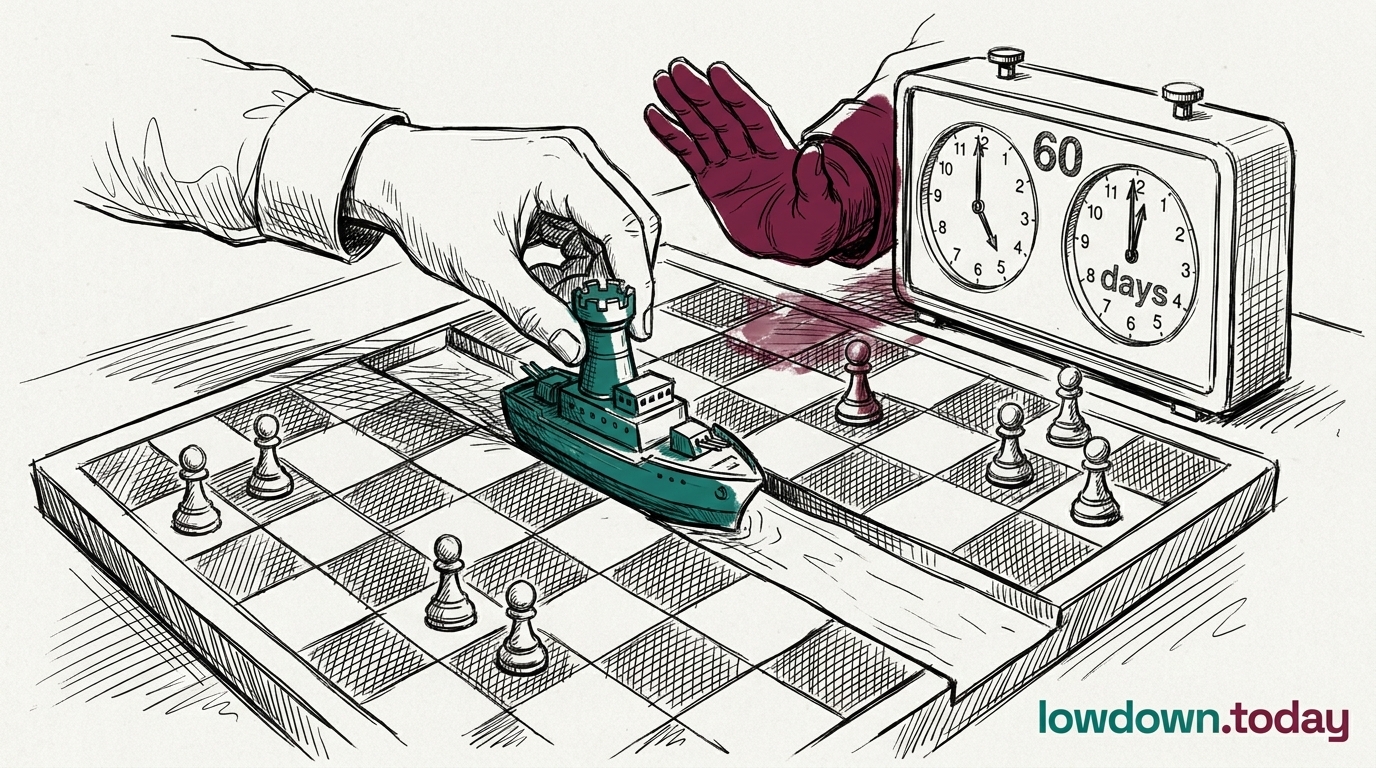
The pause sits inside that schedule. Trump paused Project Freedom on Tuesday 5 May; Araghchi met Wang Yi on Wednesday 6 May; Trump-Xi convenes eight days later. Two days before Araghchi's visit, MOFCOM (China's Ministry of Commerce) activated China's 2021 Blocking Rules and named five refineries protected from OFAC Iran compliance, including Hengli Petrochemical and four Shandong and Hebei independents . The same week the United States was deploying destroyers to enforce its blockade against Iranian oil flows, China was writing the legal counter-instrument that protects roughly 400,000 barrels per day of refining capacity from compliance.

Wang Yi's call for a 'comprehensive ceasefire' goes further than the US framing of a 'pause'. Trump's stated reason for pausing was Pakistan; the schedule said Beijing. A US-China confrontation over Iran-sanctions enforcement on the eve of a 14-15 May summit was the overhang the pause removed. Beijing's diplomatic position now combines a public ceasefire call, a domestic legal shield for its refiners and a face-to-face meeting with Tehran's chief diplomat, all sequenced into the eight-day window before Trump arrives.

Deep Analysis

In plain English

Iran's top diplomat flew to Beijing on 6 May and met China's foreign minister Wang Yi, who offered China a 'greater role in restoring peace'. This was the first such visit since the war started in late February. China matters here because it buys most of Iran's oil. Despite US sanctions, China has kept buying Iranian crude through workarounds. If the Strait of Hormuz stays blocked, even those workarounds get harder. China also has a summit with Trump scheduled for 14-15 May, so it wants to show it can help end the conflict, which gives it more leverage with the US. The meeting happened the day after Trump paused the US naval operation, suggesting both sides are testing whether diplomacy can produce a deal before the pause ends.

Deep Analysis
Root Causes

China's stake in a Hormuz resolution runs through its MOFCOM-shielded crude flows: of the 153.7 million barrels of Iranian crude on water in mid-April (per Windward data cited in prior updates), 84.9% was China-bound. China cannot sustain that flow if P&I war-risk exclusions prevent Iranian tankers from obtaining any insurance, even Chinese state reinsurance, for transits through waters now explicitly designated as combat zones by UKMTO.

The timing of the meeting, eight days before the Trump-Xi summit, is the second structural driver. China needs to demonstrate to the US that it can deliver Iranian de-escalation as a tradeable diplomatic asset. If Araghchi leaves Beijing and Iran resumes attacks, Wang Yi loses face before the summit opens.

What could happen next?
  • Consequence

    China's public ceasefire call eight days before the Trump-Xi summit creates a diplomatic timeline: if no progress is made by 14 May, Wang Yi's offer of mediation becomes a personal credibility liability.

  • Opportunity

    Beijing's interest in a Hormuz resolution aligns with Washington's pause, creating a narrow window in which Chinese diplomatic pressure on Tehran could unlock IRGC concessions the Pakistan channel alone cannot achieve.

First Reported In

Update #89 · Truxtun gets through; Trump pulls back

Al Jazeera· 6 May 2026
Read original
Different Perspectives
Israel
Israel
Israeli strikes on Hezbollah positions in Lebanon continued through the weekend, maintaining the secondary front. The IDF has publicly named Mojtaba Khamenei as an assassination target; his courier-governance mode complicates targeting but does not remove him from the order.
Russia
Russia
Putin told a Moscow press conference that Washington, not Tehran or Moscow, killed the Russia-custody uranium arrangement by demanding US-territory-only storage. Neither Tehran nor Washington has corroborated the account, which appeared in second-tier outlets only, consistent with a trial balloon rather than a formal position.
United Kingdom
United Kingdom
HMS Dragon was redeployed from the Eastern Mediterranean to the Middle East on 9 May, the first physical European platform commitment to the Gulf. The Ministry of Defence called it "prudent planning" while publishing no rules of engagement, no tasking order, and no vessel name, committing a named asset to a conflict zone before the political instrument authorising it exists.
United Arab Emirates
UAE air defences intercepted two Iranian drones over its territory on 10 May, a kinetic escalation six days after the Fujairah oil terminal strike that drew no formal protest. The three-state simultaneous operation, not the severity of individual strikes, appears to have crossed the threshold at which the GCC states collectively began responding.
Saudi Arabia
Saudi Arabia
Riyadh issued the first formal Gulf-state protest of the conflict on 10 May, demanding an "immediate halt to blatant attacks on territories and territorial waters of Gulf states", ending 10 weeks of channelling displeasure through OPEC+ quota discussions. The protest forecloses Saudi Arabia's preferred quiet-channel role and reduces the functioning back-channel architecture to Pakistan alone.
Qatar
Qatar
Doha is simultaneously a strike target, the site of the Safesea Neha attack 23 nautical miles offshore, and an active MOU mediator: Qatar's prime minister met Rubio and Vance in Washington the same weekend. Whether Qatar issues its own formal protest or maintains its dual role is the critical escalation indicator for the week of 11 May.