Skip to content
Welcome, thoughtbot's Giant Robots listeners!Start here
Iran Conflict 2026
29APR

Four LNG terminals at lowest utilisation since 2023

2 min read
09:17UTC

IEEFA identified four EU LNG terminals recording their lowest utilisation since 2023 in Q1 2026: Panigaglia (Italy), EemsEnergy (Netherlands), Fos Cavaou (France) and Sines (Portugal).

ConflictDeveloping
Key takeaway

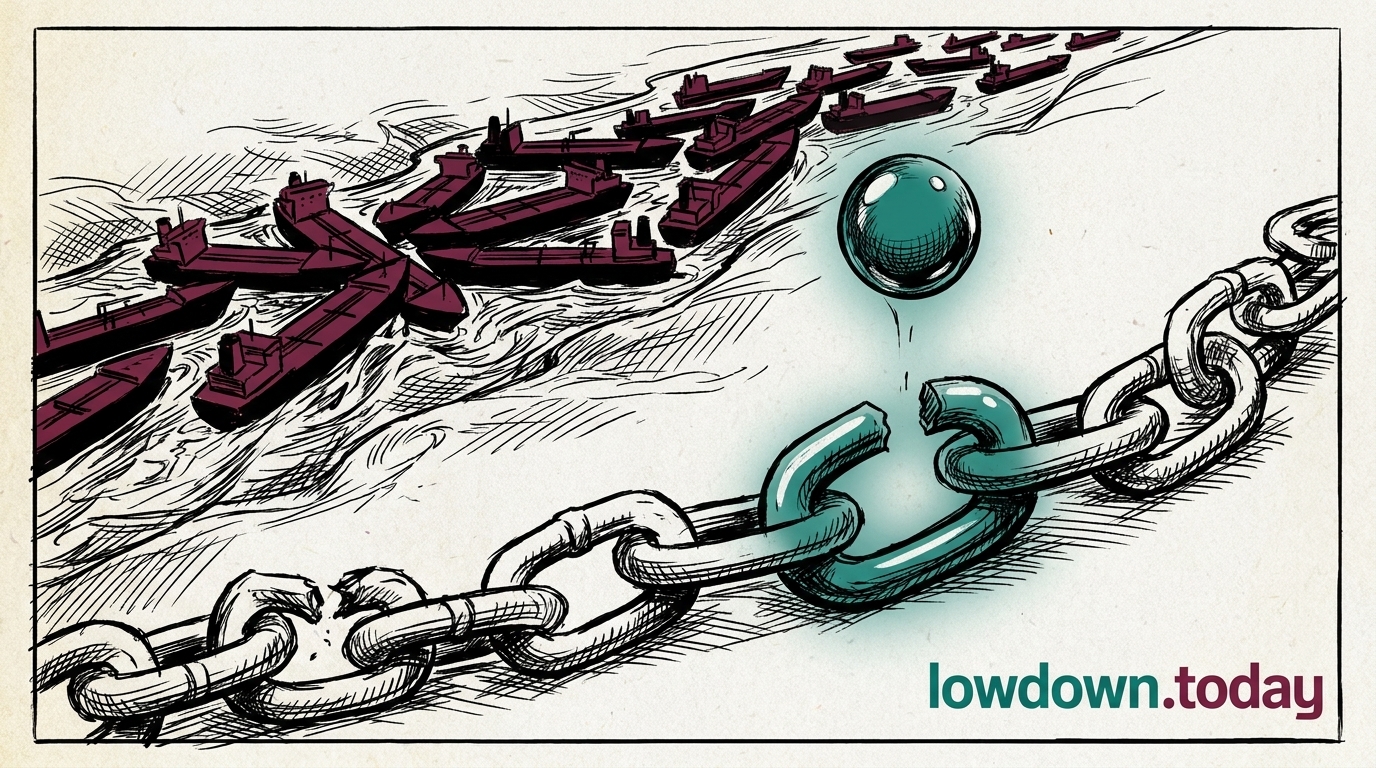
LNG cargo concentration at fewer hubs leaves four terminals underutilised and deepens the locational supply imbalance across the EU.

IEEFA data for Q1 2026 found four LNG terminals at their lowest utilisation since 2023: Panigaglia near La Spezia, EemsEnergy at Eemshaven in the Netherlands, Fos Cavaou in southern France, and the Sines terminal on Portugal's Atlantic coast. The finding sits alongside the Russian LNG quarterly record reported in the same dataset, which means overall import volumes rose while terminal throughput concentrated at fewer facilities.

The concentration pattern has a geographic logic. Post-Hormuz, LNG cargoes are overwhelmingly Atlantic-sourced (US at 63% of EU imports in Q1). Atlantic cargoes route preferentially to large-capacity terminals on the Atlantic and North Sea coasts: Zeebrugge, Gate Rotterdam, Montoir. Smaller or Mediterranean-facing terminals that historically received Qatari or spot Middle Eastern cargoes are losing throughput because those cargoes no longer exist in sufficient volume. The terminals recording low utilisation are precisely the ones most exposed to the loss of eastern and southern supply routes.

For infrastructure operators, low utilisation feeds directly into the revenue assumptions underpinning terminal investment cases. For gas consumers served by those terminals, lower throughput means less local supply, which reinforces the hub premium that ACER identified in Central European markets. The EU built LNG import capacity to diversify away from pipeline dependency; in practice, the new dependency concentrates at a handful of hubs.

Deep Analysis

In plain English

Europe has built many specialised ports and facilities to receive tankers carrying supercooled liquid natural gas, which is then warmed up and pumped into pipelines. Four of these facilities in Italy, the Netherlands, France, and Portugal are currently running at their lowest levels since 2023, even as Russia has been shipping more gas to Europe than ever. This suggests that the gas arrivals are going to a small number of favoured ports rather than being spread across all available infrastructure, which creates a vulnerability if those preferred ports become unavailable.

What could happen next?
  • Consequence

    The four underutilised terminals represent latent regasification capacity that becomes immediately available for replacement LNG procurement after the 1 January 2027 Russian cargo ban, but commercial reactivation costs (maintenance, reactivation fees) have not been publicly modelled.

First Reported In

Update #13 · Storage on track by 45 GWh; one outage away

Euronews· 29 May 2026
Read original →
Causes and effects
This Event
Four LNG terminals at lowest utilisation since 2023
Low utilisation alongside a Russian LNG quarterly record implies cargoes are concentrating at fewer hubs rather than distributing across the terminal estate, deepening the locational basis problem for Central European consumers.
Different Perspectives
International Energy Agency
G7 members agreed on 2 October to release up to 100 million barrels through the IEA over four months, front-loading diesel.
China
China
China signed the 15 October text reaffirming the Resolution 2216 arms embargo on the Houthis. The Wall Street Journal reported that Conflict Armament Research found Chinese parts in a Houthi copy of Iran's Kheibarshekan missile.
Russia
Russia
Russia joined the 15 October consensus condemning the Houthis, a month after vetoing a mandate for a UN panel of experts on Iran sanctions on 17 September. One Western official told Bloomberg that Moscow is providing Iran with missiles, and the White House rejected the assessment.
India
India
National Security Adviser Ajit Doval raised seafarer safety with Mohsen Rezaei on 12 October, after a drone hit the Petro Dolphin with 11 Indians aboard at Sohar. External Affairs Minister S. Jaishankar urged that attacks on commercial shipping and seafarers be avoided.
Lebanon
Lebanon
President Joseph Aoun met UN peacekeeping chief Jean-Pierre Lacroix in Beirut on 14 October as UNIFIL winds down before its mandate ends on 31 December. Two days later Qatar's prime minister pledged in Beirut to fund a solar plant for Lebanon.
Kataib Hezbollah
Kataib Hezbollah
The militia announced a halt to operations except against "hostile aircraft" and denied any disarmament deal with Prime Minister Ali al-Zaidi. A day later Quds Force chief Esmail Qaani urged eliminating "remaining traces of the US presence in other arenas".

Written with AI from Lowdown's published reporting. Not individually reviewed by an editor. Editorial standards.