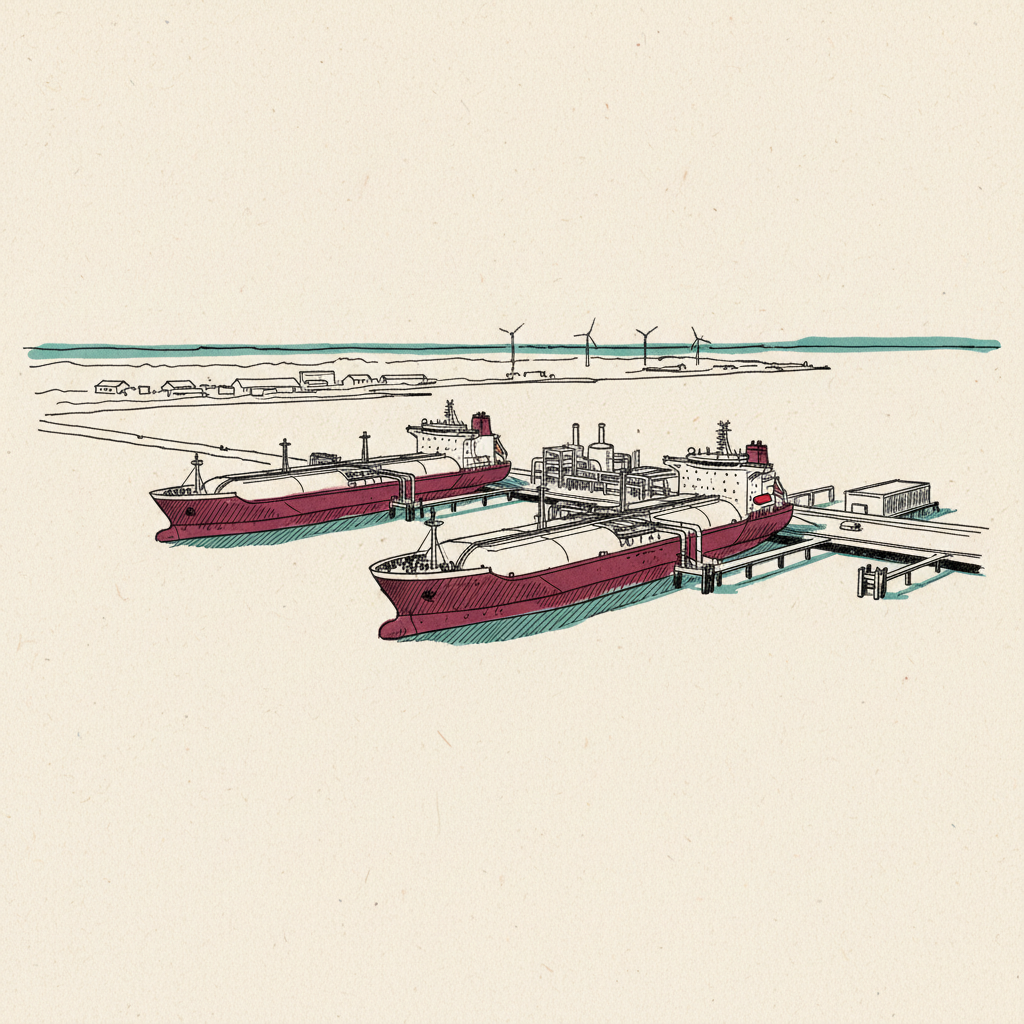
EemsEnergy Terminal
Dutch LNG regasification terminal located at Eemshaven in Groningen.
Last refreshed: 29 May 2026 · Appears in 1 active topic
Timeline for EemsEnergy Terminal
recorded lowest utilisation since 2023 in Q1 2026
European Energy Markets: Four LNG terminals at lowest utilisation since 2023Background
EemsEnergy Terminal (EET) is an FSRU-based LNG import facility located in the port of Eemshaven in the Netherlands, operated jointly by Gasunie (50%) and Vopak (50%). It opened in September 2022 as an emergency response to the European gas crisis following Russia's invasion of Ukraine, reaching a baseload capacity of 8 bcm per year and subsequently optimised to 9 bcm per year. Shell, Czech utility CEZ, and France's Engie hold the terminal's long-term capacity contracts (4 bcm, 3 bcm, and the balance respectively). By early 2026, the terminal had received more than 200 LNG cargoes since commissioning.
Despite its rapid construction and early high utilisation, EemsEnergy Terminal recorded the lowest throughput among Dutch and broader European LNG terminals in Q1 2026, reflecting a broader softening of European LNG demand as storage levels remained elevated and pipeline gas competition increased. The terminal received 68 cargoes in 2023 but only around 20 in the first half of 2024, a pattern that has continued into 2026. Gasunie and Vopak are assessing further capacity extensions in partnership with Belgian shipping group Exmar, which could extend operations to at least 2036.
EemsEnergy Terminal is a case study in POST-crisis LNG infrastructure: built fast to avert a shortage, it now faces the structural challenge of justifying long-term capacity in a market where European demand growth is uncertain and the EU's 2027 Russian phase-out may not automatically fill the gap with new non-Russian LNG.
What is EemsEnergy Terminal and who operates it?
Why does EemsEnergy Terminal have low utilisation in 2026?
How was EemsEnergy Terminal built so quickly?
What is the future of EemsEnergy Terminal after 2027?
