Skip to content
You can now search across every topic, entity and event.What's new
Iran Conflict 2026
25APR

Lebanon truce frays on day one

3 min read
20:34UTC

A 10-day Israel-Lebanon ceasefire took effect at 17:00 local on 17 April. An Israeli strike killed one civilian in Kounine within 24 hours.

ConflictDeveloping
Key takeaway

A truce announced on Truth Social is already producing casualties with Hezbollah outside the deal entirely.

A 10-day Israel-Lebanon ceasefire took effect at 17:00 local on Friday 17 April . Benjamin Netanyahu told his cabinet that Israel Defense Forces (IDF) troops would not withdraw from the 10-kilometre southern Lebanon "security zone" during the truce and that the ceasefire did not apply to Hezbollah operations 1. An Israeli strike killed one civilian in Kounine, a village in southern Lebanon, within the first 24 hours. The Lebanese Army reported multiple Israeli violations, including intermittent shelling in southern villages.

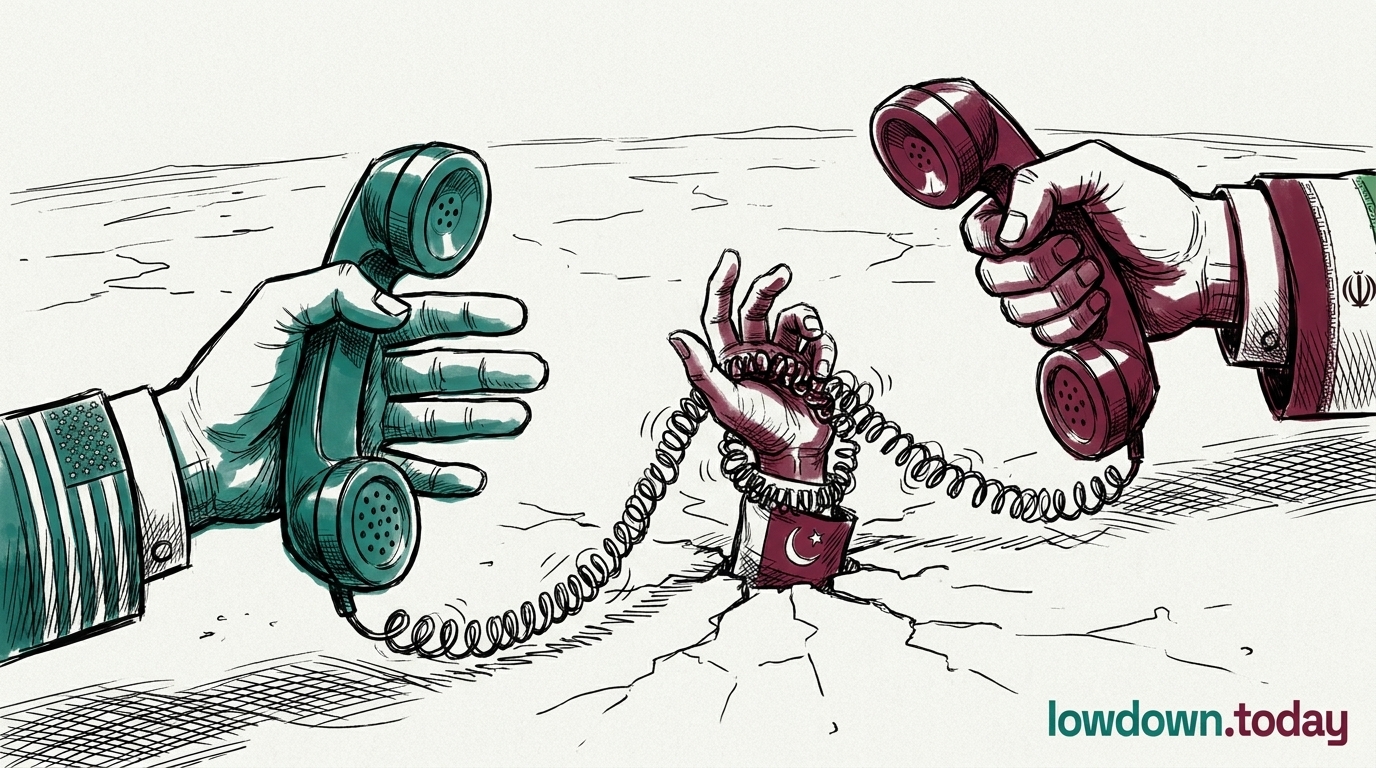
Trump posted on Truth Social that Israel was "PROHIBITED" from bombing Lebanon after Netanyahu's cabinet remark that the Lebanon fight was "not over" . The truce itself was announced through the same Truth Social channel, not through a published text with Lebanese counter-signatures. Hezbollah is explicitly outside the agreement, which leaves no armed Lebanese party bound to the ceasefire the Israeli prime minister has already partially disowned.

The Lebanon truce expires around 26-27 April, four days after the Iran ceasefire expires on 22 April. Two verbal truces are now stacked on top of each other, neither backed by a published bilateral text, both announced from a US president's social-media account rather than from a State Department readout. The Iran 22 April expiry and the Lebanon 26-27 April expiry land inside the four-deadline convergence window this briefing's WPR and GL-U sections set out.


Deep Analysis

In plain English

Israel and Lebanon agreed a 10-day ceasefire on 17 April. But Israel's Prime Minister said the truce did not cover Hezbollah (the militant group that has been firing rockets into northern Israel throughout the war). An Israeli strike killed a civilian in the village of Kounine in southern Lebanon within the first 24 hours. The ceasefire has no written agreement behind it and no outside body to check whether either side is keeping to it.

What could happen next?
  • Meaning

    Netanyahu's retention of the right to strike 'at any time' in self-defence means the Kounine strike is a precedent-setter for the truce's operational meaning: a ceasefire that allows unilateral strikes on the basis of self-defence is a tempo reduction, not a genuine halt.

    Short term · Assessed
  • Meaning

    The Lebanon truce expiry around 26-27 April sits four days after the Iran ceasefire expiry on 22 April; if both lapse without signed extensions, the war restarts on two fronts simultaneously within a five-day window.

    Short term · Assessed
  • Meaning

    Trump's 'PROHIBITED' post and Netanyahu's self-defence reservation cannot both be operative simultaneously; the first public strike after 26 April will reveal which claim holds practical authority.

    Short term · Assessed
First Reported In

Update #72 · Hormuz opens and closes in 24 hours

Euronews· 18 Apr 2026
Read original
Different Perspectives
Oil market and P&I insurers
Brent cleared $87 intraday only once CENTCOM's blockade became physical rather than declared, even though P&I Clubs had already excluded Hormuz war risk a week earlier on 7 July: capital hedged ahead of enforcement, but prices moved only after it.
UAE reporting
UAE reporting
UAE reporting placed the Omani tanker deaths at one seafarer against the International Maritime Agency's count of two, the first time in this war that a Gulf state's casualty figures have diverged from an international monitor's.
Jordan
Jordan
Iranian strikes reached Jordan again on 14 July as part of the Gulf-wide retaliation for the Hormuz blockade, extending the conflict's geographic footprint to a state with no direct stake in the strait itself.
Bahrain
Bahrain
Bahrain sounded air-raid sirens on 14 July during Iran's Gulf-wide retaliation, the same day CENTCOM's blockade order and fourth night of strikes pushed the conflict's physical reach into the wider Gulf littoral.
Kuwait
Kuwait
Kuwait intercepted Iranian missiles and drones on 14 July as Tehran's blockade retaliation reached Gulf states beyond Iran's immediate shoreline, confirming Kuwaiti airspace now sits inside Iran's retaliatory envelope.
Oman
Oman
Oman absorbed the war's first tanker casualties in its own waters on 14 July, with two supertankers disabled and seafarers killed, putting the sultanate's shipping lanes directly in the path of the blockade fight for the first time.



