Skip to content
Welcome, thoughtbot's Giant Robots listeners!Start here
Iran Conflict 2026
25APR

Bessent's oil threat meets a halved flow

2 min read
20:34UTC

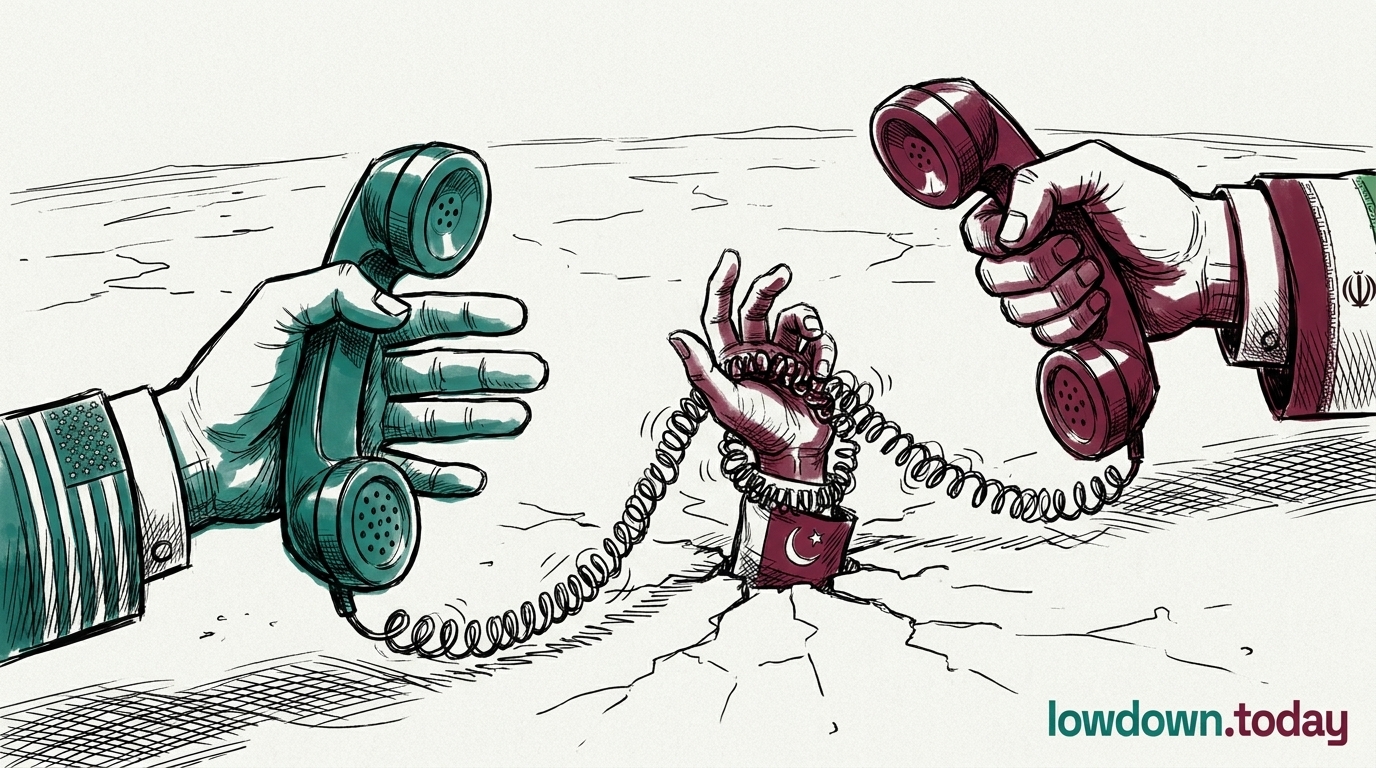
The Treasury Secretary told buyers of Iranian oil they face an economic D-Day, declining to name China. Chinese purchases had already fallen by half before he spoke, for reasons no American instrument reached.

ConflictDeveloping
Key takeaway

China's Iranian crude imports halved for commercial reasons before any American instrument reached them.

Scott Bessent said on Tuesday 25 August that buyers of Iranian oil face an "economic D-Day", declining to name China and adding "we know who they are"⁠1. China's foreign ministry spokesman Lin Jian replied that sanctions "do not help" and that Beijing would "take all necessary measures to firmly safeguard its own rights and interests"⁠2. The warning followed the Treasury Secretary's promise of unprecedented economic-isolation measures a fortnight earlier.

Chinese imports of Iranian crude had already halved before he spoke. Emma Li of Vortexa puts them at about 700,000 barrels a day, down from roughly 1.4 million before the war, driven by lower Chinese refinery runs and inventory drawdowns rather than by any sanction⁠3. A threat aimed at a flow that commercial arithmetic has already cut delivers less than the same threat would have delivered in the spring, and Beijing can concede nothing while continuing to buy at the reduced level.

Turkey, Iraq and India all carry Iranian trade and none has signalled a cut-off. Iraq pays Iran an estimated $4bn to $5bn a year for power-generation gas, and it had already asked Tehran in August for special consideration on its own Hormuz oil exports, which is the position of a state negotiating with Iran rather than isolating it⁠4. OPEC recorded Iranian output flat in the same period while Iraqi and Kuwaiti production surged.

Naming China would commit Washington to an instrument against Chinese refiners and banks, with a retaliation calculation attached; leaving the target unnamed keeps the warning free.

Deep Analysis

In plain English

The US Treasury Secretary warned that countries still buying Iranian oil face serious new economic pressure, without naming China directly. China's government said the threat would not help and that it would protect its own interests. China's purchases of Iranian oil had already fallen by half before this warning, for its own commercial reasons rather than because of any US pressure, which limits how much the new threat can actually change.

First Reported In

Update #175 · Iran says it re-mined the cleared lanes

CNN· 3 Sept 2026
Read original →
Different Perspectives
International Energy Agency
G7 members agreed on 2 October to release up to 100 million barrels through the IEA over four months, front-loading diesel.
China
China
China signed the 15 October text reaffirming the Resolution 2216 arms embargo on the Houthis. The Wall Street Journal reported that Conflict Armament Research found Chinese parts in a Houthi copy of Iran's Kheibarshekan missile.
Russia
Russia
Russia joined the 15 October consensus condemning the Houthis, a month after vetoing a mandate for a UN panel of experts on Iran sanctions on 17 September. One Western official told Bloomberg that Moscow is providing Iran with missiles, and the White House rejected the assessment.
India
India
National Security Adviser Ajit Doval raised seafarer safety with Mohsen Rezaei on 12 October, after a drone hit the Petro Dolphin with 11 Indians aboard at Sohar. External Affairs Minister S. Jaishankar urged that attacks on commercial shipping and seafarers be avoided.
Lebanon
Lebanon
President Joseph Aoun met UN peacekeeping chief Jean-Pierre Lacroix in Beirut on 14 October as UNIFIL winds down before its mandate ends on 31 December. Two days later Qatar's prime minister pledged in Beirut to fund a solar plant for Lebanon.
Kataib Hezbollah
Kataib Hezbollah
The militia announced a halt to operations except against "hostile aircraft" and denied any disarmament deal with Prime Minister Ali al-Zaidi. A day later Quds Force chief Esmail Qaani urged eliminating "remaining traces of the US presence in other arenas".

Written with AI from Lowdown's published reporting. Not individually reviewed by an editor. Editorial standards.