Skip to content
You can now search across every topic, entity and event.What's new
Iran Conflict 2026
20APR

Witkoff claims an unseen IAEA letter

3 min read
10:10UTC

Steve Witkoff says Iran wrote to the IAEA clearing its inspectors, a claim neither Tehran nor the nuclear watchdog has confirmed or put on paper.

ConflictDeveloping
Key takeaway

Another inspection claim arrives by interview, with no signed instrument from Iran or the IAEA.

US Special Envoy Steve Witkoff claimed on Friday 26 June that Iran had sent a letter to Rafael Grossi, head of the IAEA (International Atomic Energy Agency), authorising inspectors to enter Tehran 1. The IAEA is the United Nations nuclear watchdog that verifies what states do with their nuclear material. No Iranian official has confirmed the letter, and the agency has published nothing matching Witkoff's description.

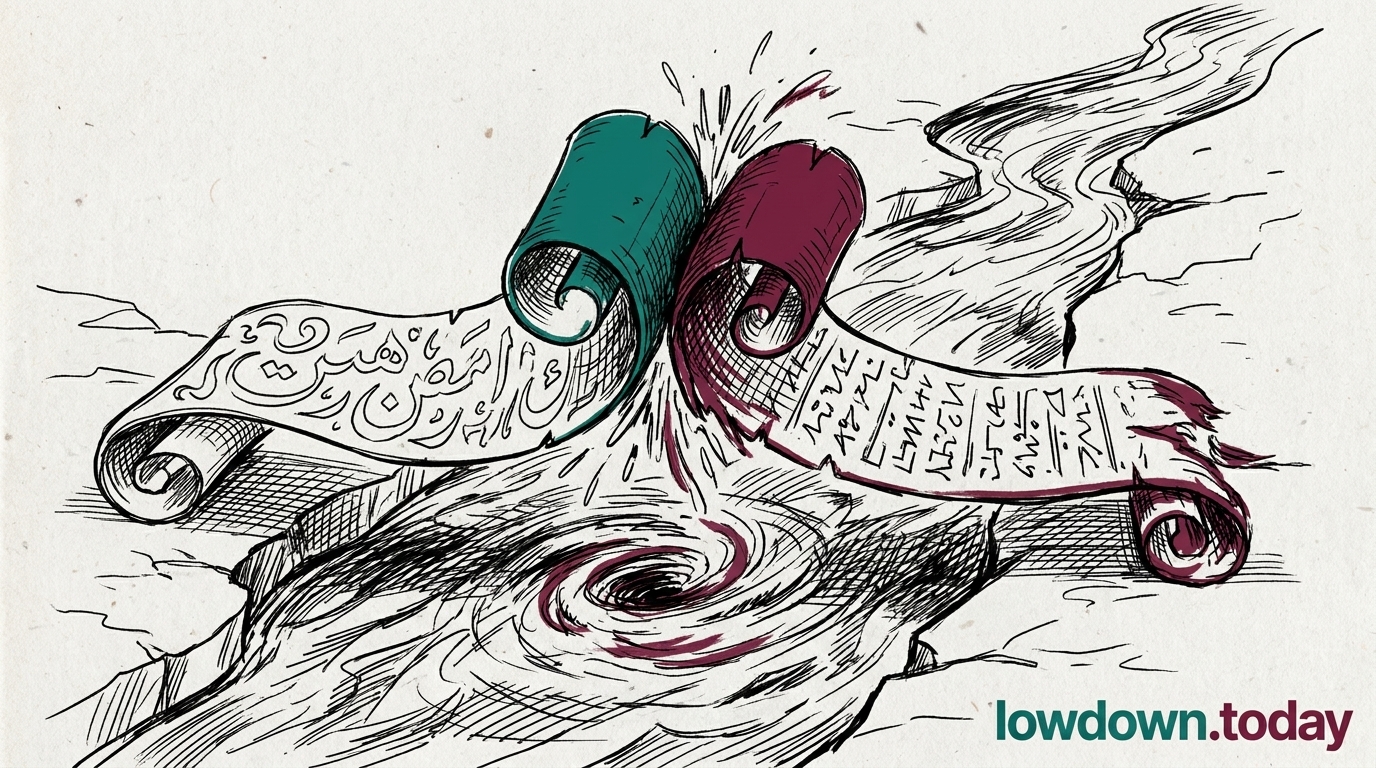
Witkoff's account follows a run of contested inspection claims. On Thursday 25 June, Grossi named inspection modalities while both governments issued opposing glosses on what he meant . Days earlier, Donald Trump said Iran had agreed to inspections, and Iran's foreign ministry spokesman Esmail Baghaei denied any such meeting took place . Each assertion travels by podium and interview, not by a published instrument, which lets either side claim progress without committing to a verifiable act.

Deep Analysis

In plain English

The IAEA (International Atomic Energy Agency) is the UN body whose job is to inspect nuclear facilities and verify that countries are not secretly building weapons. Iran has not allowed IAEA inspectors into several of its nuclear sites since February 2026, and the agency cannot currently verify what Iran holds or is doing. Witkoff is the US special envoy handling the Iran negotiations. On 26 June he claimed Iran had sent a letter directly to the IAEA's director allowing inspectors to travel to Tehran. Neither Iran's government nor the IAEA confirmed this. Previous similar claims, Trump said on 23 June that Iran had completely agreed to inspections, and Iran denied this within hours, follow the same pattern. Neither side has produced a signed text or an agreed inspection date.

What could happen next?
  • Risk

    Repeated unconfirmed inspection claims erode the credibility of any future confirmed progress. If Iran and the IAEA eventually agree a genuine inspection framework, markets and allies will be slower to price it in after a series of false announcements.

  • Consequence

    Each cycle of claim and denial extends Iran's effective nuclear verification blackout while consuming diplomatic bandwidth that might otherwise be used to negotiate actual access modalities.

First Reported In

Update #139 · A commander dies, the deal binds no one

Entekhab· 26 Jun 2026
Read original
Different Perspectives
Jordan
Jordan
Jordan's armed forces downed three Iranian missiles on Tuesday with no casualties, a second successful interception since the 19 July strike on Muwaffaq Salti that killed three US service members. Amman has neither confirmed nor denied ISW's assessment that its intelligence sharing is a Russia-China cover story.
Operation Aspides
Operation Aspides
Operation Aspides has not needed to intervene against the Houthi Bab al-Mandab embargo: six vessels, including the Chinese VLCC Xin Long Yang, reversed course after radio hailing alone, with no vessel boarded, fired on or stopped by force.
Pete Hegseth, US Secretary of War
Hegseth told the Senate Appropriations Committee the campaign has cost $37.5 billion so far, without saying whether the figure is obligated, appropriated or incremental. It is the first cost Washington has put on the war, arriving as OMB seeks $87.6 billion for the wider supplemental.
Iran's IRGC and Artesh
Iran's IRGC and Artesh reported destroying radar and Patriot installations at four Gulf bases on Tuesday night, the fifth dated iteration of the same claim against the same sites since 13 July. Neither Kuwait nor Bahrain has named or confirmed a single base as destroyed.
Saudi Arabia
Saudi Arabia
Riyadh has pressed Washington to end the Hormuz blockade specifically to remove Tehran's incentive for the Houthis to escalate Bab al-Mandab beyond radio warnings. It treats the embargo as coordinated pressure on Saudi shipping tied to the Hormuz campaign, not an independent Yemeni action.
Kuwait's Ministry of Electricity, Water and Renewable Energy and defence ministry
Kuwait reported power and desalination stations struck for a fourth consecutive day and four cruise missiles plus 21 drones intercepted since dawn Wednesday, while its defence ministry statement used only the word interception, never destruction. Kuwait has confirmed no Iranian claim of a destroyed base.