Skip to content
Briefings are running a touch slower this week while we rebuild the foundations.See roadmap
Iran Conflict 2026
20APR

Three powers tell three uranium stories

3 min read
10:10UTC

An Israeli official says Trump promised Netanyahu all of Iran's uranium will go; Reuters says Tehran agreed to no such thing; Baghaei says nuclear is not even in the text.

ConflictDeveloping
Key takeaway

The deal commits Iran to negotiate over its uranium, not to give it up, and Tehran disputes even that.

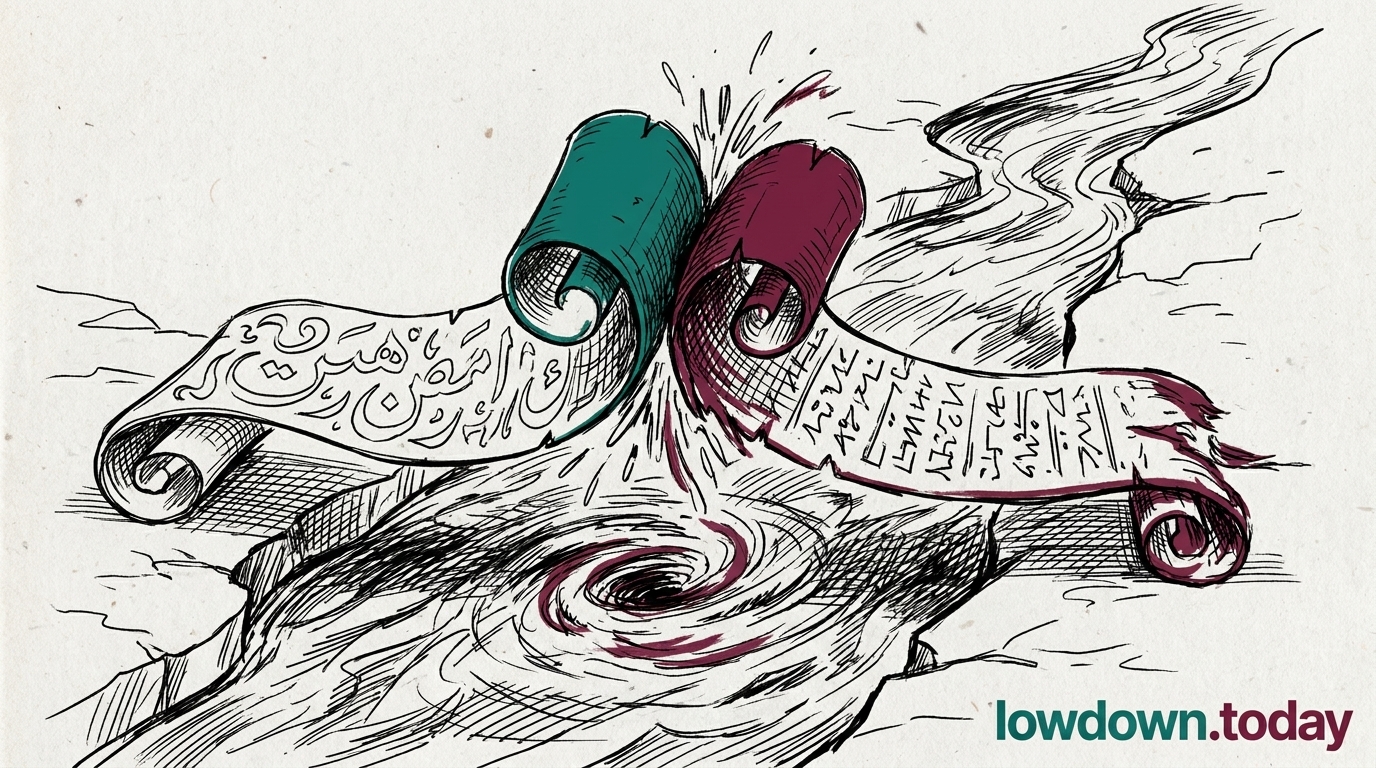
Three parties described the deal's nuclear terms in incompatible ways across 23 and 24 May. An Israeli official told The Times of Israel that Donald Trump told Prime Minister Benjamin Netanyahu the deal will dismantle Iran's programme and remove all its uranium 1. A senior Iranian source told Reuters that Tehran has not agreed to hand over its highly enriched uranium (HEU), the near-weapons-grade material at the centre of the war 2. Foreign ministry spokesman Esmail Baghaei told state agency IRNA that nuclear issues are not in the current text at all: end the war first, then talk nuclear over two months 3.

The stockpile in question is roughly 440 kilograms of 60%-enriched uranium, enough fissile material for several weapons if enriched further. The Axios draft commits Iran only to negotiate enrichment suspension and HEU removal, not to remove it. The moratorium length is still being argued: three sources told Axios at least 12 years, one named 15, and the gap matters, because a 15-year pause pushes any enrichment restart three years further out than a 12-year one.

The gap sits exactly where it has always sat. Iran's Supreme Leader ordered the stockpile kept inside the country last week , reversing the earlier offer to dilute it at home under a decade-long moratorium . The same material is now described three different ways by three parties who all insist the deal is nearly done. Former Israeli intelligence has assessed that the spring strikes left Iran's enrichment capacity largely intact, which is why the 440-odd kilograms still drive every account of the terms.

No independent body can check any of it. The IAEA, the UN nuclear watchdog, has been locked out of Iran's struck sites since the Majlis voted to suspend cooperation on 11 April, and the draft does not commit Tehran to let inspectors back. Any deal therefore arrives without a way to verify the one provision the three parties cannot agree on.

Deep Analysis

In plain English

On 23 and 24 May, three different parties described what the Iran deal will do to Iran's nuclear programme, and all three gave different answers. An Israeli official said Trump told Israeli Prime Minister Benjamin Netanyahu the deal will dismantle Iran's entire nuclear programme and remove all its enriched uranium. A senior Iranian source told Reuters that Iran has not agreed to hand over its stockpile of highly enriched uranium (uranium processed to near-weapons-grade level). And Iran's Foreign Ministry spokesman said nuclear issues are not in the deal text at all: the sequence is to end the fighting first, then negotiate nuclear matters separately. This matters because the roughly 440 kg of highly enriched uranium Iran holds is the central issue. The US wants it removed. Iran's Supreme Leader ordered on 21 May that it must stay inside the country. Until those two positions are reconciled, no nuclear part of any deal can be implemented, even if fighting stops.

Deep Analysis
Root Causes

Iran's nuclear programme sits at the intersection of three distinct institutional authorities: the President and Foreign Ministry (who negotiate), the Supreme Leader (who holds constitutional sovereignty over national security), and the IRGC (which physically controls much of the enrichment infrastructure). These three centres have different time horizons and audiences.

Khamenei's uranium-stay directive on 21 May reflects a structural constraint that predates this negotiation: Iran's hardliner consensus holds that exporting enriched uranium without a permanent treaty guarantee would repeat the 2015 JCPOA mistake, where Iran disposed of material and then saw the deal unilaterally abandoned. The approximately 440 kg HEU stockpile represents years of enrichment capacity; surrendering it without a permanent framework is politically impossible for Khamenei's base.

Escalation

Escalatory on the nuclear track. Three-party contradiction on the most sensitive deal component, the day after the deal was declared, reduces the probability of a signed instrument and increases the risk that one side publicly accuses the other of bad faith.

Israel's direct communication with the US about nuclear dismantlement terms (per the Israeli official's account) creates an Israeli veto trigger: if Netanyahu believes he was told full dismantlement was agreed and the deal delivers less, he may move to sabotage.

What could happen next?
  • Risk

    Israel's stated understanding (full uranium removal) differs from Iran's stated position (nuclear not in the text). A deal that delivers the latter while Israel expected the former creates a sabotage incentive for Netanyahu.

  • Consequence

    The 12-15 year moratorium gap remains unresolved. Until it narrows, the MOU's enrichment-suspension clause cannot be finalised, and any published deal text will be incomplete.

First Reported In

Update #106 · Trump says deal; OFAC says nothing

NBC News· 24 May 2026
Read original
Causes and effects
This Event
Three powers tell three uranium stories
The deal's hardest term is described three incompatible ways by the three parties who all say it is nearly done.
Different Perspectives
Israel
Israel
IDF Chief Eyal Zamir declared on 3 June there was no ceasefire for his forces, and strikes killed at least 10 civilians and one Israeli soldier on 4 June. The IDF killed Hezbollah's chief engineer and warned three south Lebanon villages to evacuate on 5 June, advancing into ground the unsigned Washington framework has not caught.
Hezbollah / Lebanon
Hezbollah / Lebanon
Naim Qassem rejected the Washington Lebanon framework on 4 June as "absurd, humiliating and insulting", blocking a ceasefire instrument that required Hezbollah to withdraw north of the Litani before any Israeli withdrawal. Over one million Lebanese remain displaced; the framework's collapse prolongs that toll.
Iran
Iran
Foreign Minister Araghchi publicly coupled the Lebanon ceasefire to the Iran-US nuclear track on 4 June, carrying IRGC authority rather than his own civilian mandate. The IRGC delegation has sent no HEU counter-proposal since Araghchi confirmed no progress that same day; Mojtaba Khamenei's 21 May order to keep the 440.9 kg stockpile inside Iran remains operative.
United States
United States
Rubio placed the Iran-US deal at 95 per cent complete on 4 June while the administration signed no Iran instrument and OFAC designated only Cuban targets. Trump separately disclosed and rejected an airlift plan to collect Iran's HEU stockpile, claiming the material is "entombed", a claim the IAEA cannot verify.
China
China
Beijing's MOFCOM Blocking Rules constrain OFAC enforcement on the mainland; China has not corroborated Trump's verbal account of any bilateral summit, and the rial's failure to hold its Rubio bounce, combined with the IRGC's stablecoin rail closure, increases Chinese yuan-denominated oil-payment exposure through Hormuz.
Bahrain
Bahrain
The IRGC struck Bahrain on 3 June as its sirens sounded and its PAC-3 magazine neared exhaustion; excluded from Rubio's 2 May emergency resupply, Bahrain received a 50-round Federal Register notice on 1 June on an 18-month delivery timeline, meaning it is defending the US Fifth Fleet headquarters on the last rounds it has.