Skip to content
You can now search across every topic, entity and event.What's new
Iran Conflict 2026
18APR

War leaves US farms 2m tonnes short

2 min read
14:57UTC
ConflictDeveloping

The Fertilizer Institute projects US farmers will be short 2 million tonnes of urea this spring, with urea prices up 30% since the war began. Some farmers cannot obtain supply at any price. 1 Spring planting is underway now. The shortage is not a forecast; it is a current constraint on fields being sowed this week.

The domestic economic pressure from this conflict has been building. US gasoline had already reached $3.98 per gallon , up 36% from pre-war levels. US diesel previously topped $5 per gallon . The fertiliser shortage adds a production-cost dimension to the energy-cost dimension: fuel to run farm equipment costs more, fertiliser to grow crops costs more or is unavailable, and transport costs have increased across the supply chain.

Urea is synthesised from natural gas. Iran and Russia together account for approximately 25% of global urea exports. The war has simultaneously disrupted Iranian production via strikes on petrochemical facilities and Russian supply chains via shipping insurance complications in The Gulf. The shortage is structural, not speculative: the 2 million tonne shortfall represents approximately 15% of annual US nitrogen fertiliser demand.

Corn planted without adequate nitrogen produces thin, pale stalks and reduced yields. The Fertilizer Institute's projection implies yields on affected acres could fall 10-20%, with downstream effects on global grain prices by autumn 2026. No administration response has been announced. The political dimension is acute: rural America, which supported the war at higher rates than urban centres per Pew data , is the constituency absorbing the most direct economic blow from a conflict it disproportionately endorsed.

Deep Analysis

In plain English

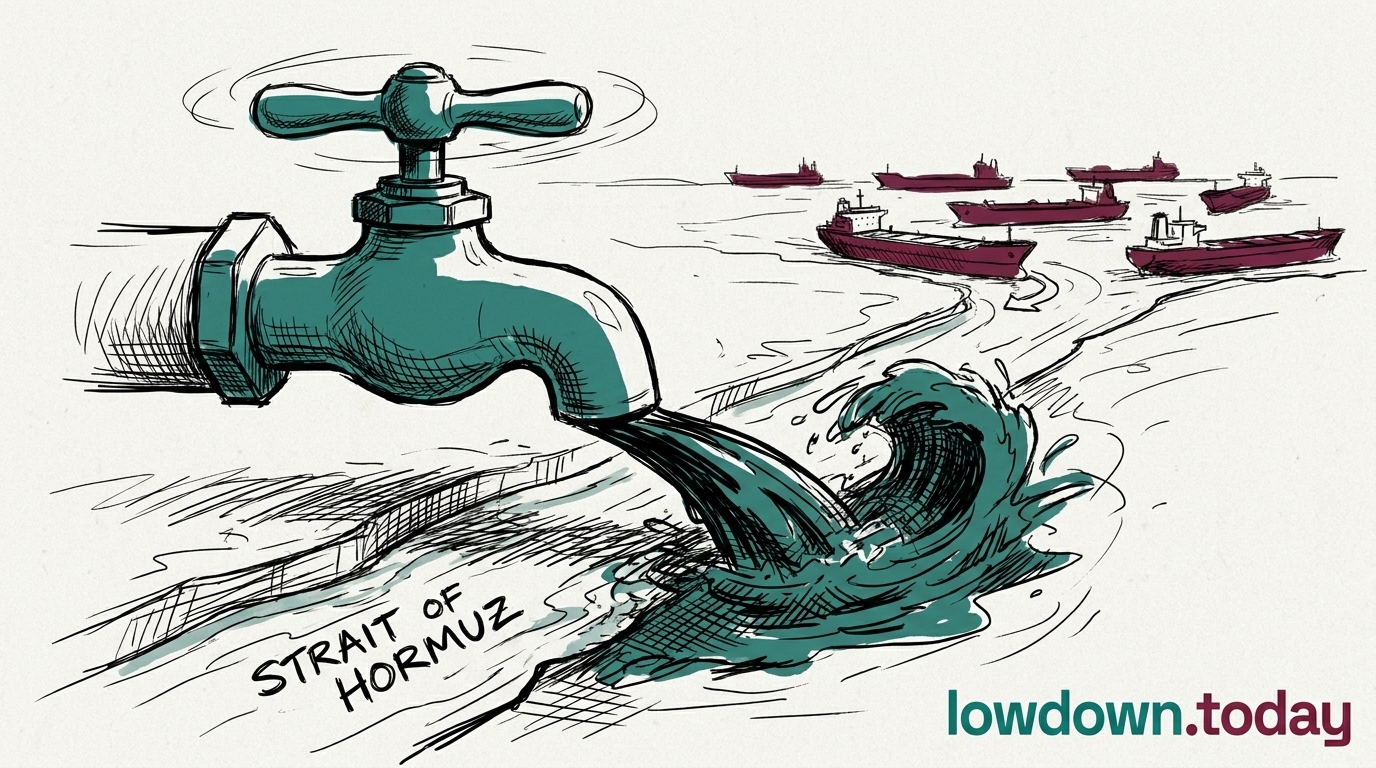
American farmers need fertiliser for spring planting right now. Most of it comes by ship through the Strait of Hormuz, which Iran controls. The war has disrupted those shipments. If fertiliser does not arrive in time, food prices rise for everyone.

Deep Analysis
Root Causes

US agriculture's dependency on imported fertiliser via a single maritime chokepoint.

The spring planting window is biologically fixed. Farmers who miss it cannot recover the yield later in the season.

First Reported In

Update #49 · Hormuz toll into law; Tangsiri killed

Siasat / Al Jazeera· 27 Mar 2026
Read original
Different Perspectives
Hengaw and Iranian protest detainees
Hengaw documented three secret executions of protest-linked detainees at Isfahan and Karaj on 15 and 16 July, including Mohammad Amini Dehaghani, hanged over a January arson charge with no public trial record. Tehran is carrying out capital punishment against 2026 protesters while global attention stays fixed on the war with the US.
Russia
Russia
OFAC named Moscow aviation firm Avratek OOO and its principals Mariya Selina and Vadim Druzhbin directly for the first time in this war's Iran arms track, under an Executive Order 13382 designation issued 15 July. The designation converts years of rhetorical claims about Russian arms supply to Iran into named, sanctionable individuals and a documented company.
Bahrain
Bahrain
Bahrain sounded air-raid sirens during Iran's 14 July Gulf-wide barrage and was struck again in the 16 July Artesh claim against Sheikh Isa air base, home to the US Fifth Fleet. Manama's air-defence stocks were already reported near-exhausted before this second strike claim against the same base in a week.
Kuwait
Kuwait
Kuwait's armed forces intercepted the drones Iran's Army claimed against Ali Al Salem air base on 16 July and separately reported intercepting missiles and drones in Iran's Gulf-wide barrage on 14 July. Kuwait now absorbs strikes from two rival Iranian commands while hosting Camp Arifjan, the US logistics base Iran also claims to have destroyed.
Iran (Artesh and IRGC)
Iran's regular Army claimed the 16 July drone strikes on Kuwait's Ali Al Salem and Bahrain's Sheikh Isa air bases under its own banner, Operation Saeqeh phase ten, while the IRGC separately claimed a mine strike closing Hormuz on 18 July. Two Iranian institutions are now claiming parallel operations, with neither claim confirmed by Kuwait, Bahrain or CENTCOM.
United States
United States
CENTCOM bombed the interior cities of Ahvaz and Yazd for the first time overnight into 17 July, Marines began boarding vessels including the tanker Wen Yao, and Treasury let General License X1 lapse at 12:01am the same day. Washington closed every remaining channel for de-escalation without a new executive action, a posture of attrition rather than a wind-down.