Skip to content
You can now search across every topic, entity and event.What's new
Iran Conflict 2026
18APR

Brent falls 8% on phantom peace talks

1 min read
14:57UTC

Brent crude dropped to $97 on Trump's negotiation claims, despite Iran's categorical rejection.

ConflictAssessed
Key takeaway

Oil prices reflect Trump's rhetoric, not Iran's actions; the paper-physical disconnect is at record levels.

Brent Crude (the international oil benchmark) fell to $96.68 per barrel on Wednesday, down from $104 at the start of the week but still 43% above the pre-war baseline of $67.41. The slide began Sunday when Donald Trump announced his 15-point ceasefire plan and continued despite Iran's categorical rejection.

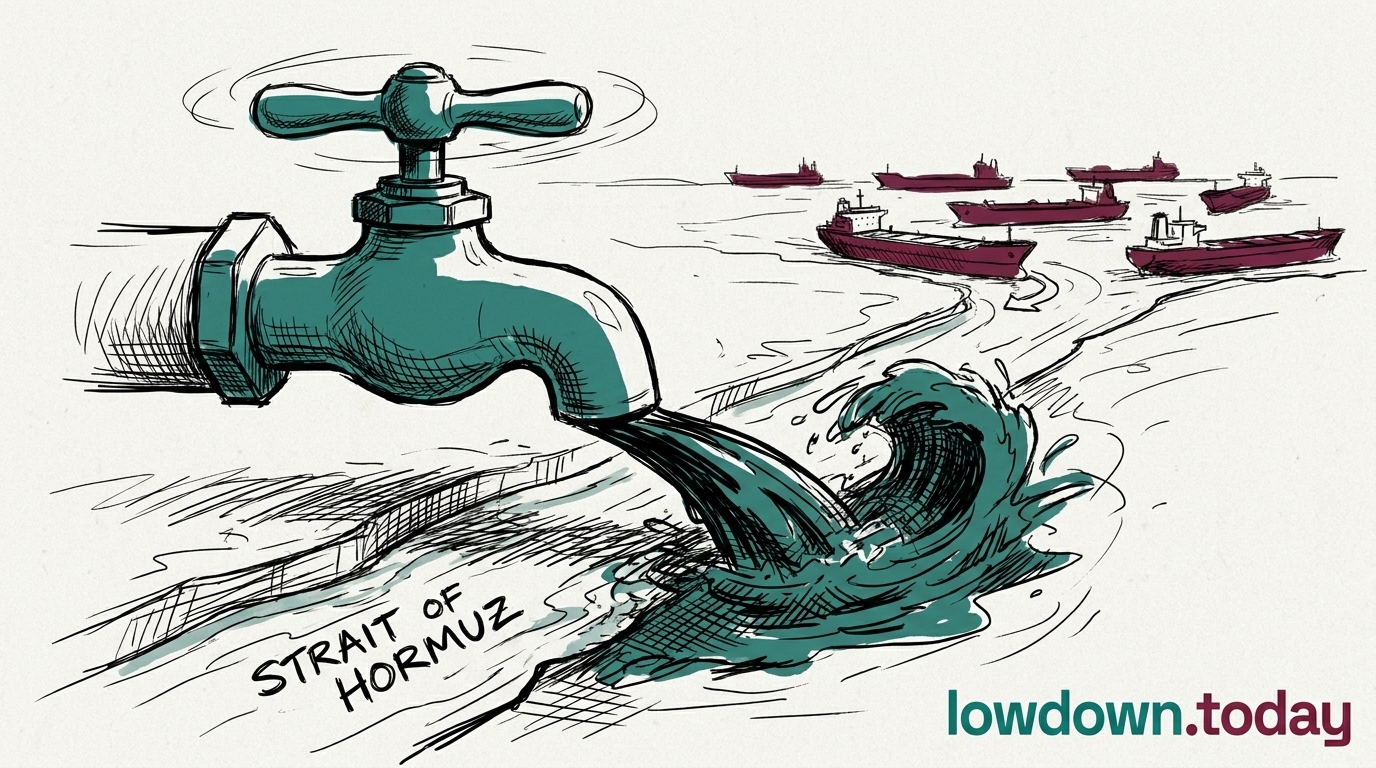
Sunday's 10.9% crash to $99.94 reversed to $102-104 within 48 hours . Physical crude tells a different story from futures: the record $14.20-per-barrel spot premium means refiners pay an effective $111 or more for delivered barrels, even as paper barrels trade at $97. The Strait of Hormuz remains closed; the physical price is more likely to pull paper up than reverse.

For British drivers, the war has added roughly 15p per litre at the pump since February. A return to the $126 peak would push that toward 30p. Goldman Sachs head of oil research Daan Struyven raised the probability of US recession to 25% at oil above $120 .

Deep Analysis

In plain English

Oil prices dropped because traders believe Trump is close to a deal with Iran. But Iran publicly rejected the deal. When that gap closes, prices will jump back up and petrol will get more expensive again.

What could happen next?
  • Risk

    Rapid upward correction likely when rejection registers

  • Consequence

    Record backwardation strains refiner working capital

First Reported In

Update #48 · Iran rejects ceasefire; Kharg fortified

CNBC· 26 Mar 2026
Read original
Causes and effects
This Event
Brent falls 8% on phantom peace talks
Markets are pricing rhetoric over reality; when Iran's rejection registers, a rapid correction could strain derivatives markets at record backwardation.
Different Perspectives
Hengaw and Iranian protest detainees
Hengaw documented three secret executions of protest-linked detainees at Isfahan and Karaj on 15 and 16 July, including Mohammad Amini Dehaghani, hanged over a January arson charge with no public trial record. Tehran is carrying out capital punishment against 2026 protesters while global attention stays fixed on the war with the US.
Russia
Russia
OFAC named Moscow aviation firm Avratek OOO and its principals Mariya Selina and Vadim Druzhbin directly for the first time in this war's Iran arms track, under an Executive Order 13382 designation issued 15 July. The designation converts years of rhetorical claims about Russian arms supply to Iran into named, sanctionable individuals and a documented company.
Bahrain
Bahrain
Bahrain sounded air-raid sirens during Iran's 14 July Gulf-wide barrage and was struck again in the 16 July Artesh claim against Sheikh Isa air base, home to the US Fifth Fleet. Manama's air-defence stocks were already reported near-exhausted before this second strike claim against the same base in a week.
Kuwait
Kuwait
Kuwait's armed forces intercepted the drones Iran's Army claimed against Ali Al Salem air base on 16 July and separately reported intercepting missiles and drones in Iran's Gulf-wide barrage on 14 July. Kuwait now absorbs strikes from two rival Iranian commands while hosting Camp Arifjan, the US logistics base Iran also claims to have destroyed.
Iran (Artesh and IRGC)
Iran's regular Army claimed the 16 July drone strikes on Kuwait's Ali Al Salem and Bahrain's Sheikh Isa air bases under its own banner, Operation Saeqeh phase ten, while the IRGC separately claimed a mine strike closing Hormuz on 18 July. Two Iranian institutions are now claiming parallel operations, with neither claim confirmed by Kuwait, Bahrain or CENTCOM.
United States
United States
CENTCOM bombed the interior cities of Ahvaz and Yazd for the first time overnight into 17 July, Marines began boarding vessels including the tanker Wen Yao, and Treasury let General License X1 lapse at 12:01am the same day. Washington closed every remaining channel for de-escalation without a new executive action, a posture of attrition rather than a wind-down.