Skip to content
You can now search across every topic, entity and event.What's new
Iran Conflict 2026
18APR

Brent at $112 as Houthis join the war

2 min read
14:57UTC

The IEA's largest-ever emergency oil release has not stabilised prices; a Dow executive warned supply chains will take nine months to recover after the strait reopens.

ConflictDeveloping
Key takeaway

Nine months of supply chain damage is locked in regardless of when the war ends.

Brent Crude closed at $112.57 on 28 March, up 4.22% on the day. Pre-war Brent was $67.41; the current price represents a 67% increase in 29 days. The Houthi entry and Iran's firm rejection of negotiations drove the reversal. 1

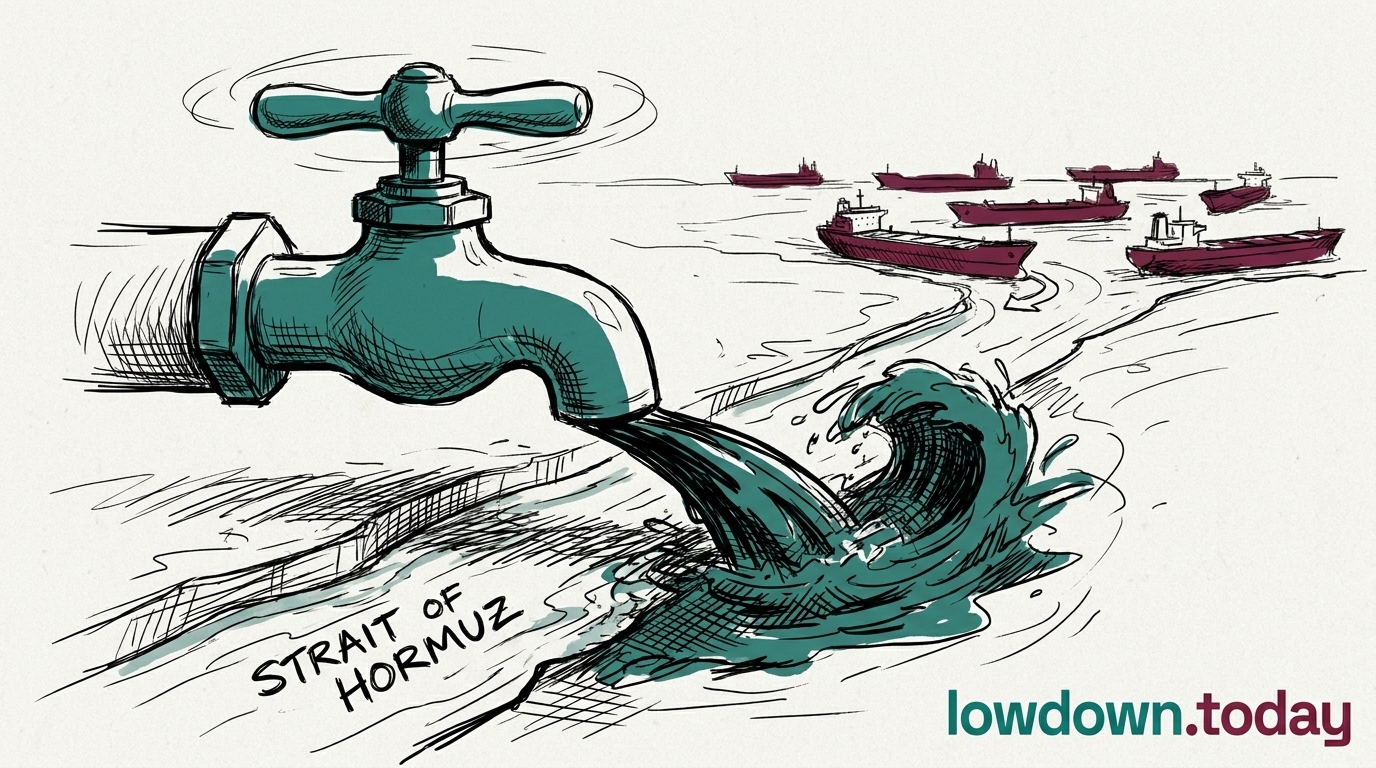
The IEA's record 400 million barrel emergency release, the largest in the agency's 50-year history, has not stabilised prices. The IEA itself said why: "The most important factor is resumption of regular transit through the strait of Hormuz." 2 European reserves are predominantly industry-held: 74.8 million barrels from industry versus 32.7 million from government, giving European governments less direct control than the headline figure implies.

Dow CEO Jim Fitterling stated the damage is already locked in: even if Hormuz reopens tomorrow, petrochemical supply chains will take 250-275 days to unwind. The US-Asia petrochemical pricing gap has surged from under $500 to over $1,200 per metric tonne. 3 US farmers face a 2 million tonne urea shortfall during spring planting, with urea prices up 49% to $720 per tonne. Corn and wheat yields on affected fields could fall 10-20%, with downstream effects on global grain prices by autumn.

Deep Analysis

In plain English

Oil prices closed at $112.57 per barrel on 28 March, up about 4% on the day. Before the war started, a barrel cost $67.41. The 67% rise in 29 days is one of the fastest sustained oil price increases in modern history. The IEA, a group of oil-consuming countries, released the largest emergency oil reserve in its history: 400 million barrels. It has not reduced prices. The IEA itself said why: reserves cover a temporary supply disruption; they cannot substitute for a closed shipping route. For a British driver, $112 oil means roughly £1.80 per litre at the pump. For farmers, fertiliser is the bigger problem. Urea, the chemical used to grow corn and wheat, has risen 49% in price and the US faces a 2 million tonne shortage this spring planting season. Crop yields could fall 10-20%, and those effects will reach food prices by autumn.

What could happen next?
  • Consequence

    A ceasefire today does not end the economic damage: Dow's 250-275 day supply chain unwind means petrochemical-driven inflation persists into Q1 2027 regardless of conflict resolution.

  • Risk

    The 2 million tonne urea shortfall is not substitutable within a planting season; US crop yields in autumn 2026 are already compromised regardless of war outcome.

First Reported In

Update #50 · Houthis join; Iran holds two chokepoints

Fortune· 28 Mar 2026
Read original
Different Perspectives
Hengaw and Iranian protest detainees
Hengaw documented three secret executions of protest-linked detainees at Isfahan and Karaj on 15 and 16 July, including Mohammad Amini Dehaghani, hanged over a January arson charge with no public trial record. Tehran is carrying out capital punishment against 2026 protesters while global attention stays fixed on the war with the US.
Russia
Russia
OFAC named Moscow aviation firm Avratek OOO and its principals Mariya Selina and Vadim Druzhbin directly for the first time in this war's Iran arms track, under an Executive Order 13382 designation issued 15 July. The designation converts years of rhetorical claims about Russian arms supply to Iran into named, sanctionable individuals and a documented company.
Bahrain
Bahrain
Bahrain sounded air-raid sirens during Iran's 14 July Gulf-wide barrage and was struck again in the 16 July Artesh claim against Sheikh Isa air base, home to the US Fifth Fleet. Manama's air-defence stocks were already reported near-exhausted before this second strike claim against the same base in a week.
Kuwait
Kuwait
Kuwait's armed forces intercepted the drones Iran's Army claimed against Ali Al Salem air base on 16 July and separately reported intercepting missiles and drones in Iran's Gulf-wide barrage on 14 July. Kuwait now absorbs strikes from two rival Iranian commands while hosting Camp Arifjan, the US logistics base Iran also claims to have destroyed.
Iran (Artesh and IRGC)
Iran's regular Army claimed the 16 July drone strikes on Kuwait's Ali Al Salem and Bahrain's Sheikh Isa air bases under its own banner, Operation Saeqeh phase ten, while the IRGC separately claimed a mine strike closing Hormuz on 18 July. Two Iranian institutions are now claiming parallel operations, with neither claim confirmed by Kuwait, Bahrain or CENTCOM.
United States
United States
CENTCOM bombed the interior cities of Ahvaz and Yazd for the first time overnight into 17 July, Marines began boarding vessels including the tanker Wen Yao, and Treasury let General License X1 lapse at 12:01am the same day. Washington closed every remaining channel for de-escalation without a new executive action, a posture of attrition rather than a wind-down.