Skip to content
Briefings are running a touch slower this week while we rebuild the foundations.See roadmap
Iran Conflict 2026
18APR

Parsi reads extension as a climbdown

2 min read
14:57UTC

Lowdown Analysis

ConflictAssessed
Key takeaway

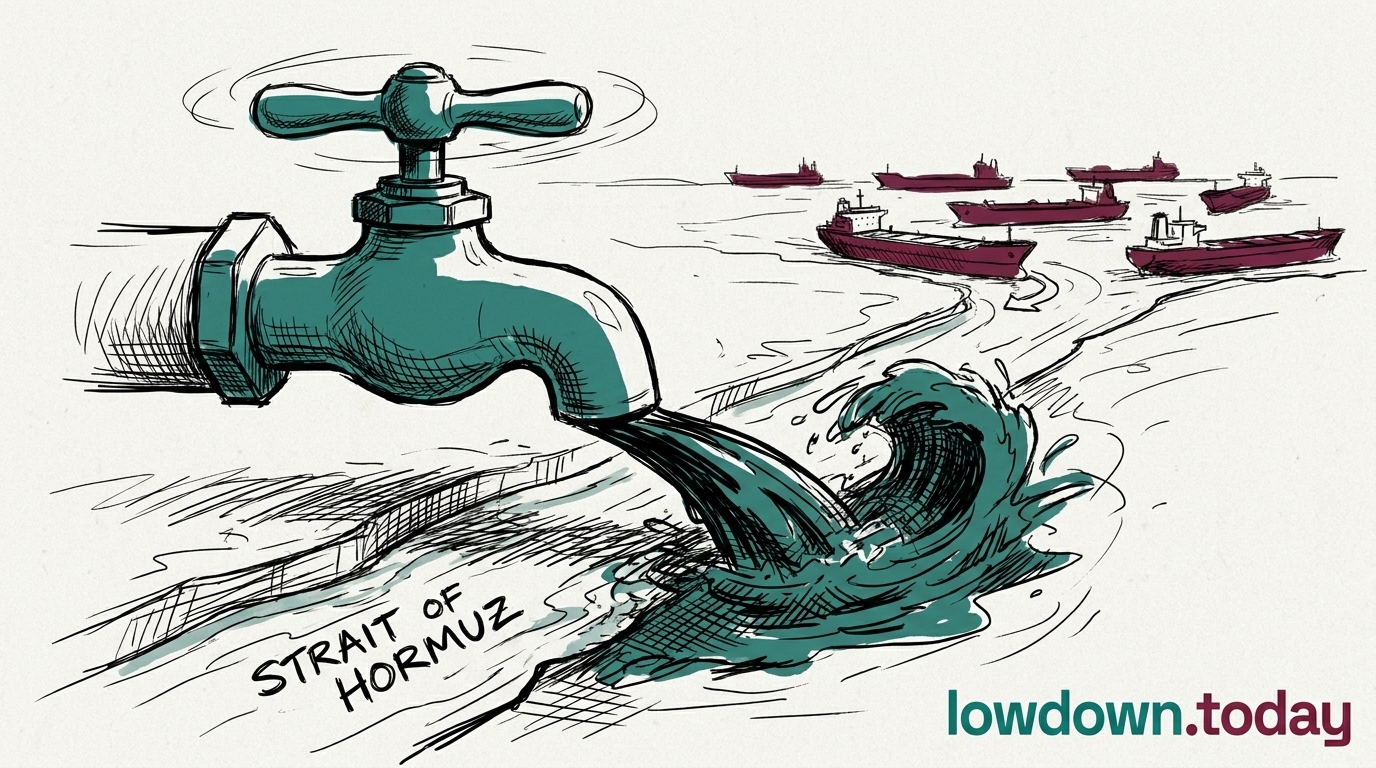
Parsi: the extension leaves Iran in control of the strait with no agreement, no relief and no return to war.

Trita Parsi at the Quincy Institute assessed the extension as a climbdown on 21 April: 'No agreement, no sanctions relief, no nuclear reconciliation, no return to war, while Iran continues controlling the strait.' 1 Parsi's reading is the most publicly articulated critique from a Washington-adjacent analyst bringing regional context rather than partisan framing.

The climbdown reading sits alongside a method reading rather than in opposition to it. Five verbal statements at five calendar deadlines across 14 days, against a White House tracker that has held at zero Iran instruments across the full war, crosses the threshold where absence of paper starts to look engineered. Trump's earlier uranium-transfer claim that Baqaei denied within hours was an earlier instance of the same verbal-instrument cadence. Parsi describes the diplomatic outcome; the instrument record describes the technique producing it. An extension with an unreachable exit trigger closes the calendar without closing the war, which is what a method built on unsigned posts delivers.

Deep Analysis

In plain English

Trita Parsi is a researcher at the Quincy Institute, a Washington think tank focused on restraint in US foreign policy. On 21 April he assessed Trump's extension announcement as a climbdown , meaning Iran got what it wanted (keeping control of the Strait of Hormuz) while giving nothing in return. Parsi's quote: 'No agreement, no sanctions relief, no nuclear reconciliation, no return to war, while Iran continues controlling the strait.' This is a contested reading. Supporters of the administration argue the extension is a deliberate method that preserves US options. Critics like Parsi argue the 22 April deadline passed without any of Washington's stated objectives being met.

What could happen next?
  • Meaning

    The Quincy Institute's climbdown framing will shape how congressional critics frame the 29 April WPR debate, providing ready-made language for any legislator seeking to challenge the 'winding down' argument.

First Reported In

Update #76 · Trump posts an exit Iran can't reach

Fararu· 22 Apr 2026
Read original
Causes and effects
Different Perspectives
Lloyd's of London war-risk underwriters
Lloyd's kept its Hormuz war-risk designation unchanged at $10-14 million per voyage even as Brent spiked 7%, holding the split from futures that has run since late May. Underwriters require a Security Council resolution or government certification, not a presidential phone call.
Gulf Cooperation Council states
Gulf states, having written to the IMO rejecting Iran's Hormuz transit authority, watched a fresh missile exchange land on Kuwaiti soil. Riyadh and Abu Dhabi remain caught between US security guarantees and Iranian fire, with no Gulf state co-belligerent except Kuwait.
China
China
Beijing stayed out of the diplomatic rupture, sending no envoy and offering no public position on the suspended talks. China keeps its bilateral energy corridor with Tehran while declining the exposure of a mediating role Trump barred it from anyway.
Kuwait
Kuwait
Kuwait's air defences engaged two Iranian ballistic missiles aimed at US forces late on 31 May, the second interception in days after invoking Article 51. Repeated strikes test whether Kuwait's politics can sustain hosting US forces as a de facto co-belligerent.
Lebanon and Hezbollah
Lebanon announced a partial ceasefire under which Hezbollah pledged to stop attacking Israel, the concrete output of Trump's call. Beirut heads to Washington on 3 June with Israeli forces still inside the south, testing whether the truce survives contact.
Israel under Netanyahu
Netanyahu stood down the planned Beirut operation under Trump's pressure but kept his ground advance running toward the Zaharani river, the deepest incursion in 25 years, and disputed Trump's claim that troops had turned around. Israel signalled the halt is tactical, not a wind-down.