Skip to content
Iran Conflict 2026
18APR

Omani Vessels Bypass IRGC Corridor, Disable Trackers

2 min read
14:57UTC

Three Omani vessels bypassed the IRGC's Larak Island toll corridor on 2 April, using the traditional international channel before disabling their AIS transponders, per Windward AI maritime intelligence.

ConflictDeveloping
Key takeaway

Oman's AIS-dark bypass suggests an undisclosed bilateral exemption from Iran's Hormuz toll, unconfirmed by either side.

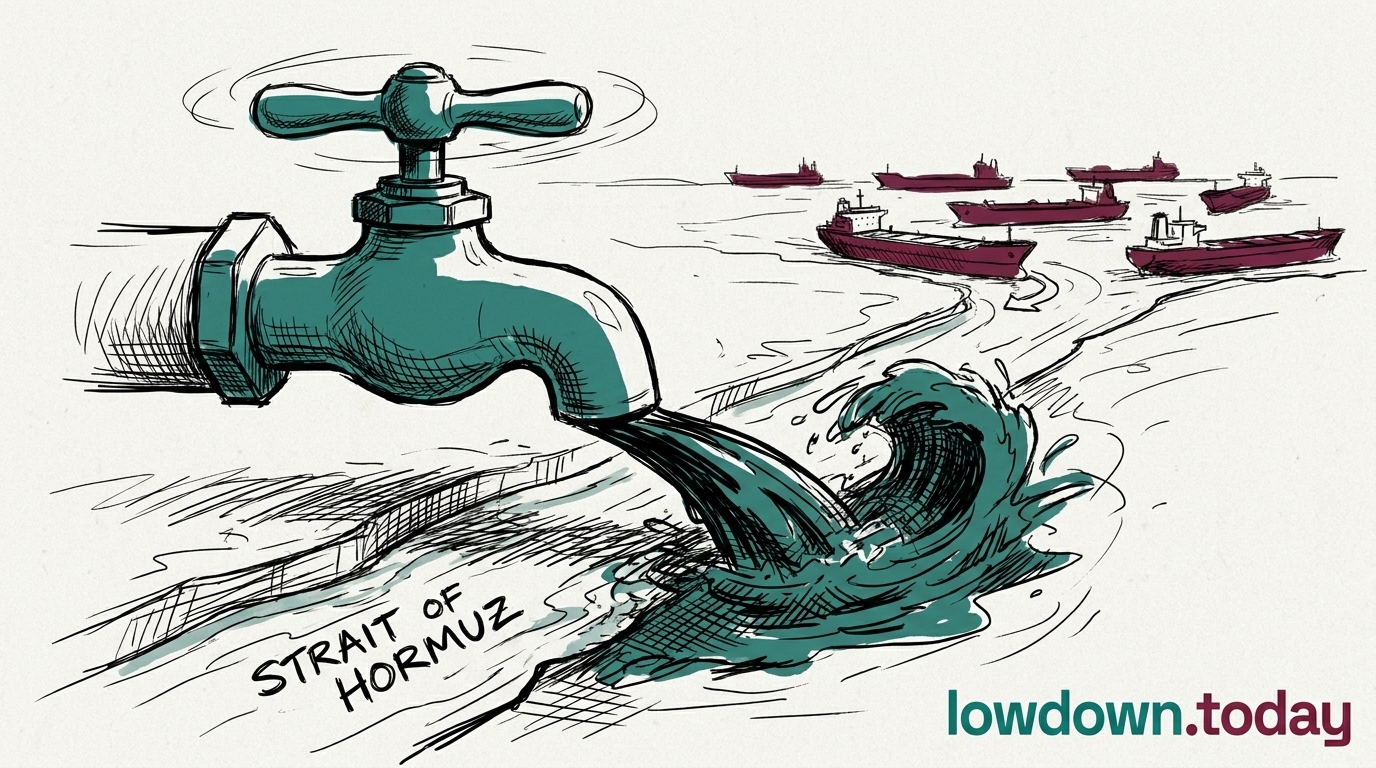
Windward AI maritime intelligence tracked three Omani vessels using the traditional international Hormuz channel on 2 April, bypassing the IRGC's Larak Island toll corridor entirely. After completing the transit, the vessels disabled their Automatic Identification System (AIS) transponders, removing themselves from public tracking.

The Philippines deal and the Omani bypass occurred on the same day. The Philippines deal was announced through official diplomatic channels. The Omani manoeuvre was not. The deliberate AIS blackout after a corridor bypass is a signature of vessels that have received clearance through back-channels rather than the official toll mechanism. Vessels that have paid the IRGC toll have no reason to disable their transponders.

Oman has served as the primary Iran-West diplomatic backchannel for decades, facilitating the initial nuclear talks that led to the JCPOA. That history means Muscat's vessels bypassing the IRGC corridor is not an act of defiance; it is more likely an act of arrangement. An undisclosed bilateral exemption is consistent with both the AIS behaviour and Oman's established diplomatic pattern.

If confirmed, Oman's undisclosed deal and the Philippines' announced deal represent two distinct flavours of the same structural problem: the IRGC toll is already operating as a differentiated licensing framework rather than a blunt blockade, with exemptions allocated selectively across a fracturing coalition of former opponents.

Deep Analysis

In plain English

Three ships from Oman took a different route through the strait — one that avoids Iran's checkpoint — and then turned off their tracking systems. This strongly suggests Oman has a quiet deal with Iran that it has not announced publicly.

Deep Analysis
Root Causes

Oman's energy export dependency on Hormuz (it exports roughly 800,000 bpd through the strait) gives it both the motive and the leverage to negotiate a corridor arrangement with Iran.

Unlike the Philippines, which had to negotiate as a supplicant, Oman operates from a position of geographic leverage: its territory flanks the strait, and its cooperation with either side is operationally valuable.

Escalation

Stabilising for Oman-Iran relations; neutral for the broader conflict. Oman's backchannel function is a net positive for the prospect of indirect talks, as evidenced by the Axios report of US-Iran communication via Pakistan.

What could happen next?
  • Opportunity

    Oman's bilateral arrangement preserves its backchannel utility; Washington and Tehran are both likely to protect it as a communication line.

  • Meaning

    The IRGC's willingness to grant Oman an exception confirms the toll is a discretionary licensing system, not an absolute blockade — which creates negotiating space.

First Reported In

Update #57 · Bridge strike kills eight; Army chief fired

Windward AI· 3 Apr 2026
Read original
Causes and effects
Different Perspectives
Global South governments (Indonesia, Brazil, South Africa)
Neutrality was possible when the targets were military. 148 dead schoolgirls made it impossible — no government can explain that away to its own citizens.
Trump administration
Oscillating between claiming diplomatic progress and threatening escalation, while deploying additional ground forces to the Gulf.
Israeli security establishment
Fears a rapid, vague US-Iran agreement that freezes military operations before the IDF achieves what it considers full strategic objectives. A senior military official assessed the campaign is 'halfway there' and needs several more weeks.
Iraqi government
Iraqi government
Iraq's force majeure is the position of a non-belligerent whose entire petroleum economy has been paralysed by a war between others — storage full, exports blocked, production being cut with no timeline for resumption.
Russia — Ambassador Vassily Nebenzia
Moscow calibrated its position between Gulf states and Iran: abstaining on Resolution 2817 rather than vetoing it, signalling it would not block protection for Gulf states, while refusing to endorse a text that ignores the US-Israeli campaign it regards as the conflict's proximate cause. Russia proposed its own ceasefire text — which failed 4-2-9 — allowing Moscow to claim the peacemaker role while providing Iran with satellite targeting intelligence, a duality consistent with its approach in Syria.
France — President Macron
France absorbed its first combat death in a conflict it has publicly declined to join. The killing of Chief Warrant Officer Frion in Erbil forces Macron to choose between escalating involvement and accepting casualties from the margins.