Skip to content
Briefings are running a touch slower this week while we rebuild the foundations.See roadmap
Iran Conflict 2026
18APR

GL-U expiry nears with no renewal

2 min read
14:57UTC

OFAC's General License U expires 19 April with no Treasury signal, after 23 days of silence on Iran sanctions.

ConflictDeveloping
Key takeaway

Treasury silence on GL-U renewal leaves stranded tankers in legal uncertainty.

OFAC (Office of Foreign Assets Control) General License U, which authorises the sale and delivery of Iranian-origin crude oil loaded before 20 March, expires on 19 April. No renewal, extension, or replacement licence has been issued as of 12 April. Seven days remain.

OFAC has not published a single Iran-related action since 20 March, 23 days of silence during an active war. It amended general licences for Russia and Venezuela in the same window, making the Iran silence conspicuous.

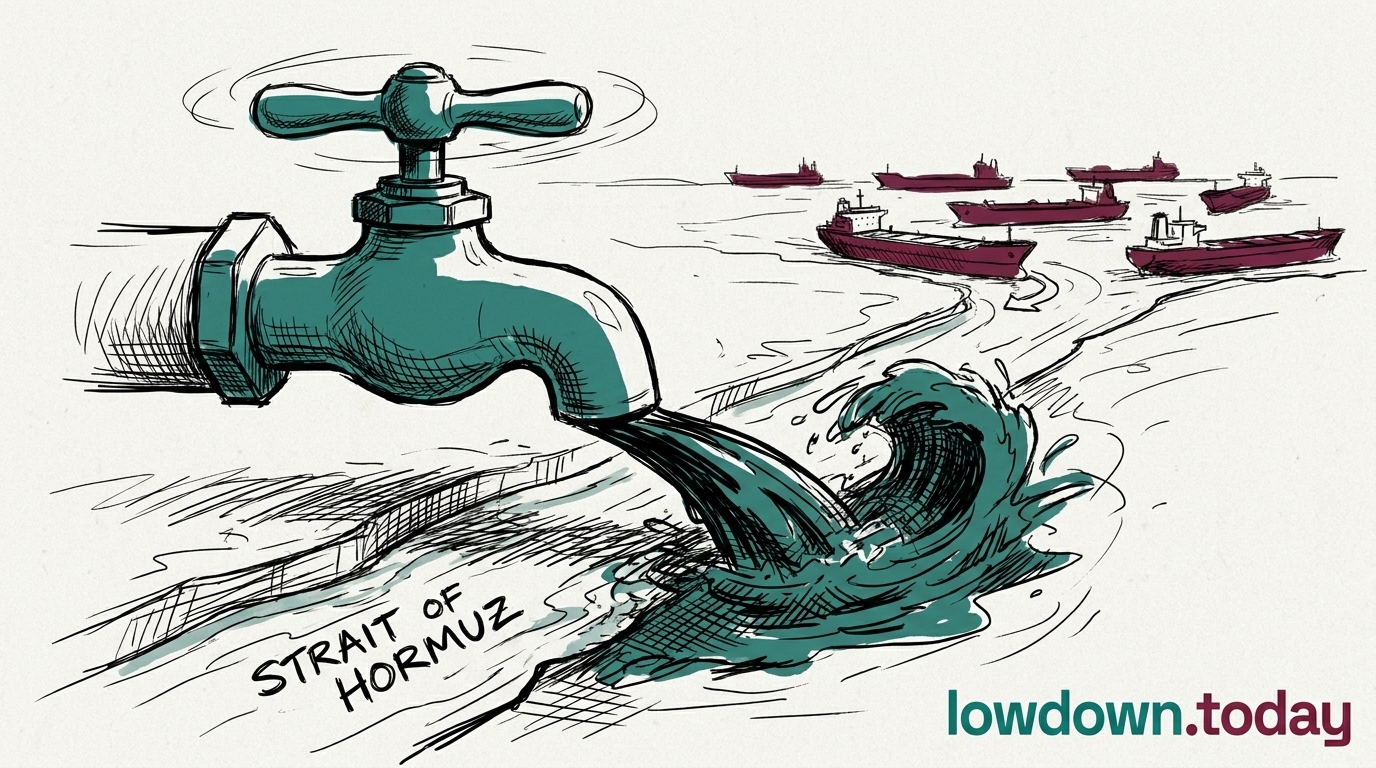
The licence's scope is narrow. It covers crude and petroleum products loaded on vessels on or before 20 March. It does not authorise new purchases, new loadings, or any transaction after its expiry. The oil tankers stranded in the Gulf are already in legal limbo; GL-U expiry would recriminalise any remaining deliveries.

GL-U expires three days before the Ceasefire's own expiry around 22 April, creating back-to-back deadlines. A renewal would signal US willingness to keep a back-channel open despite the talks breakdown. Non-renewal would be read in Tehran as confirmation that the US is tightening pressure rather than extending space. Neither outcome has been signalled, which in itself is a signal: The Administration has not decided, or has decided not to show its hand.

Deep Analysis

In plain English

OFAC is the US Treasury office that enforces sanctions. When the US struck a deal to pause hostilities, it issued a special permit called General License U, which temporarily allowed oil that had already been loaded onto ships before 20 March to be delivered and sold legally. That permit expires on 19 April. With talks now collapsed, the US has not signalled any intent to renew it. If it expires without renewal, every Iranian oil delivery currently in transit becomes illegal under US sanctions, meaning any bank or company involved in processing that payment faces US penalties. For the 325 tankers stranded in the Gulf, this creates a legal cliff: even if they get through the strait, their cargo may become unsellable under US sanctions three days before the ceasefire itself expires. It is a tightening vice with two jaws closing simultaneously.

What could happen next?
  • Consequence

    GL-U non-renewal on 19 April would tighten the sanctions regime three days before the ceasefire expires on approximately 22 April, creating a legal and commercial cliff that compounds the diplomatic vacuum from the Islamabad collapse.

  • Opportunity

    A targeted GL-U renewal, possibly extended to cover additional Iranian oil deliveries, could serve as a back-channel signal to Tehran that the US is not yet escalating sanctions, potentially creating space for Pakistan to arrange a further round of talks.

First Reported In

Update #66 · Islamabad collapses: 10 days to expiry

Al Jazeera· 12 Apr 2026
Read original
Different Perspectives
Lloyd's of London war-risk underwriters
Lloyd's kept its Hormuz war-risk designation unchanged at $10-14 million per voyage even as Brent spiked 7%, holding the split from futures that has run since late May. Underwriters require a Security Council resolution or government certification, not a presidential phone call.
Gulf Cooperation Council states
Gulf states, having written to the IMO rejecting Iran's Hormuz transit authority, watched a fresh missile exchange land on Kuwaiti soil. Riyadh and Abu Dhabi remain caught between US security guarantees and Iranian fire, with no Gulf state co-belligerent except Kuwait.
China
China
Beijing stayed out of the diplomatic rupture, sending no envoy and offering no public position on the suspended talks. China keeps its bilateral energy corridor with Tehran while declining the exposure of a mediating role Trump barred it from anyway.
Kuwait
Kuwait
Kuwait's air defences engaged two Iranian ballistic missiles aimed at US forces late on 31 May, the second interception in days after invoking Article 51. Repeated strikes test whether Kuwait's politics can sustain hosting US forces as a de facto co-belligerent.
Lebanon and Hezbollah
Lebanon announced a partial ceasefire under which Hezbollah pledged to stop attacking Israel, the concrete output of Trump's call. Beirut heads to Washington on 3 June with Israeli forces still inside the south, testing whether the truce survives contact.
Israel under Netanyahu
Netanyahu stood down the planned Beirut operation under Trump's pressure but kept his ground advance running toward the Zaharani river, the deepest incursion in 25 years, and disputed Trump's claim that troops had turned around. Israel signalled the halt is tactical, not a wind-down.