Skip to content
Briefings are running a touch slower this week while we rebuild the foundations.See roadmap
Iran Conflict 2026
14APR

Russia bans gasoline exports to July

2 min read
09:22UTC

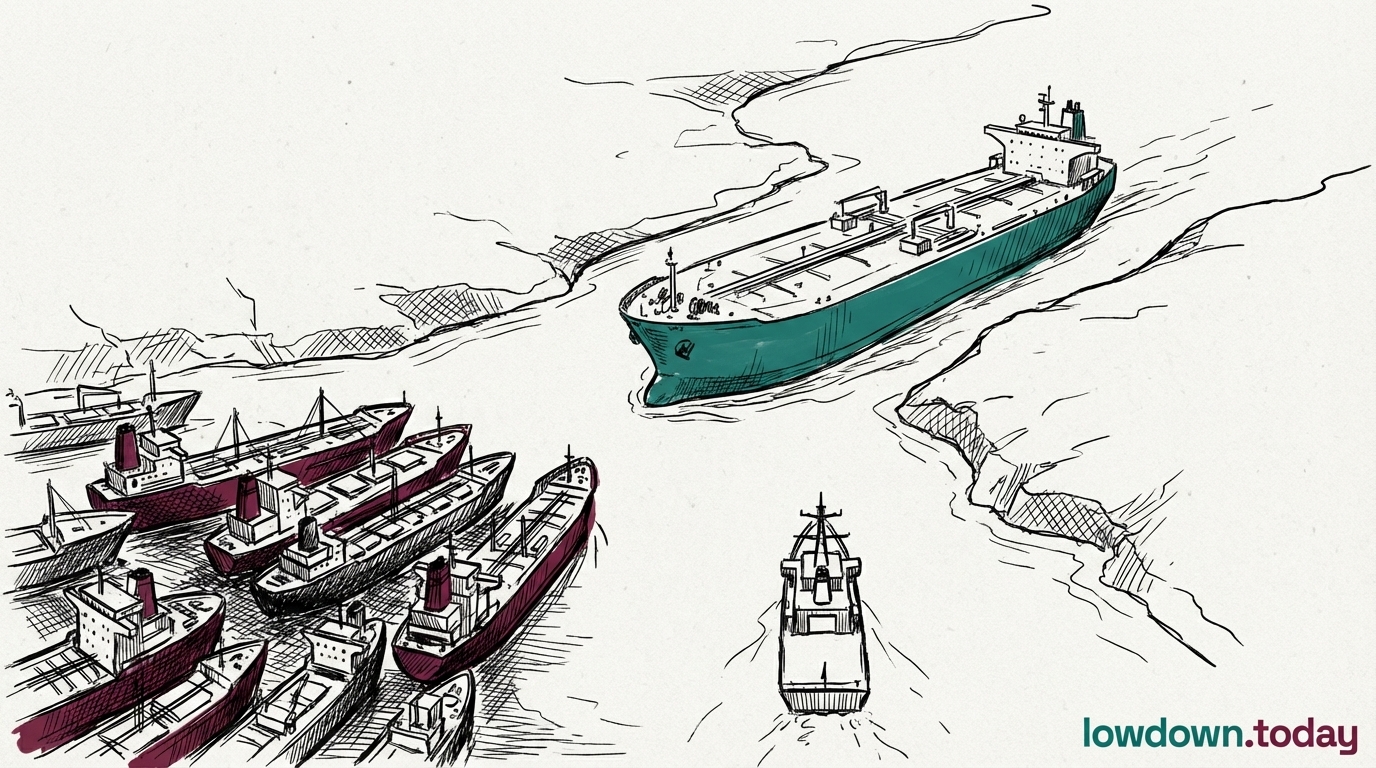
Moscow imposed a four-month gasoline export ban after Baltic port damage forced the Kirishi refinery offline and threatened four more facilities processing 55 million tonnes annually.

ConflictDeveloping
Key takeaway

Russia's gasoline export ban through July confirms Baltic port damage has crippled its refining supply chain.

Russia banned all gasoline exports from 1 April through 31 July 2026 after Ust-Luga halted fuel oil and gasoline intake on 25 March. The Kirishi refinery (KINEF), responsible for 6.6% of Russia's total oil refining, ceased operations 1. Three more refineries, in Yaroslavl (YANOS), Moscow, and Ryazan, face the same problem: fuel oil comprises 18 to 35% of their output, has negligible domestic demand, and now has nowhere to export.

A refinery specialist told Reuters that stockpiles would fill "within days," forcing cuts "to minimum levels and then potentially shut units." The four facilities process a combined 55 million tonnes of crude annually. The ban was framed publicly as a response to Iran-war price volatility. The actual trigger is that the export infrastructure carrying refined products out of northwest Russia no longer functions.

The earlier Ukrainian strikes on the Labinsk oil depot and the Afipsky refinery targeted storage and processing. The Baltic campaign strikes at the chokepoint where refined product meets ocean shipping. Russia now faces the spring and summer driving season with its largest export-facing refineries offline or throttled.

Deep Analysis

In plain English

Oil refineries turn crude oil into usable products: petrol, diesel, and fuel oil. Russian refineries near the Baltic ports produce large amounts of fuel oil, which they export since Russia doesn't burn much of it domestically. With the Baltic ports shut, the refineries have nowhere to send the fuel oil. Storage tanks fill up within days, forcing the refinery to slow or stop entirely. The Kirishi refinery, which handles 6.6% of all Russian oil refining, has already gone offline. Russia banned all petrol exports for four months. This is partly to protect domestic supply, but it also signals that the Baltic ports will not be fixed quickly, and that the damage to refining operations is serious.

Deep Analysis
Root Causes

The immediate cause is the physical blockage of fuel oil export pathways. Fuel oil, which comprises 18-35% of the output at the affected refineries, has no significant domestic market in Russia and must be exported. With Ust-Luga halted, the product accumulates in tanks until refineries must slow or stop production.

The structural cause is Russia's refinery geography. Soviet-era refining capacity was built in northwest Russia to serve European export markets. Post-2022 rerouting moved crude buyers to Asia, but the refinery locations and export infrastructure were not changed. Ukraine's strikes exploit this geographic mismatch.

What could happen next?
  • Consequence

    Russia's domestic fuel price stability depends on maintaining refinery output. If the four threatened facilities reduce to minimum operations, Russia faces summer fuel shortages in regions far from alternative supply.

  • Risk

    If the refinery cascade shutdown reaches the Moscow and Ryazan facilities, Russia faces politically sensitive domestic fuel shortages close to the capital.

First Reported In

Update #9 · Ukraine halves Russia's Baltic oil exports

Moscow Times / Reuters· 1 Apr 2026
Read original
Different Perspectives
Iran human rights monitors (Amnesty International, Iran HRM, Hengaw)
Monitors documented 30 women held on capital moharebeh charges in a basement prison ward, Benyamin Naqdi's death sentence with a forced-confession broadcast, and 39 political executions since February. Iran's security courts have processed protest cases at uninterrupted wartime tempo regardless of the diplomatic track.
Lloyd's of London (war-risk underwriters)
Lloyd's held its Hormuz war-risk designation at $10-14 million per voyage while Brent fell 19%, maintaining a structural divergence from futures pricing. Underwriters require a UN Security Council resolution or government certification letter, not diplomatic optimism, before de-listing the strait.
Oman (Sultan Haitham's government)
Muscat issued a mine alert in its own territorial waters while denying any Hormuz toll plan after US Treasury threatened sanctions. A suspected mine in Omani waters on the same weekend as US financial pressure forces Muscat to demonstrate sovereignty without appearing to choose sides.
China (PRC)
China (PRC)
Beijing sent scholars rather than its defence minister to Shangri-La for the second year running and addressed Taiwan and multilateralism without mentioning Iran. China maintains its bilateral energy corridor protection with Tehran while refusing the diplomatic exposure of a public position at multilateral forums.
Iran Supreme National Security Council
The SNSC framed the unsigned MOU as a 10-point Iranian victory with enrichment already recognised, and the foreign ministry rejected Trump's nuclear conditions within hours. Tehran treats each unsigned day as validation that Iran has retained its stockpile without surrendering it.
Trump administration (CENTCOM/White House)
Trump posted three non-negotiable public conditions while CENTCOM disabled a commercial ship and Hegseth threatened resumed strikes from Singapore. The administration treats the unsigned MOU as leverage to extract maximum Iranian concessions before any ceasefire instrument is committed to paper.