Skip to content
Briefings are running a touch slower this week while we rebuild the foundations.See roadmap
Iran Conflict 2026
14APR

Iran zone now spans Fujairah, Khorfakkan

4 min read
09:22UTC

Iran extended its declared maritime control area over Fujairah and Khorfakkan on 4 May, then struck the Fujairah oil terminal with drones and missiles, the first attack on the UAE since the 16 April Trump ceasefire.

ConflictDeveloping
Key takeaway

Iran's expanded zone closes the UAE's bypass ports; the Trump ceasefire remains the named regime.

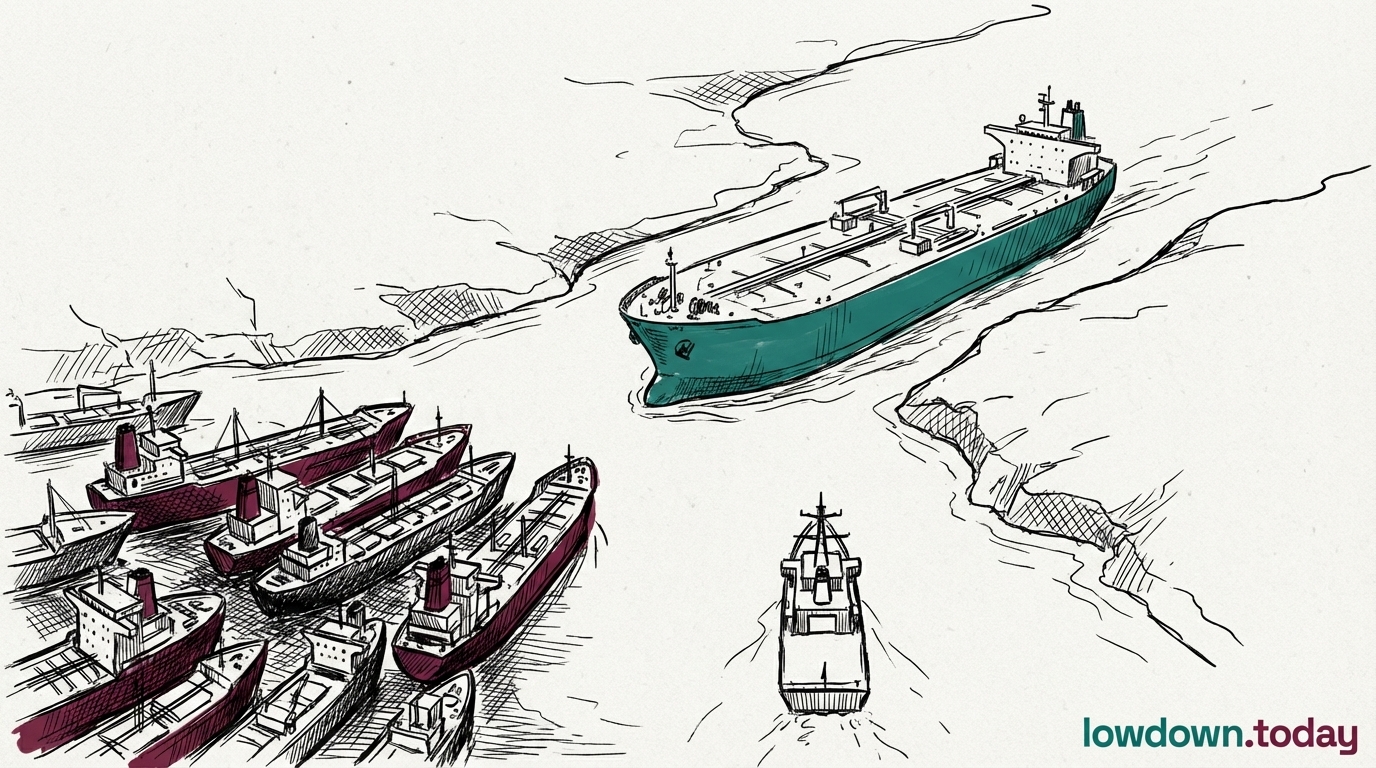
Iran extended its declared maritime control area on Monday 4 May to cover Fujairah and Khorfakkan, the two Gulf of Oman ports the UAE relied on to bypass the blocked Strait of Hormuz 1. Iranian drones and missiles struck the Fujairah oil terminal the same day, the first attack on UAE territory since the Trump ceasefire of 16 April. UAE air defences engaged 15 missiles and four drones; one drone got through and sparked a fire at the terminal, wounding three Indian nationals 2. A UAE-linked tanker was struck twice in the strait, and South Korean-operated HMM Namu (Hyundai Merchant Marine) caught fire while at anchor off the UAE the same day.

The expansion drags two Emirati ports inside the kinetic zone for the first time in the war. Fujairah and Khorfakkan sit on The Gulf of Oman side of the peninsula and were the workaround the UAE used to keep crude flowing while the strait was closed; Iran's announcement removes the workaround. Emirati shippers that diverted to Fujairah after the 28 February escalation are now back inside the same risk envelope they thought they had left behind. UAE quit OPEC (Organisation of the Petroleum Exporting Countries) on Friday 1 May and turned to Asian buyers when Brussels declined the first post-conflict tanker ; the new zone closes the maritime route for that trade until either the Iranian announcement is rolled back or Emirati air defences carry the full intercept load.

Pete Hegseth, the US Defence Secretary, told reporters the ceasefire 'remains in place' despite the kinetic exchange, the first explicit administration position that engagement and ceasefire status can coexist 3. The contradiction is now operational policy: the Trump 16 April ceasefire still names the regime even as Iranian munitions land on UAE soil and American destroyers sink Iranian small craft in the same week.

Deep Analysis

In plain English

Iran struck a major oil port in the United Arab Emirates on 4 May and simultaneously declared that the UAE's two main bypass ports are now inside its military control zone. Since Iran blocked the Strait of Hormuz in mid-April, ships had been rerouting through UAE ports to avoid the strait. Iran has now closed that workaround too. Fujairah, the port that was struck, is one of the world's biggest ship-refuelling hubs. UAE air defences shot down 15 of the 19 incoming missiles and drones, but one drone got through and started a fire; three Indian workers at the terminal were wounded in the strike. Iran had not struck the UAE since a ceasefire was announced in mid-April; 4 May broke that three-week lull.

Deep Analysis
Root Causes

The Fujairah bypass route exposed a structural gap in Iran's toll enforcement: vessels rerouting around Hormuz through Fujairah and Khorfakkan were generating zero toll revenue for the IRGC and demonstrating to global shippers that alternatives existed. The IRGC's doctrine requires there to be no viable alternative; the existence of a functioning bypass contradicted the enforcement architecture the Majlis sovereignty law created.

India's stake is the second structural driver: three of the injured workers at Fujairah were Indian nationals, and Indian shipping has been the largest non-Chinese user of the Fujairah bypass since mid-April. The strike functionally ends India's ability to claim neutral status while continuing to use Fujairah as its primary Gulf energy logistics hub.

What could happen next?
  • Consequence

    India's ability to maintain diplomatic neutrality collapses if Fujairah remains inside the Iranian enforcement zone, as Indian nationals and Indian-routed energy cargoes are now directly at risk.

  • Risk

    The elimination of the Fujairah bypass closes the last commercially viable alternative routing, concentrating all price pressure on a single Hormuz chokepoint and raising the floor for any insurance-market re-opening.

First Reported In

Update #89 · Truxtun gets through; Trump pulls back

CBS News· 6 May 2026
Read original
Different Perspectives
Qatar
Qatar
Qatar holds approximately $12 billion in frozen Iranian assets that Tehran named as the precondition for any Hormuz reopening sequence; with Oman sidelined and no agreed HEU custodian, the asset-routing architecture that any deal requires has no operational channel and no neutral financial intermediary to run it through.
Hengaw and Iranian civilian population
Iranians face an internet capped at 40 per cent by hardware their president cannot dismantle, field killings that leave no court record, and judicial executions running in parallel; Hengaw, based in Norway, is the primary remaining monitor of a repression system the IRGC is deliberately moving beyond auditable records. The real toll is higher than any single monitor's count.
China
China
China supplied deep-packet-inspection hardware that caps Iran's internet at 40 per cent and enables an instant on-demand blackout, and was barred by Trump as a potential HEU custodian on 27 May. Beijing gains from Iran's continued non-alignment with the West while the DPI sale extends Chinese surveillance-technology exports as a geopolitical instrument.
Pakistan
Pakistan
Foreign Minister Ishaq Dar met Rubio in Washington on 29 May, formally inheriting the role of sole active mediator after Oman's forced withdrawal. Pakistan lacks Oman's banking infrastructure for frozen-asset routing and carries its own regional stakes, making it a less structurally neutral broker for the Qatar-held $12 billion sequencing.
Kuwait
Kuwait
Kuwait invoked Article 51 of the UN Charter after absorbing an Iranian ballistic-missile strike on Ali Al Salem Air Base on 28 May, becoming the first Gulf state to make a formal individual self-defence claim in the war. The invocation creates a legal record enabling a future bilateral defence-pact activation without yet triggering it.
Oman
Oman
Oman denied any Hormuz toll plan within hours of Bessent's 28 May threat, absorbing a sanctions warning from the country it has brokered for since 1981. The rapid capitulation preserved the channel formally, but Tehran now knows Washington will threaten its own mediator, which changes Muscat's calculus on how far it can lean into any joint-management architecture.