Skip to content
Briefings are running a touch slower this week while we rebuild the foundations.See roadmap
Iran Conflict 2026
11APR

Houthis strike Israel for third day

2 min read
11:03UTC

Two drones intercepted over Israel. Three attacks in three days confirms sustainable tempo, not a one-off provocation. The Houthi deputy minister named Bab al-Mandeb closure as 'among our options.'

ConflictAssessed
Key takeaway

Three days of attacks confirm Houthi tempo is sustainable.

Houthi forces fired at Israel for a third consecutive day on 30 March. Two drones were intercepted by Israeli defences. 1 Deputy Information Minister Mohammed Mansour described Bab al-Mandeb closure as 'among our options' in a staged escalation programme. Blockade was described as 'likely' in the next phase if Israel targets Hodeidah port or Yemeni civilian infrastructure.

Ansar Allah entered the war with ballistic missiles on 28 March and threatened Bab al-Mandeb closure the same day . A third consecutive attack now establishes sustainable operational tempo. Hezbollah fired 600 projectiles at Israel in a single 24-hour period on 28 March . Iran's proxy network is activating in sequence, each front requiring separate defensive resources from a coalition already stretched by the primary conflict.

Houthi entry came the day after Pakistan confirmed US-Iran indirect talks had stalled and the day Iran published its five conditions for ending the war . Tehran coordinated the opening of this front. The Long War Journal reports that Houthi leaders conditioned further escalation on whether other nations join anti-Iran operations or use the Red Sea for strikes.

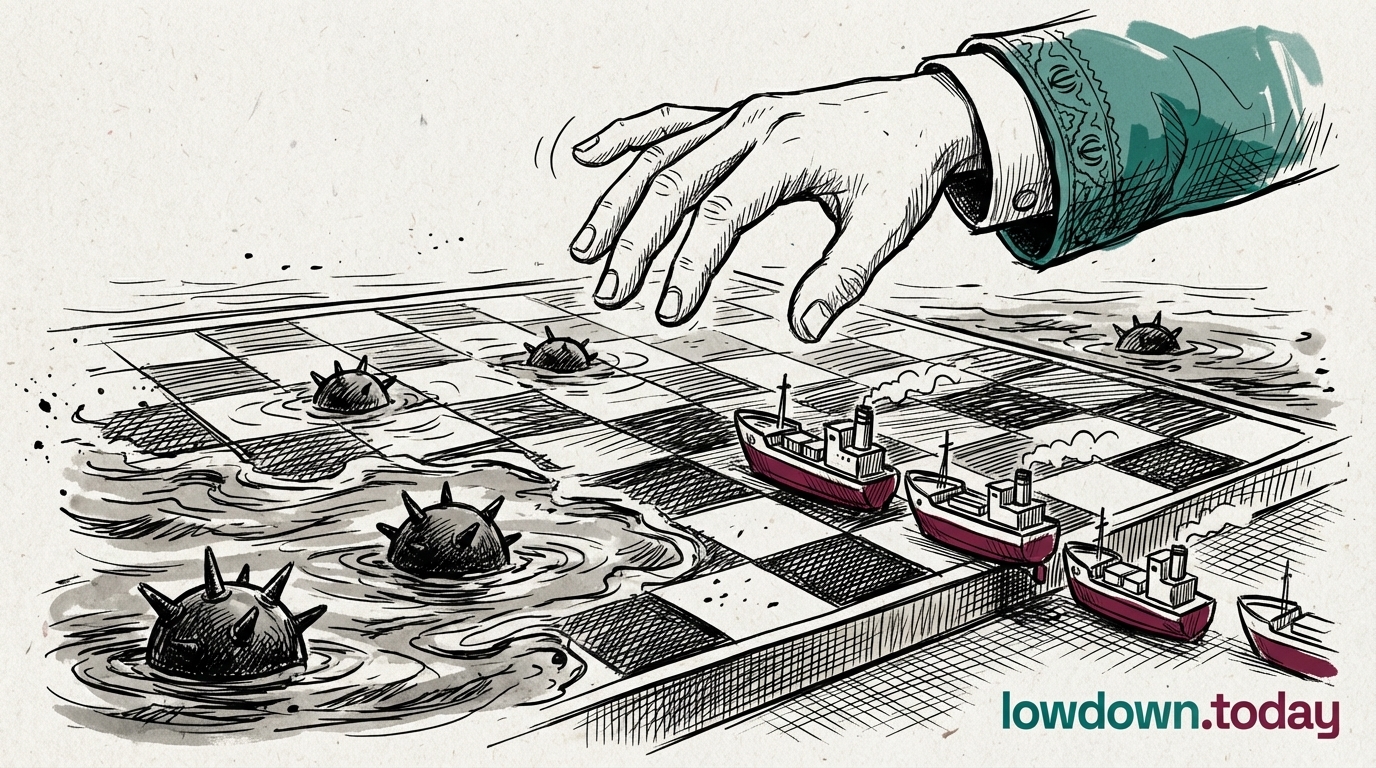
Combined with near-total Hormuz closure, formal Bab al-Mandeb blockade would place simultaneous pressure on the world's two most critical oil transit routes for the first time since the 1973 oil crisis. MARAD and UKMTO have already confirmed deliberate GNSS denial spanning from Hormuz to Bab al-Mandeb . An electronic warfare corridor now links both chokepoints.

Deep Analysis

In plain English

The Houthis are an armed group based in Yemen that has been fighting a civil war there for years. They also have a history of firing at ships in the Red Sea. Now they are firing drones and missiles at Israel. This is the third day in a row they have attacked. The attacks are being intercepted, but three consecutive days of attacks is different from a one-off strike: it shows they can sustain the effort. The Houthis have also suggested they might close the Bab al-Mandeb strait, which is the narrow water passage between Yemen and Africa. Oil tankers going from the Gulf to Europe pass through it. If both the Strait of Hormuz (near Iran) and Bab al-Mandeb (near Yemen) are closed or disrupted at the same time, the world's two biggest oil shipping routes would be blocked simultaneously, something that has not happened since 1973.

What could happen next?
  • Risk

    If Israel strikes Hodeidah port or Yemeni civilian infrastructure, Houthi officials have stated Bab al-Mandeb closure becomes operational, creating simultaneous dual-chokepoint pressure not seen since 1973.

  • Meaning

    Three consecutive attacks on Israel establish the Houthis as a sustainable second front in the conflict, requiring separate Israeli and US defensive resources distinct from the primary Iran campaign.

First Reported In

Update #52 · Trump wants Iran's oil; 3,500 Marines land

Al Jazeera / Middle East Monitor· 30 Mar 2026
Read original
Different Perspectives
Qatar
Qatar
Qatar holds approximately $12 billion in frozen Iranian assets that Tehran named as the precondition for any Hormuz reopening sequence; with Oman sidelined and no agreed HEU custodian, the asset-routing architecture that any deal requires has no operational channel and no neutral financial intermediary to run it through.
Hengaw and Iranian civilian population
Iranians face an internet capped at 40 per cent by hardware their president cannot dismantle, field killings that leave no court record, and judicial executions running in parallel; Hengaw, based in Norway, is the primary remaining monitor of a repression system the IRGC is deliberately moving beyond auditable records. The real toll is higher than any single monitor's count.
China
China
China supplied deep-packet-inspection hardware that caps Iran's internet at 40 per cent and enables an instant on-demand blackout, and was barred by Trump as a potential HEU custodian on 27 May. Beijing gains from Iran's continued non-alignment with the West while the DPI sale extends Chinese surveillance-technology exports as a geopolitical instrument.
Pakistan
Pakistan
Foreign Minister Ishaq Dar met Rubio in Washington on 29 May, formally inheriting the role of sole active mediator after Oman's forced withdrawal. Pakistan lacks Oman's banking infrastructure for frozen-asset routing and carries its own regional stakes, making it a less structurally neutral broker for the Qatar-held $12 billion sequencing.
Kuwait
Kuwait
Kuwait invoked Article 51 of the UN Charter after absorbing an Iranian ballistic-missile strike on Ali Al Salem Air Base on 28 May, becoming the first Gulf state to make a formal individual self-defence claim in the war. The invocation creates a legal record enabling a future bilateral defence-pact activation without yet triggering it.
Oman
Oman
Oman denied any Hormuz toll plan within hours of Bessent's 28 May threat, absorbing a sanctions warning from the country it has brokered for since 1981. The rapid capitulation preserved the channel formally, but Tehran now knows Washington will threaten its own mediator, which changes Muscat's calculus on how far it can lean into any joint-management architecture.