Skip to content
Welcome, thoughtbot's Giant Robots listeners!Start here
Iran Conflict 2026
11APR

Hormuz tankers hit pre-war daily range

2 min read
11:03UTC

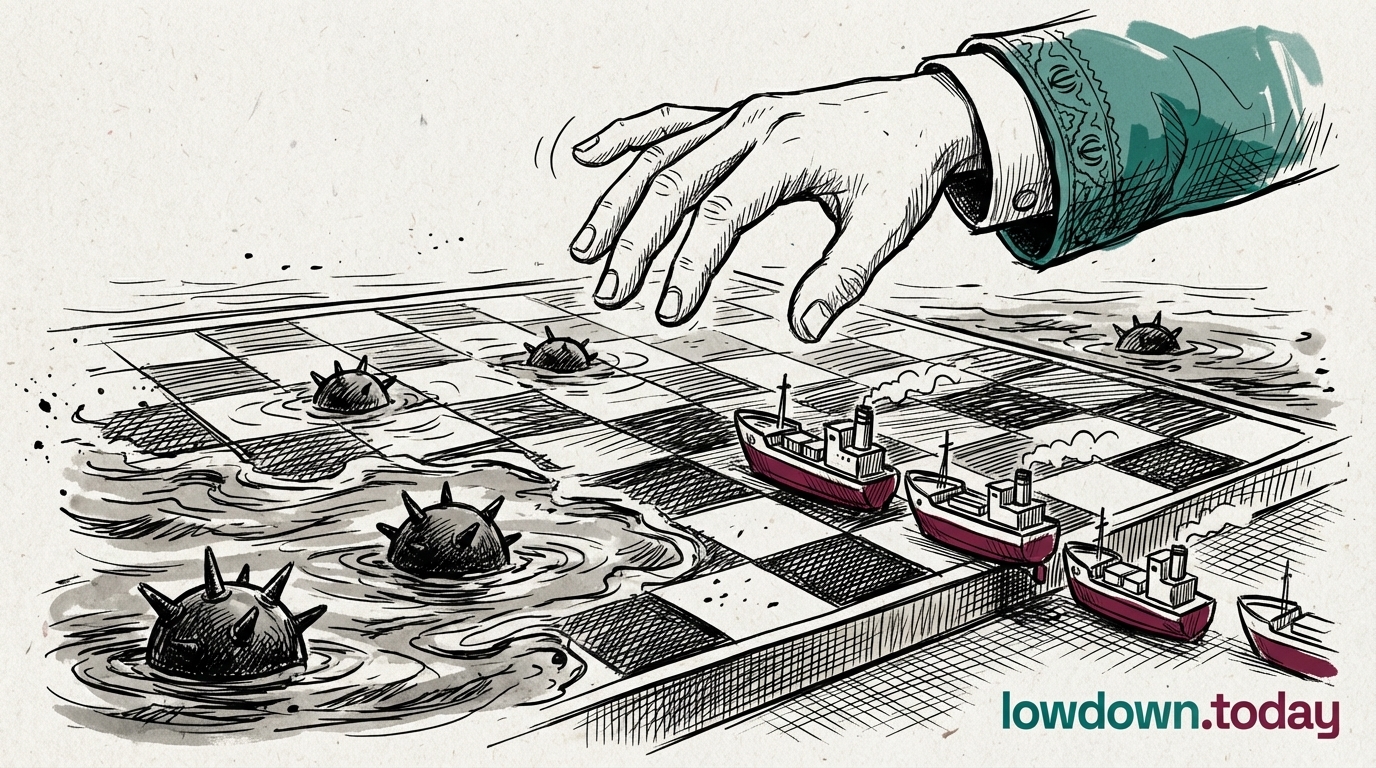
Al Jazeera counted 35 tankers exiting the Strait of Hormuz on Thursday 2 July, the first pre-war-typical daily total of the conflict, though its seven-day moving average still trails last year.

ConflictDeveloping
Key takeaway

Thirty-five tankers cleared Hormuz on 2 July, but the seven-day average still trails last year.

Al Jazeera counted 35 tankers exiting the Strait of Hormuz on Thursday 2 July, the first daily total back inside the pre-war-typical range since the conflict began⁠1. The broadcaster paired the count with a "has the oil shortage turned into a glut?" framing that moved quickly across trading desks.

Al Jazeera's own seven-day moving average still sits below last year's level, one strong session rather than a durable recovery. The Washington-Tehran arrangement runs on a 60-day interim transit-negotiation window dated from the 17 June memorandum, fragile by both sides' account.

IMF PortWatch put Hormuz transits at roughly a third of pre-crisis levels on its 3 July reading, so the day-count optimism and the underlying seven-day trend pull in opposite directions⁠2. That divergence, not the single session, is what a transit-exposed book prices.

Deep Analysis

In plain English

Thirty-five oil tankers left the strait of Hormuz on 2 July, a chokepoint between Iran and Oman that carries about a fifth of the world's oil. That single-day count looks almost normal. But averaged over the whole week, and according to the IMF's own ship-tracking service, traffic is still running at only about a third of pre-conflict levels. Think of it like a motorway that clears after roadworks: one fast-moving lorry does not mean the jam has gone. Insurers and oil traders watch the weekly average, not the best day, because a single busy day can just mean a backlog of ships was let through together.

Deep Analysis
Root Causes

The 60-day US-Iran incident-avoidance understanding, established in Geneva on 21 June, expires around 20 August. The 2 July count sits closer to the start of that window than its expiry, so a single strong day says little about whether transit holds once the informal arrangement lapses.

IMF PortWatch's own early-July baseline already put daily transits at 27 to 43 against an 84 pre-crisis norm, so the 2 July count of 35 sits inside a range PortWatch had already logged, not a new trend; a single Thursday count can just as easily reflect a bunched convoy release as a genuine change in the underlying escort-clearance rate.

What could happen next?
  • Meaning

    A single strong transit day is not yet evidence of durable recovery, since IMF PortWatch's own rolling measure still shows roughly two-thirds of capacity missing.

    Immediate · Assessed
  • Risk

    The 60-day Geneva incident-avoidance window closes around 20 August; a transit recovery built on informal Iranian forbearance rather than a legal settlement could reverse abruptly once that window lapses.

    Medium term · Reported
  • Precedent

    Kpler and Windward's differing read on daily-versus-averaged transit data will likely recur at every future Hormuz recovery milestone, since neither tracker has adjusted its methodology to the current convoy-bunching pattern.

    Short term · Suggested
First Reported In

Update #24 · Hormuz tanker rebound is no LNG relief

Al Jazeera· 6 Jul 2026
Read original →
Causes and effects
This Event
Hormuz tankers hit pre-war daily range
A transit-exposed desk prices the seven-day trend, and that trend still trails 2025 even as the single-day count returns to range.
Different Perspectives
International Energy Agency
G7 members agreed on 2 October to release up to 100 million barrels through the IEA over four months, front-loading diesel.
China
China
China signed the 15 October text reaffirming the Resolution 2216 arms embargo on the Houthis. The Wall Street Journal reported that Conflict Armament Research found Chinese parts in a Houthi copy of Iran's Kheibarshekan missile.
Russia
Russia
Russia joined the 15 October consensus condemning the Houthis, a month after vetoing a mandate for a UN panel of experts on Iran sanctions on 17 September. One Western official told Bloomberg that Moscow is providing Iran with missiles, and the White House rejected the assessment.
India
India
National Security Adviser Ajit Doval raised seafarer safety with Mohsen Rezaei on 12 October, after a drone hit the Petro Dolphin with 11 Indians aboard at Sohar. External Affairs Minister S. Jaishankar urged that attacks on commercial shipping and seafarers be avoided.
Lebanon
Lebanon
President Joseph Aoun met UN peacekeeping chief Jean-Pierre Lacroix in Beirut on 14 October as UNIFIL winds down before its mandate ends on 31 December. Two days later Qatar's prime minister pledged in Beirut to fund a solar plant for Lebanon.
Kataib Hezbollah
Kataib Hezbollah
The militia announced a halt to operations except against "hostile aircraft" and denied any disarmament deal with Prime Minister Ali al-Zaidi. A day later Quds Force chief Esmail Qaani urged eliminating "remaining traces of the US presence in other arenas".

Written with AI from Lowdown's published reporting. Not individually reviewed by an editor. Editorial standards.