Skip to content
You can now search across every topic, entity and event.What's new
Iran Conflict 2026
10APR

Trump claims enrichment ban Iran has never confirmed

2 min read
08:05UTC
ConflictDeveloping
Key takeaway

Both sides made public enrichment commitments that preclude compromise

Trump posted on Truth Social on 8 April: 'There will be no enrichment of Uranium' 1. Karoline Leavitt called enrichment 'a red line the President is not going to back away from' 2. PBS News confirmed Iran has not confirmed any agreement on enrichment 3.

Iran's position is the opposite. The 10-point plan that Pakistan relayed, and that Trump accepted as a 'workable basis' when the SNSC issued its ceasefire statement , explicitly demands enrichment rights. Mohammad Bagher Ghalibaf, Speaker of Iran's Majlis, listed enrichment refusal as the third of three ceasefire violations, alongside the Lebanon strikes and a drone incursion into Iranian airspace 4. He called continued negotiations 'unreasonable.'

Ghalibaf is the highest-ranking elected official in Iran to reject the ceasefire framework. The enrichment gap is the fault line the Islamabad talks must bridge on Friday. Araghchi confirmed he will attend, but 'with complete distrust' 5.

Deep Analysis

In plain English

Trump says Iran agreed to stop enriching uranium. Iran says its right to enrich is non-negotiable and calls the demand a ceasefire violation. Both claims cannot be true. Friday's talks in Islamabad must resolve this or the ceasefire framework collapses.

Deep Analysis
Root Causes

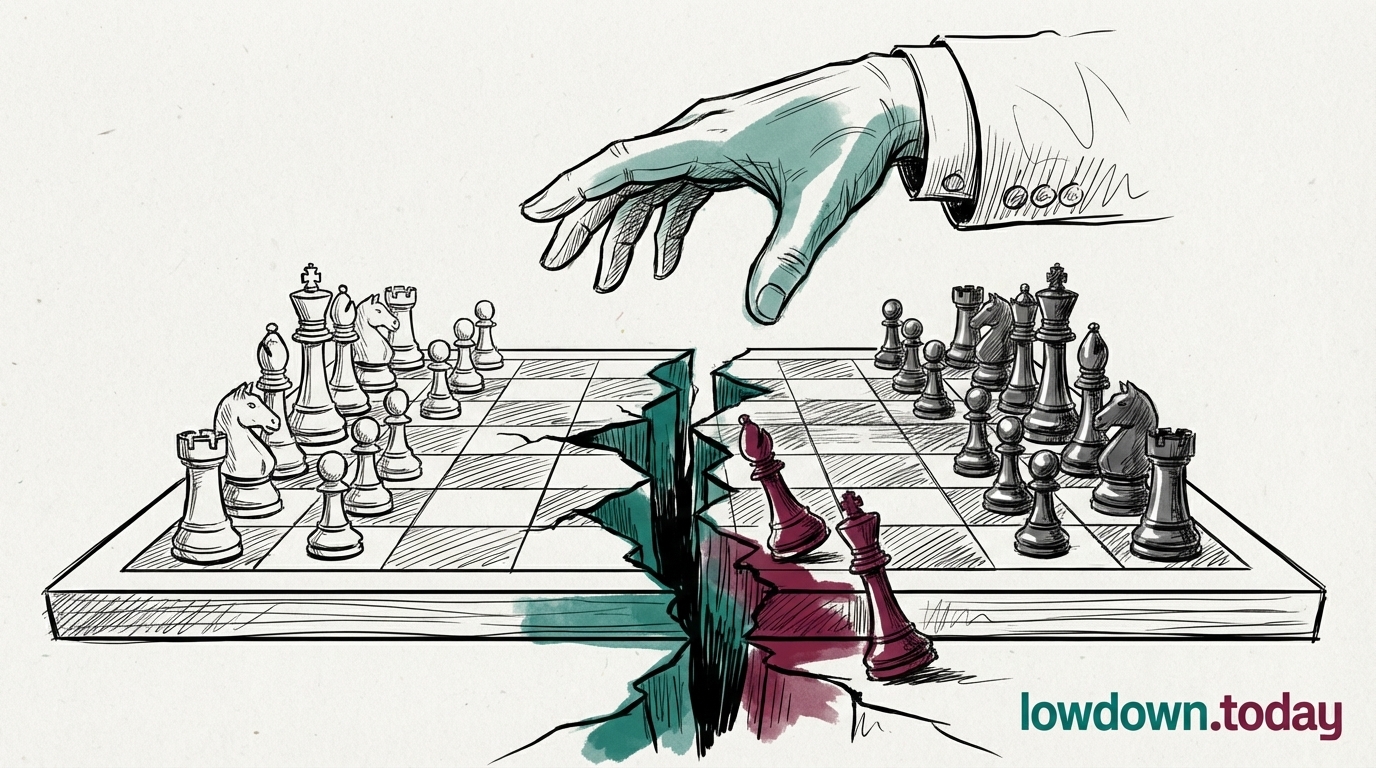
Trump accepted Iran's 10-point plan as 'workable' while simultaneously claiming enrichment is off the table. The two positions are structurally incompatible.

First Reported In

Update #63 · Ceasefire redistributes the war, not ends it

Iran Ministry of Foreign Affairs· 9 Apr 2026
Read original
Causes and effects
This Event
Trump claims enrichment ban Iran has never confirmed
The enrichment gap is the nuclear fault line the Islamabad talks must bridge on Friday. Both sides have made public commitments that preclude quiet compromise.
Different Perspectives
Oil market and P&I insurers
Brent cleared $87 intraday only once CENTCOM's blockade became physical rather than declared, even though P&I Clubs had already excluded Hormuz war risk a week earlier on 7 July: capital hedged ahead of enforcement, but prices moved only after it.
UAE reporting
UAE reporting
UAE reporting placed the Omani tanker deaths at one seafarer against the International Maritime Agency's count of two, the first time in this war that a Gulf state's casualty figures have diverged from an international monitor's.
Jordan
Jordan
Iranian strikes reached Jordan again on 14 July as part of the Gulf-wide retaliation for the Hormuz blockade, extending the conflict's geographic footprint to a state with no direct stake in the strait itself.
Bahrain
Bahrain
Bahrain sounded air-raid sirens on 14 July during Iran's Gulf-wide retaliation, the same day CENTCOM's blockade order and fourth night of strikes pushed the conflict's physical reach into the wider Gulf littoral.
Kuwait
Kuwait
Kuwait intercepted Iranian missiles and drones on 14 July as Tehran's blockade retaliation reached Gulf states beyond Iran's immediate shoreline, confirming Kuwaiti airspace now sits inside Iran's retaliatory envelope.
Oman
Oman
Oman absorbed the war's first tanker casualties in its own waters on 14 July, with two supertankers disabled and seafarers killed, putting the sultanate's shipping lanes directly in the path of the blockade fight for the first time.